A puffy winter coat feels like the right layer on a cold morning, but under a car seat harness it can leave a child dangerously loose. Most parents searching this topic want to know whether a child can wear a winter coat in a car seat. The short answer is no, not under the harness. The U.S. National Highway Traffic Safety Administration (NHTSA) advises thinner layers that let the straps lie snug, with extra warmth added over the buckled harness.
Why does a winter coat make a car seat harness loose?
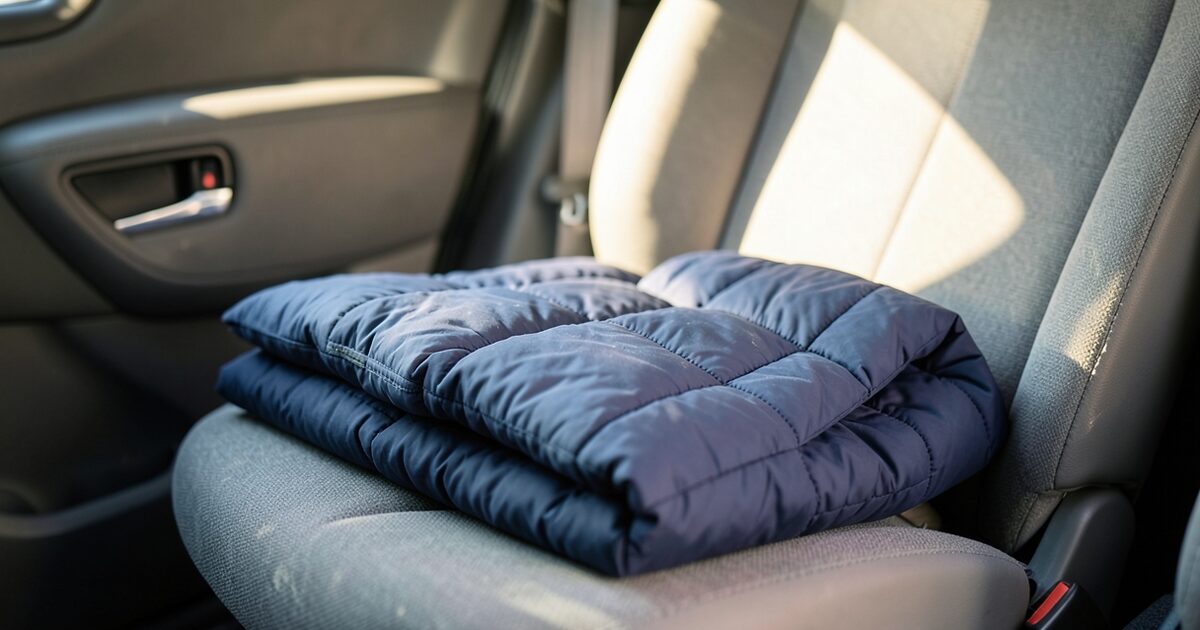
A quilted down or synthetic jacket is mostly trapped air. When the harness is tightened over it, the insulation compresses under the straps, so the belt feels snug in the driveway. Once the coat comes off, the space it took up is still there, and the harness sits loose on the child's body.
That slack matters in a crash. The harness is meant to hold the child's torso and hips against the seat, and extra room lets the child move before the straps take the load. NHTSA's guidance on keeping children warm and safe in car seats is built around that fit, which is why it treats coat choice as a safety question rather than a comfort question.
Picture a three-year-old buckled into a thick jacket on a December morning in Minneapolis. The straps feel firm, the coat zips up, and the parent drives off. At the grocery store the coat comes off, and the same harness setting now leaves a visible gap at the child's shoulder. That gap is exactly what the pinch test is designed to catch.
How do I do the pinch test with a winter coat?
The pinch test takes about a minute and needs no tools. Use it every time a child is buckled in heavy outerwear, and do it before the car moves.
- Put the child in the coat and buckle the harness, with the chest clip at armpit level.
- Tighten the harness until the straps lie flat and the child cannot be pulled out easily.
- Unbuckle, take the coat off without changing the harness setting, and buckle the child back in.
- Pinch the harness webbing at the child's shoulder between thumb and forefinger. If you can pinch a fold of strap, the harness is too loose for the seat.
- Tighten the harness until no strap can be pinched, then check again with the coat off.
Here is a worked example. A parent in Denver buckles a four-year-old into a down coat and tightens the straps until they feel firm. The parent then removes the coat, re-buckles at the same setting, and pinches the shoulder strap, which folds easily. Tightening again with the coat off removes the fold, and the harness now fits the child in the fleece layer worn inside the car. If the test fails only with the coat on, the fix is to take the coat off, not to leave the harness loose.
For adults the same rule applies to the seat belt. Remove a puffy coat before fastening the belt, because the padding creates slack that the belt cannot take up in a crash.
Which warm layers work under a car seat harness?
Thin, close-fitting layers keep heat in without adding loft under the straps. These work well under a harness:
- A fleece base layer or thin fleece pullover, the lightweight option NHTSA recommends.
- A thin knit or merino layer that sits flat against the body.
- A hat, mittens and warm socks, which add heat without bulk behind the shoulders.
- Thin leggings or pants under fleece for children who run cold in the legs.
Check each combination with the pinch test rather than by feel. A thick hood or a bunched hoodie can sit behind the shoulders and create the same slack as a puffy coat, so remove hoods and drawstrings before buckling. The chest clip should still land at armpit level with the layers on.
What can go over the harness to keep a child warm?
Warmth can go on top of the harness once the child is fully buckled and the straps pass the pinch test. NHTSA's guidance points to two options: a coat put on backward over the buckled harness, or a blanket laid over the child. In both cases the extra layer sits outside the straps, so it does not change how the harness fits.
A blanket works well, but tuck it so nothing sits under the straps or near the child's face. Avoid stuffing blankets behind the back or under the child, because that puts bulk exactly where the harness needs to be snug. Keep a spare blanket in the trunk for this purpose, and pack it alongside the rest of the winter gear in your winter car emergency kit.
The cleanest solution is to warm the car before the child gets in. Run the heater long enough that the seat and cabin are comfortable, so the child does not need a heavy coat in the seat at all. If you are deciding between remote start, a block heater and simply idling, our comparison of warm-up methods lays out the trade-offs.
What mistakes do parents make with winter car seats?
The most common mistake is buckling a child in a coat, then leaving the harness loose because it looks secure. Parents often tighten the harness over a coat at home, then drive to a store where the child is taken out and put back in without any adjustment. Each unbuckling changes the fit, so the pinch test should be repeated after the coat comes off, not only once in the driveway.
A second mistake is placing a blanket, a padded insert or a seat liner under the harness. Aftermarket products can change how the harness sits, so check the car seat manual before using anything that goes between the child and the straps. A third mistake is assuming a seat that fitted in September will fit in January. Thicker winter clothing changes the fit even when the seat itself has not changed.
A fourth mistake is treating the fix as a one-time job. Children grow, clothing changes, and a harness that passed the pinch test in October may not pass in January. Repeat the test whenever the outerwear changes and whenever you adjust the harness height.
How do I check a car seat's expiration date before winter?
The expiration date is printed on a label on the seat's shell, usually on the side or underneath. Some labels show only the manufacture date and a number of years to add. Manufacturers commonly set expiration periods somewhere around six to eight years from manufacture, though the exact figure depends on the model, so read the label on the seat itself rather than the box.
If the seat has no printed expiration date, the American Academy of Pediatrics suggests treating it as expired six years after the date of manufacture, as described in its winter car seat safety tips. A seat involved in a crash should be replaced according to the manufacturer's instructions, even when it looks undamaged. Register the seat with its manufacturer so recall notices reach you, and NHTSA also offers car seat recall alerts to registered owners.
Pair the seat check with the routine in our Thanksgiving road trip car check, and note the expiration year next to the car's other deadlines. CarDiary, a digital vehicle cost and deadline log that replaces spreadsheets, can hold the seat's expiration date beside your registration and inspection dates so the reminder arrives before winter travel.
Frequently asked questions about winter coats and car seats
Can a child wear a winter coat in a car seat?
Not under the harness. NHTSA advises thinner layers that let the straps fit snugly, then adding warmth over the buckled harness, such as a coat worn backward or a blanket.
Is it safe to put a blanket over a buckled child?
Yes, as long as the child is fully buckled and the straps pass the pinch test. Keep the blanket outside the harness and away from the child's face.
What if my child fails the pinch test in a thin fleece?
Tighten the harness until the test passes, and confirm the chest clip sits at armpit level. A certified child passenger safety technician can check the fit at a local inspection station.
Do the same rules apply to adults?
The bulk problem is the same. Remove a puffy coat before fastening a seat belt, because the padding leaves slack that the belt cannot take up in a crash.