A Thanksgiving road trip usually starts with a full trunk, a tired driver, and a car that has sat in the driveway since the last long drive. Thanksgiving falls on Thursday, November 26, 2026, and the days around it are among the busiest on American highways. AAA's 2025 forecast projected 81.8 million travelers going 50 miles or more from home, with about 73 million of them driving, so the car is part of the holiday plan for most people. The 2026 forecast had not been published when this was written.
The main question most drivers have is simple: what should I check on my car before a long Thanksgiving drive? The short answer is an open recall check, tire pressure and tread, the battery, wipers and lights, and a trunk kit for a roadside wait. Each step takes minutes. The order matters, because a recall repair or a tire replacement may need a shop appointment that is hard to get in the week of the holiday.
How far ahead should I start a Thanksgiving road trip car check?
Start about two weeks before departure. That gives you time to book a dealer or tire shop slot, which often fills up in the days before a holiday. Two weeks also leaves room to fix anything that turns up without rushing the trip.
- Look up open recalls with the VIN.
- Check tire pressure and tread on all four tires plus the spare.
- Test the battery and look at the terminals.
- Replace worn wipers and top off washer fluid rated for freezing temperatures.
- Confirm every exterior light works.
- Pack the trunk kit the evening before you leave.
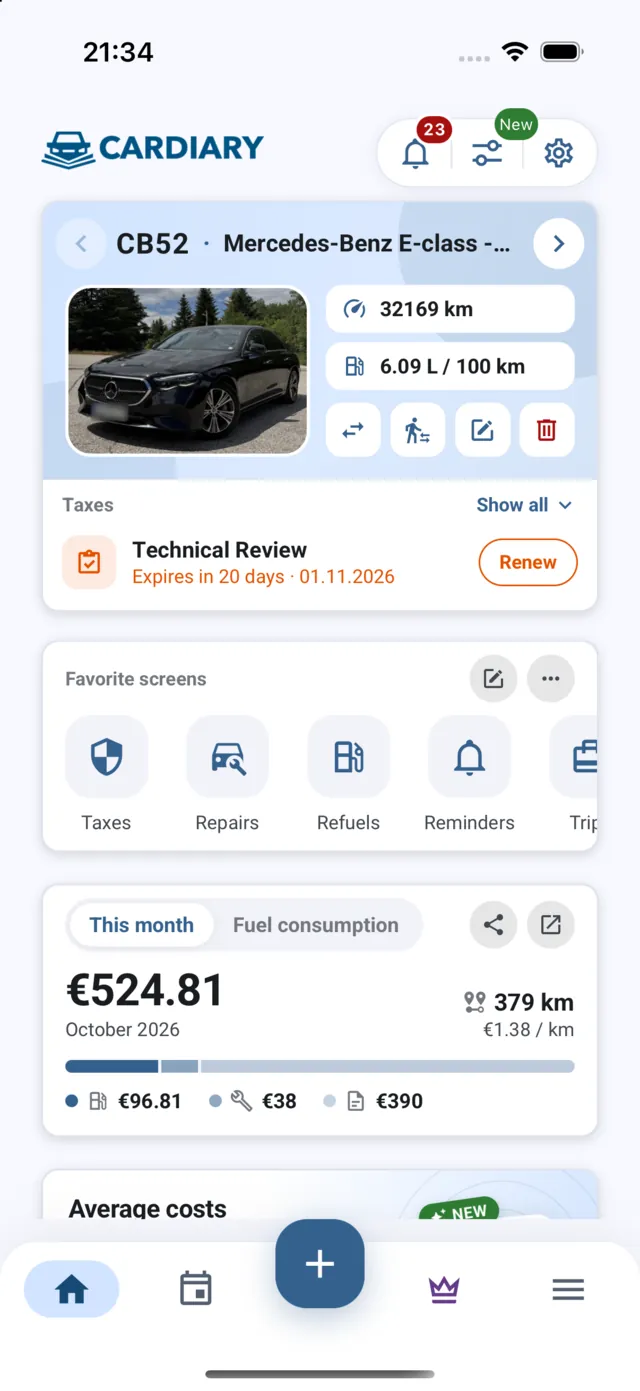
Keep the list in one place. A service log in CarDiary can hold the last tire rotation, the battery install date, and the wiper change, so the next due date is visible before you leave for Thanksgiving instead of in your memory.
How do I check for an open recall before the trip?
An open recall is a safety defect the manufacturer has identified and has not yet fixed on your car. Federal rules require the manufacturer to repair a safety recall at no charge, but the owner still has to book the repair. The fastest check is the NHTSA recall lookup at nhtsa.gov/recalls, where you enter the 17-character VIN.
The VIN appears on the dashboard near the windshield and on the driver door jamb label. Enter it exactly, watching for letters and numbers that look alike, such as O and 0. A result that shows an open recall does not mean the car is unsafe to drive in every case, but it should be scheduled before the trip.
Read the recall notice itself before deciding. Some notices say the car can be driven until the repair, while others say do not drive it at all. The notice decides this, not a guess, and a brake or fuel-system warning with a do not drive instruction means a tow, not a holiday drive.
Consider a driver in Columbus, Ohio, who is taking a used crossover to Charlotte, North Carolina, for Thanksgiving. The VIN lookup shows an open rear-view camera recall. The dealer can complete the fix in one visit, so the driver books it for the Monday before the trip and avoids the holiday rush at the shop.
What tire pressure and tread should I check before a long drive?
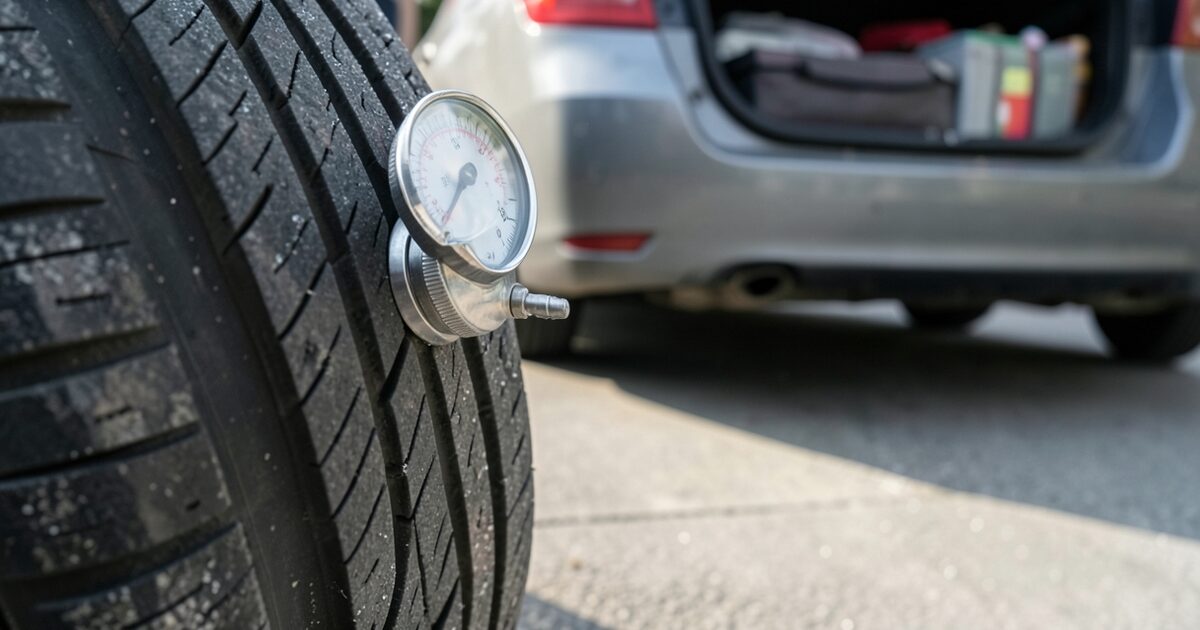
Tire pressure is measured cold, which means before the car has been driven far. Use the number on the tire placard, the sticker usually on the driver door jamb, not the maximum pressure molded into the tire sidewall. The sidewall number is the tire's limit, not the pressure your car needs.
Tread depth matters most in rain and snow. Place a penny in a tread groove with Lincoln's head facing down. If you can see the top of his head, the tread is at or below 2/32 of an inch, which is the common legal minimum in many states and the point where replacement is due. Check several spots across each tire, because uneven wear can point to an alignment or inflation problem.
Is the spare tire ready for the trip?
The spare is the tire people forget until they need it. Check its pressure against the number printed on its own sidewall, since temporary spares often run at a higher pressure than the road tires. Confirm the jack and lug wrench are in the car, and that you know where the spare release is on your model.
Do the battery, wipers, and lights need attention in November?
Cold mornings expose a weak battery. Many auto parts stores test batteries for free, and a load test takes only a few minutes. Most batteries last about three to five years depending on climate and use, so an older battery is a reasonable replacement candidate before a long drive. Clean any white or green corrosion from the terminals with a brush and a baking soda and water solution.
Wipers should clear the glass in one pass without streaks. If they smear or chatter, replace them before holiday rain or early snow in the Midwest and Northeast. Use washer fluid rated for freezing temperatures wherever the overnight low drops below freezing. Ask a helper to stand outside while you test headlights, brake lights, turn signals, and reverse lights, or check the reflections on a garage door.
What belongs in the trunk for a highway breakdown?
A holiday drive on an interstate can leave you waiting for a tow in cold air, sometimes for a long time. A small kit covers most of the outcomes. Pack these items:
- A jump starter pack or jumper cables, and a tire inflator with a gauge
- A flashlight with fresh batteries, and reflective warning triangles or flares
- Water, non-perishable food, and a blanket or warm layer
- A phone charger, a paper copy of the roadside assistance number, and a first-aid kit
- Work gloves and a lug wrench that fits your wheels
Warning triangles or flares are not required in every state, but they help other drivers see you at night. Keep the kit in the trunk, not in the garage, and check the jump pack's charge before you leave, since a dead pack is useless on the roadside.
What mistakes turn a routine holiday drive into a delay?
The most common mistake is trusting a car that was fine last spring. A recall notice that was ignored, a low tire that was never measured, or a warning light that came on at a gas station can each turn a routine drive into a roadside wait. These are the errors drivers run into most often.
- Checking tire pressure right after a long drive, when the reading runs higher than the cold value on the placard
- Assuming a borrowed or used car has no open recall without running the VIN
- Loading a roof box or rack that adds weight high on the vehicle and changes handling
- Ignoring a warning light because the car still drives normally
- Leaving the trunk kit in the garage
If the car fails on the highway, move it as far onto the shoulder as you safely can and turn on the hazards. If the shoulder is narrow or traffic is fast, stay inside with your seatbelt fastened and call for help rather than standing next to a moving lane.
What do drivers ask about a Thanksgiving road trip car check?
Do I have to pay for a recall repair?
No. Federal law requires manufacturers to fix safety recalls at no charge to the owner, including at an authorized dealer. You still need to book the appointment, and parts availability can delay some repairs.
Can I drive with an open recall before Thanksgiving?
Often yes, but read the recall notice first. Some recalls say the car is safe to drive until the repair, and others warn against driving at all. Call the dealer if the notice is unclear.
How long should I wait before measuring tire pressure?
Measure when the tires are cold, usually after the car has sat for a few hours. A reading taken right after a drive can come out higher than the cold value on the placard.
What should I do if the battery dies at a rest stop?
Use a jump pack or call roadside assistance rather than cranking the engine over and over, which drains the battery further. If your battery test from the start of the check showed it was already weak, plan a replacement before the next long trip.