Cold mornings push most drivers toward one of three habits: let the engine idle for a long time, plug the car in overnight, or start it from the house with a remote starter. For a modern gasoline car in the US, the short answer is about 30 seconds of idling to clear the glass, then gentle driving. Longer idling adds little for the engine and burns fuel for no benefit.
This guide compares those three options on what matters in a real winter: engine wear, battery load, how fast the windshield clears, whether you can reach an outlet, and what your city allows. It also covers the cold-morning mistakes that cause real trouble, from carbon monoxide in a garage to a cracked windshield from hot water.
Do You Need to Warm Up a Car Before Driving in Winter?
Most owner's manuals describe the same routine. Start the engine, give the oil a moment to reach the moving parts, clear the glass, and then drive off at light throttle until the temperature starts to climb. Read the manual for your exact model, because diesels and some turbocharged engines have their own rules.
The reason to drive gently is that an engine warms faster under light load than it does at idle. Argonne National Laboratory, a Department of Energy research lab, has reported that a car warms up faster when it is driven than when it sits idling. That is why the advice is to move early instead of waiting in the driveway.
Picture a 2018 Toyota RAV4 parked outdoors in Duluth, Minnesota, on a morning at 5°F. The driver starts the engine, runs the defrost on high for about 30 seconds, scrapes the rest of the glass, and then drives at low speed for the first mile. The cabin heat usually arrives within a few miles, so there is no need to wait ten minutes in the driveway. If you live where the thermometer stays below zero for weeks, the oil grade matters too, and the engine oil grade explainer on what 0W-20 means in winter covers that choice.
What Idling Does to the Engine, the Battery and the Windshield
Long idling does not protect the engine. Most engine wear happens in the first minutes after a cold start, when the oil is thick and has not yet reached every bearing and cylinder wall. Idling keeps the engine in that cold, rich-running state for longer. On short trips that never fully warm the oil, fuel can dilute the oil, and idling in the driveway does nothing to fix that.
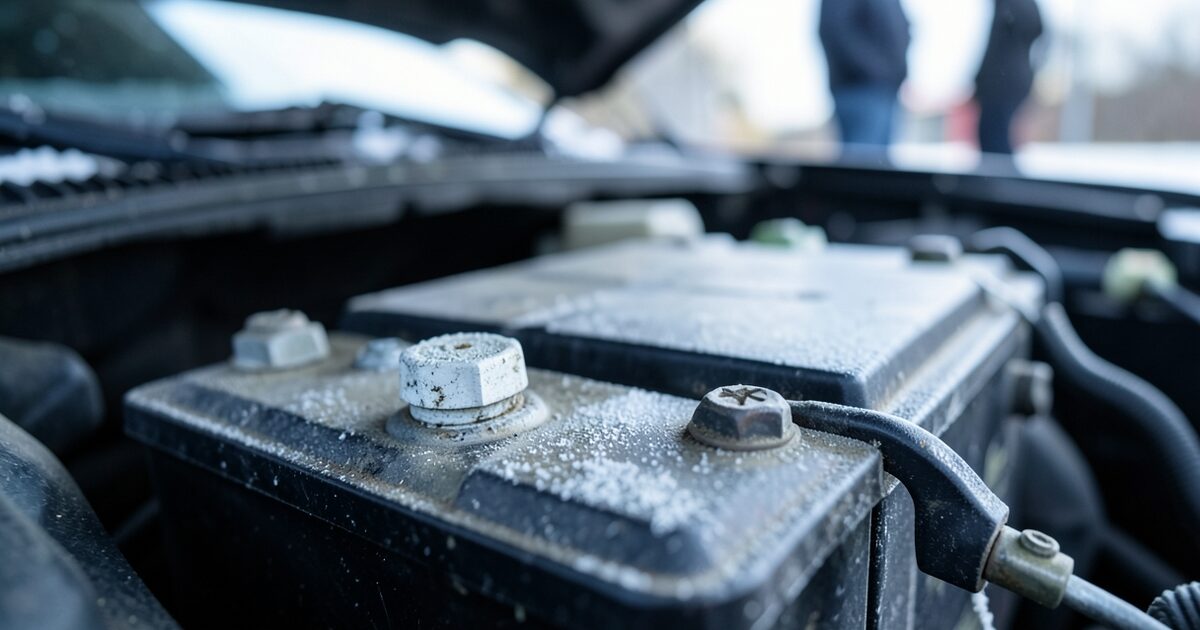
The battery also suffers. At idle the alternator produces little charging current, so a battery already weakened by cold may not recover the energy the starter, lights and blower draw. Use the idle time to notice whether the engine cranks slowly, not as a substitute for a battery test. The cold-weather battery checks guide shows how to test it before the cold snap arrives.
On fuel, the Department of Energy says that restarting the engine uses only about 10 seconds worth of fuel. Argonne testing on a late-model mid-sized car in mild weather found that idling past 10 seconds burned more fuel and produced more CO2 than restarting. So shutting the engine off during a long stop is the better habit, but a cold-morning warm-up is a separate question.
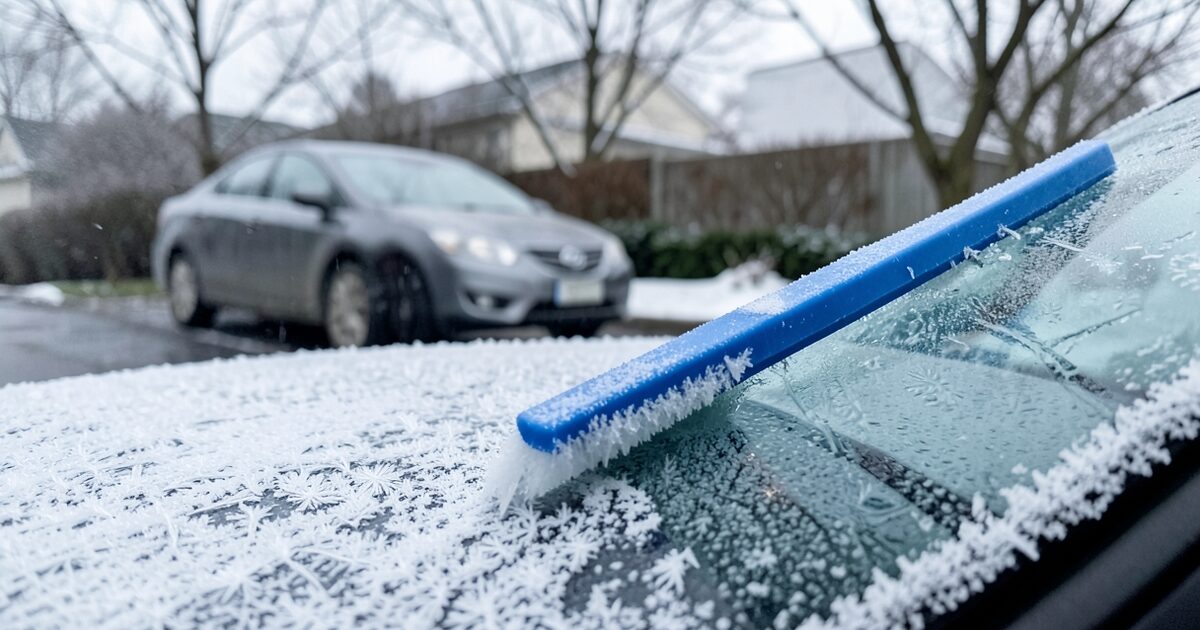
The windshield is the one place where a short idle earns its keep. The Alaska Department of Transportation anti-idling fact sheet says no more than about 30 seconds of idling is needed, just long enough to clear the glass. Running the defrost with the fan on clears frost faster than waiting with the engine on low. For the full routine on frozen glass, see the guide on how to defrost a car windshield with frozen glass.
When Does a Block Heater Make Sense?
A block heater is an electric heating element that screws into the engine block or a coolant passage and plugs into a grounded outdoor outlet. It warms the coolant and oil while the car is parked, so the engine starts with less strain and the cabin heat arrives sooner. Many owners plug in when overnight temperatures fall below about 20°F. It is most common in the Upper Midwest, northern New England, the Rockies and interior Alaska.
The choice depends on whether you can reach an outlet. A car parked in a garage with a 120-volt outlet nearby is an easy fit. A car in a driveway needs an outdoor-rated extension cord with a grounded plug and a GFCI-protected outlet. Route the cord where snow plows and shovels will not pinch it, plug in a few hours before you need the car, and unplug the cord before you drive away.
Diesel pickups in cold states often gain the most, because they need more heat to start reliably. A block heater does not clear frost, so it works alongside the defrost, not in place of it. If the installer adds a heater to an older car, ask for the part number and the wiring location in writing so the next mechanic knows what is there.
Is a Remote Starter Safe to Use on a Cold Morning?
A remote starter lets you start the engine from a key fob or phone app, so the cabin and windshield are ready when you walk out. It helps most when you need heat and clear glass but do not want to stand in the cold scraping. Factory systems are offered on many newer models, and aftermarket kits are common on older trucks and crossovers.
Safety comes first. The car should start in park with the doors locked, and it should never be left running where someone can take it, which is a common theft setup. Many cities and some states restrict leaving a vehicle running unattended, so check your local rules before you set a 15-minute run. Many systems also shut off after a set time, often around 10 to 15 minutes, so check the manual for yours.
If you install a remote starter or a block heater, a CarDiary service log can keep the install date and the invoice next to your other repairs, so the next shop visit starts with the record.
Which Cold-Start Option Fits Your Climate and Parking?
Judge the three options on five points: engine wear, battery load, how fast the glass clears, whether you have power at the parking spot, and whether local rules allow the method. The right answer changes with the thermometer and with where the car sleeps.
- Drive gently after a short idle. This suits daytime and mild overnight temperatures, a car parked on the street, and drivers with no outlet nearby. It needs scraping and a few minutes of patience, but it asks nothing else of the car.
- Block heater. This suits sustained cold, especially below zero, and any diesel. It needs an outlet and a cord, and it reduces starting strain, but it does not clear the windshield on its own.
- Remote starter. This suits drivers who want heat and clear glass on arrival. It does not warm the engine better than a block heater does, and it depends on local rules and on a car that stays locked and in park.
Take a driver in Fargo, North Dakota, with a 2019 Ford F-150 parked on the street at 12°F overnight and no outlet within reach. A block heater is out of the question, so the plan is a short idle to clear the glass, gentle driving for the first few miles, and a battery test before the next cold week. The same driver with a garage outlet would plug in on the coldest nights and drive gently the rest of the winter.
What Mistakes Do Drivers Make on Cold Mornings?
Most cold-morning mistakes come from wanting heat fast. The most dangerous one is running the engine in an enclosed space. Exhaust carbon monoxide builds up quickly in an attached garage, even with the door open, so start and run the engine only outside.
- Pouring hot water on frozen glass. Sudden temperature change can crack a windshield, so use the defroster and a scraper, and use winter-rated washer fluid.
- Leaving the tailpipe buried in snow. Snow can block the exhaust, so clear the pipe before you start the engine, especially after a plow has passed.
- Cranking the starter again and again. Repeated cranking drains a cold battery, so wait a minute between attempts and test the battery if it still fails.
- Assuming a warm cabin means a warm engine. The heater can blow warm air while the coolant and oil are still cold, so keep the gentle-driving rule until the gauge moves.
- Treating the idle as an inspection. Idling does not show whether the brakes, tires or lights are sound, so a short walkaround before you leave is the better check.
Frequently Asked Questions About Warming Up a Car in Winter
Is it bad to let a car idle for 10 minutes in winter?
It is not usually dangerous, but it does little for a modern fuel-injected car. Long idling keeps the oil cold, and short trips can leave fuel in it. A short warm-up followed by gentle driving is the better routine.
How long should I warm up my car before driving?
Plan about 30 seconds to clear the glass, then drive gently at low throttle. Your owner's manual gives the rule for your specific model.
When should I use a block heater?
Plug in when the car sits outside in deep cold, often below about 20°F, and the engine starts slowly. Use an outdoor-rated, grounded cord and unplug it before you drive away.
Can I run a remote starter in a parking garage?
Only if your building and local rules allow it, and never in an enclosed space where exhaust can collect. Many systems also shut off after a set time, so the car may stop while you are still scraping.