If a winter storm strands you on a rural highway, the first question is whether you can stay warm, stay visible, and stay reachable until help arrives. A winter car emergency kit answers that question when it is packed for the roads you actually drive, not for a generic disaster list. Most drivers already own an ice scraper and a pair of jumper cables. The gaps are usually heat, light, traction, and a phone that runs low by the second hour.
The short answer for a US driver is to pack for a wait of several hours, not a quick tow. Closed interstates, county roads after a lake-effect squall, and mountain passes can stay shut long after the snow stops. Build the kit around warmth, power, digging out, and food and water, then keep it where you can reach it from the driver seat.
What should a winter car emergency kit include?
Start with a list that covers the failures stranded drivers face most often. Each item should solve one specific problem: no heat, no light, no grip, no signal, or no way to free the car. Check the list against the longest drive you make in a typical week, because a commute on a city street needs less than a route over a pass.
- A flashlight or headlamp with spare batteries, plus a red warning light so other drivers can see you at night
- A wool blanket or cold-rated sleeping bag for each person who rides with you
- Hand warmers, a knit hat, waterproof gloves, and a spare coat
- A phone charger that plugs into the 12-volt outlet, and a fully charged power bank
- A collapsible snow shovel and an ice scraper with a brush
- A bag of sand or clay cat litter for traction under a drive wheel
- Jumper cables or a portable jump starter, checked for charge each fall
- A rated tow strap, plus reflective triangles or flares where your state permits them
- Bottled water and ready-to-eat food that does not need cooking
- A first-aid kit and a supply of any prescription you take every day
Why is heat the first thing to plan for in a stalled car?
Idling the engine is the usual way people stay warm in a stalled car, and it is also the most dangerous habit. Snow can block the tailpipe within minutes of a drift forming, and exhaust can then seep into the cabin. Carbon monoxide has no smell, so check the tailpipe before every run and crack a window on the side away from the wind.
Keep the fuel tank above half from November through March. A fuller tank gives you more idling time, and you do not have to leave the car in a storm to search for an open station. Run the engine in short periods rather than continuously, and turn it off once the cabin is warm enough to keep you comfortable.
Consider a driver who commutes on a two-lane county road in northern Minnesota. A sudden whiteout closes the road, and the car slides into a ditch with a half tank of fuel. With a blanket, hand warmers, and a headlamp in the front seat area, that driver can wait out the night in reasonable comfort. Without them, the same wait becomes a question of how long the fuel and the phone battery will last.
How do you get unstuck and dig out without making it worse?
Most stuck cars are not hopelessly lost. They sit on a drift that packs under the drive wheels, and the tires spin and dig deeper. Clear snow from around the wheels, the front bumper, and the tailpipe first. Then put litter or sand under the drive wheels so the tires can bite.
Road salt is a poor substitute for traction. It is made to melt ice on pavement, and it works slowly, so it does little for a tire that is buried. Cat litter or sand gives grip right away. Keep the shovel where you can reach it without unloading the trunk.
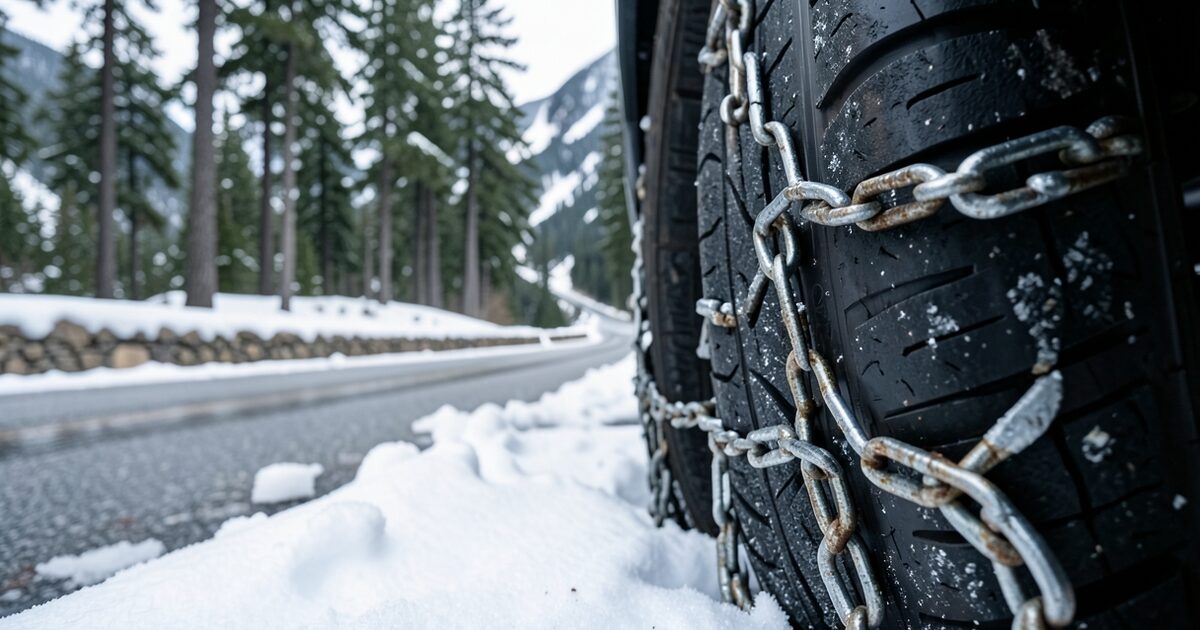
Tow straps work when a second vehicle pulls in a straight line with slack taken up slowly. Use a rated recovery strap rather than a bare chain, and keep people out of the path of the strap while it is under load. If the car is wedged deep in a ditch or the snow is still falling, a tow truck is the safer call than digging deeper.
How much food and water should stay in the car?
Ready.gov, the federal emergency preparedness site run by FEMA, recommends at least one gallon of water per person per day, with a supply for several days at home. A car kit is smaller than a home stock, so choose the number of days that matches your longest realistic wait, then add a margin for passengers and pets. Store the water in an insulated bag, because bottles can freeze in a cold trunk and burst.
Food should be ready to eat and tolerate temperature swings. Granola bars, nut packs, peanut butter crackers, and dried fruit work well. Replace them each fall, because heat and cold both shorten the shelf life of some packaged snacks, and an old bar is a poor backup at 2 a.m. on a closed road.
Where should the winter kit ride so you can reach it?
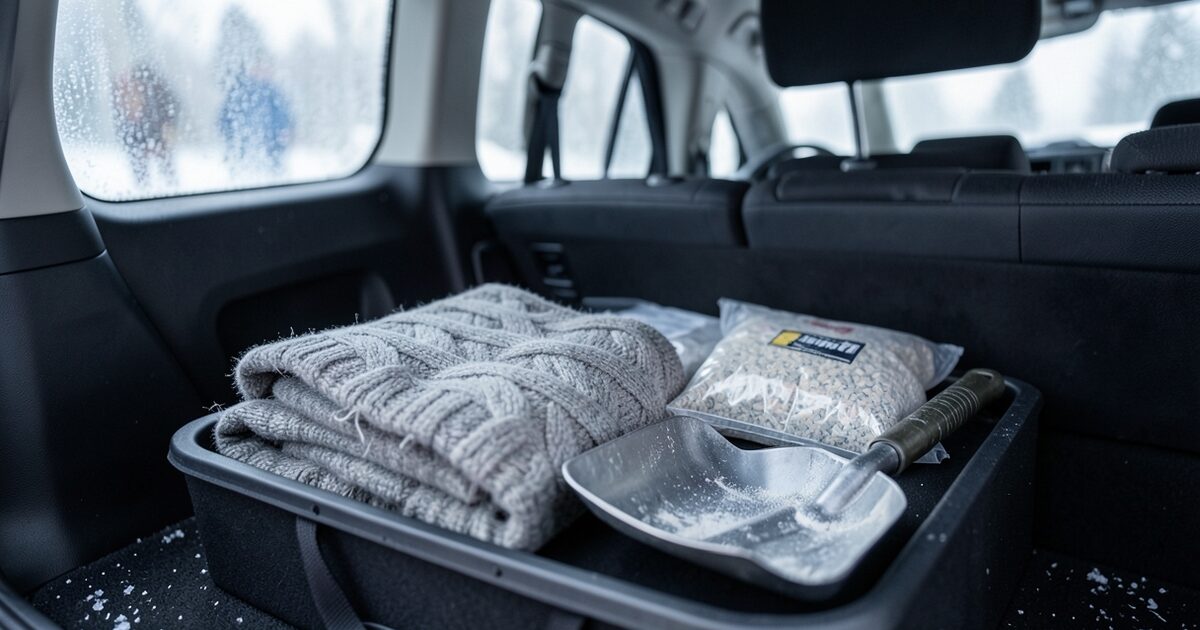
A kit buried under luggage or pushed under the rear seat is hard to use when a driver is cold, scared, and alone. Put the blanket, headlamp, and charger in the front seat area or in a bin you can reach from the driver seat. Keep the shovel and litter in the cargo area, secured so they cannot slide forward in a sudden stop.
A driver of a compact SUV might bolt a plastic bin to the cargo floor and fill it with the shovel, a bag of litter, and the jump starter. The blanket and water go in a separate tote behind the front seats. Both stay put in a hard stop, and nothing loose becomes a projectile in the cabin.
What mistakes do drivers make with winter car kits?
The most common mistake is packing the kit once and never checking it. Batteries drain, snacks expire, and the charger cable frays. The second mistake is relying on the phone alone, which can drop to a low charge within a few hours of cold weather while the screen is in use.
- Keeping only an ice scraper, with no gloves, hat, or warm layer
- Storing water in the trunk where it freezes and bursts the bottle
- Running the engine with snow packed around the exhaust pipe
- Buying a kit with no traction aid, then finding the drive wheels spin in a drift
- Assuming reflective triangles or flares are required everywhere, when state rules vary
- Leaving the jump starter in a cold car without checking its charge before the first freeze
Cold also reduces battery capacity, so a jump starter that held a charge in summer may run low in January. Test it before the first hard freeze, and keep the cable clamps clean so the connection holds.
How do you check the kit before winter arrives?
Do one full check each October, before the first storm, and again after any emergency use. Turn on each flashlight, replace batteries older than the date on the package, swap out expired food, and confirm the phone charger still works in the 12-volt socket. Fold the blanket back into its bag so it can be found in the dark.
If you already track tire and battery dates in CarDiary, add the kit check as a yearly reminder so it appears in the same list before the first storm, not after you are stuck. Your state police or state DMV website lists which emergency equipment is required in your state, so confirm the warning device rules there rather than relying on a neighbor's advice.
Winter car emergency kit questions drivers ask
Do I need a winter car emergency kit if I rarely drive in snow?
Yes, if you travel rural roads or long highway stretches where help can be far away. A small kit costs little compared with a night stranded in a cold car, and the same items also help during a summer breakdown.
Is it safe to run the engine while the car is stuck in snow?
It is safe only with the tailpipe clear and a window cracked. Run the engine in short periods, check the exhaust before each run, and turn it off when the cabin is warm.
Is road salt a good traction aid for a stuck car?
Usually not. Road salt is meant to melt ice on pavement and works slowly. Cat litter or sand gives immediate grip under a drive wheel.
How often should I replace the items in a winter kit?
Check batteries, food, and water once a year in the fall. Replace anything past its date and recharge the power bank and jump starter before the first freeze.