Snow on car roof is a winter check that many drivers skip, and the morning after a storm is when it usually happens. You wake up, scrape the windshield, start the engine, and pull out with four inches of snow still sitting on the roof. The short answer for United States drivers is to clear the whole car before you drive, roof included. Snow that slides off at highway speed can strike the vehicle behind you, and several states have written rules that name the roof.
This piece follows one driveway on one snowy morning: what the driver sees, what counts as clear enough, and where the legal lines fall. It also covers how to clear a roof without damaging the paint, what to do when the snow has turned to ice, and the mistakes that keep repeating each winter.
What a Snowy Driveway Looks Like at 7 a.m.
Picture a 2019 Honda CR-V parked outside a house in western Pennsylvania after an overnight storm dropped about six inches. The windshield has a thin crust, the hood has a soft layer, and the roof carries the most snow because nothing on it sheds the load. The driver brushes off the glass, clears the side windows, and leaves. From the driver's seat the roof is out of sight, which is why it gets ignored.
Snow on a roof does not stay put once the car moves. Air rushing over the body lifts loose snow and pushes it backward, and braking or a bump in the road can shift a packed slab. A roof that looks fine in the driveway can release a sheet at the first stop sign.
The decision is simple. If you can see any snow on the roof, the car is not ready to drive. Clearing the roof takes two or three minutes with a brush, and that is a small price compared with a windshield that cracks behind you on the highway.
Is It Illegal to Drive With Snow on Your Car Roof?
It depends on the state, and the rules are not uniform. Coverage of state codes lists a group of states, including Connecticut, Michigan, New Jersey, and Pennsylvania, that can cite drivers who leave snow on the vehicle. The lists in published summaries do not fully agree, so check the current text of your own state's vehicle code before relying on any single article.
Pennsylvania is the clearest example in the coverage. Drivers are expected to make reasonable efforts to remove snow and ice from the hood, trunk, and roof within 24 hours after snowfall stops, and the base fine reported for a violation is $50. Connecticut's reported fine for leaving the hood, trunk, or roof uncleared is $75. New York and Washington, D.C. are reported to have no statute that names the roof, which does not make a snowy roof safe to drive with. An officer can still stop a vehicle whose view is blocked.
To check your own state, search for your state's vehicle code with the phrase snow or ice on vehicles, or start from your state DMV or state police website. Section numbers differ from state to state, so use the official code text rather than a summary.
Why Snow on a Car Roof Becomes a Hazard for the Car Behind
The danger is physical, not just legal. A sheet of packed snow or a slab of ice is heavy, and it can slide when the car accelerates, brakes, or hits a dip in the road. The National Weather Service warns that snow left on a roof can blow off while the vehicle is moving and endanger drivers behind it. Reports of ice flying off a vehicle roof and breaking a truck's windshield have appeared in AccuWeather coverage, which is the kind of impact that turns a minor delay into a crash.
Following distance matters too. Winter driving guidance from the National Weather Service and automotive safety writers advises extra space between vehicles because stopping distances grow on snow and ice. A driver following a car with a loaded roof cannot predict when that load will move, so the safest gap is the one that leaves room to react.
Liability follows the falling object. If snow or ice leaves a vehicle and causes damage or a crash, the driver whose car it came from can face a claim, and a citation may follow under state rules. Insurers and courts look at the facts, including whether the driver could see the roof was loaded before setting off.
How to Clear the Roof Without Damaging the Car
Work in a fixed order so that loose snow does not fall back onto areas you have already cleared. Start with the roof, then the hood, then the glass, and finish with the mirrors and lights.
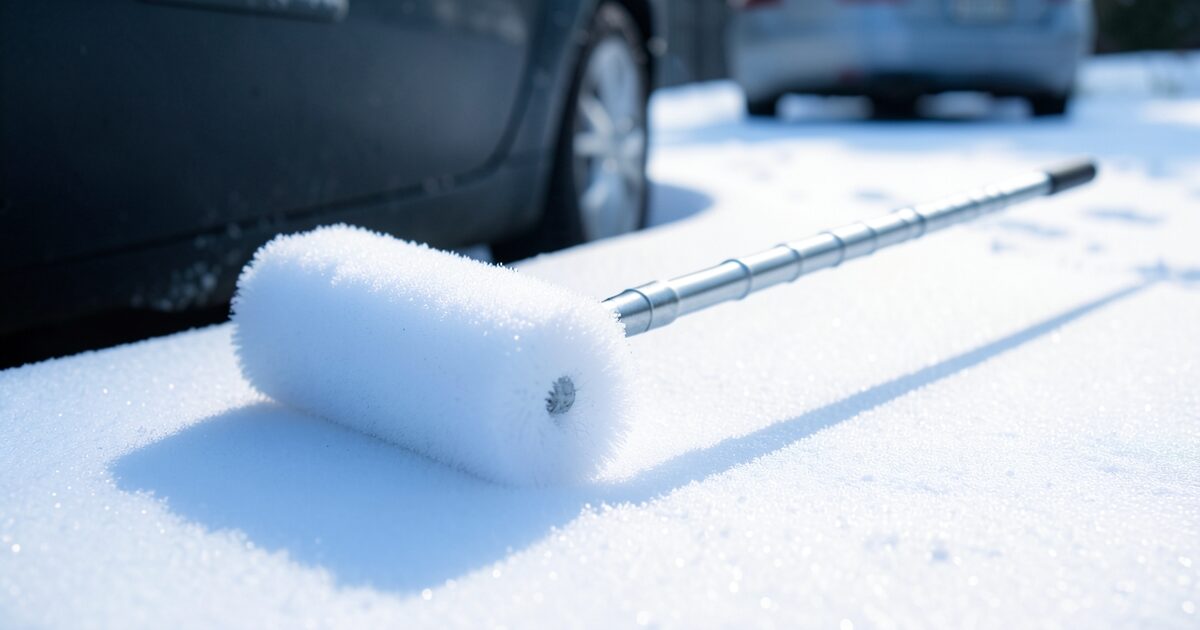
- Clear the roof first with a foam-head snow brush or a roof rake made for cars. Foam and soft bristles are gentle on clear coat, while a hard shovel or metal ice scraper can leave marks.
- Brush the hood, then the windshield, rear window, and side windows. Clear the side mirrors so you can see the lanes beside you.
- Clear the rear license plate and every light. A covered brake light or plate hides the car from drivers behind you.
- Knock snow off the wiper blades and lift each blade to check that it moves freely. A frozen blade can tear when you switch the wipers on.
- Start the engine, run the defroster, and wait until the glass is clear before pulling out.
Do not pour hot water on a cold windshield to speed things up. The sudden temperature change can crack the glass, and the water refreezes on the road when you leave the driveway.
What to Do When the Roof Has Ice, Not Snow
Freezing rain and sleet leave a glaze that a brush will not move. Do not climb onto the roof or chip at the glaze with a metal scraper. A slip on a slick roof is a serious fall, and the scraper will mark the paint.
If the car is parked under cover or in a garage, wait for the glaze to soften as the car warms up. If the car has to move before the ice softens, break the sheet into pieces with a plastic scraper, start from the edge of the roof, and keep your speed low. Expect a slab to shift at the first brake application, and leave extra following distance.
Next time, park under cover when the forecast shows freezing rain, since a carport or garage keeps the roof from glazing overnight. A driveway under a gutter that drops ice onto the car also deserves a different parking spot in a storm.
Mistakes That Keep Turning Up on Winter Mornings
Most snow-related incidents on the road start with a small shortcut in the driveway. These are the mistakes that come up most often:
- Clearing a small window in the windshield and leaving the rest of the glass and the entire roof.
- Assuming a short trip to the store is safe, when falling snow does not depend on distance.
- Using a hard ice scraper on the paint or on the roof edge, which leaves scratches that show up in spring.
- Parking under trees or a roof edge that drops snow onto the car overnight, then clearing only the windshield.
- Forgetting a roof rack or roof box. Snow on a rack adds weight and gives the wind more to lift.
Snow that blows into a garage when the door opens is another common surprise. It melts on the roof, refreezes overnight, and sets up the same problem the next morning.
Keeping Winter Visibility Parts on a Schedule
The morning after a storm is when wiper blades, washer nozzles, and exterior lights take the most abuse. Beam, hybrid, and conventional wiper blades each handle ice and snow differently, and a worn blade can smear the glass even after you have cleared it, as covered in this comparison of wiper blades for winter.
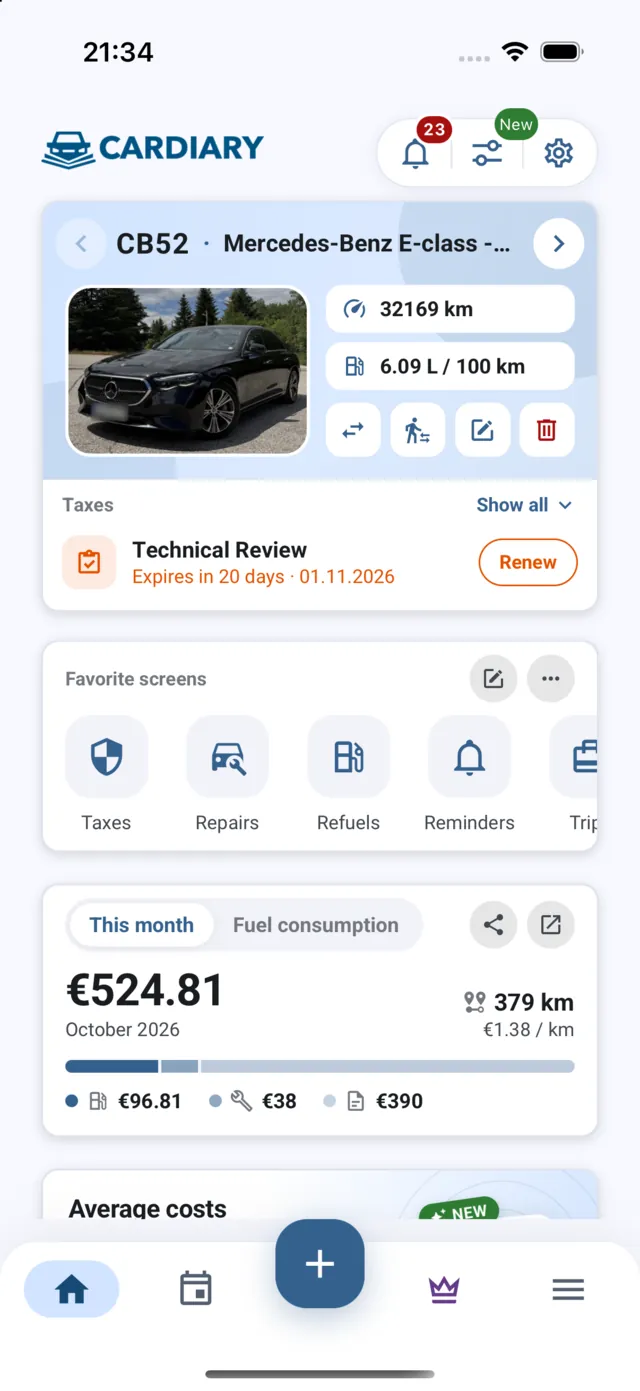
CarDiary can serve as a service log for these winter parts, keeping the date of each blade or bulb change next to your other maintenance so you can see when a set was last replaced before the next storm.
Frequently Asked Questions About Snow on Car Roof
Can I drive with a little snow on the roof?
Not safely, and in some states the law does not allow it. A thin dusting may blow off at low speed, but you cannot predict when a larger layer will move. Clear it before you leave.
Do I need to clear ice as well as snow?
Yes. Ice bonds to the roof and can break free in one piece, which is the most dangerous form for drivers behind you. If it will not come off with a brush, wait for it to soften or break it up with a plastic scraper.
Will brushing snow off damage the paint?
A foam or soft-bristle brush generally does not, while a hard shovel, a metal scraper, or a rough cloth can scratch the clear coat. Brush gently and avoid dragging the brush across a dry, gritty roof.
Can police stop me for snow on the car?
Yes. In states with a roof rule, an officer can cite the driver for the snow itself. In other states, an officer can stop a car when snow blocks the driver's view or falls into traffic, and that stop is usually about visibility.
Who pays if falling snow damages another car?
The driver whose vehicle shed the snow can be liable for the damage, usually through auto liability insurance, and the outcome depends on the state and the facts. Clearing the roof before you drive is the simplest way to avoid that claim.