Blowing snow driving is a different job from driving through falling snow. On a high plains interstate, wind lifts snow that is already on the ground and throws it across the lanes, so the road can look clear for a mile and then vanish in a few seconds. Forecasters flagged a storm for the Plains and Midwest around the Thanksgiving holiday, from November 25 through 27, with I-25, I-70, I-76 and I-80 in the risk zone. If you cannot see the lane lines or the taillights ahead, slow down, switch to low beams, and get fully off the travel lanes before you stop.
Most drivers who search this topic are already on the road or about to leave. The useful answer is a sequence: what to do in the first few seconds, what to check on the car the day before, and when a closure means you should wait rather than push on.
How blowing snow driving differs from falling snow
Falling snow reduces visibility from above, and you can usually still see the road surface between flakes. Blowing snow works from the ground up. A ground blizzard can sit only a few feet high, which is why the sky overhead can look clear while the lanes disappear in front of the bumper.
Picture a crossover, such as a Subaru Outback, heading east on I-80 in the afternoon. The pavement is dry near Cheyenne, then the road crosses an open stretch where the wind has pushed a drift over both eastbound lanes. The white band hides the lane lines and the reflector posts, and the taillights of the car ahead turn into a gray smear. The driver who brakes hard at that moment is the one most likely to spin.
The pattern repeats on open high ground, in cuts through hills, and on bridges where wind speeds up. Late-day light in November is low and flat on snow, which makes the edge of the road harder to pick out. Treat each exposed stretch as its own small hazard, not as the end of a bad section.
Can I keep driving when I cannot see the lane lines?
Keep moving only while you can still track the road edge or the vehicle ahead. If both are gone, your job changes from making progress to getting out of the lane. Work through these steps in order:
- Lift off the accelerator gradually. Do not brake hard, since sudden braking on packed snow can start a skid.
- Switch to low beams. High beams throw light back at you off the snow and cut contrast.
- Turn on the defroster and wipers so the windshield does not fog while you slow down.
- Look for the right shoulder, an exit ramp or a rest area, and move onto it with your turn signal on.
- Stop with the car fully off the travel lanes, set the parking brake, and keep your seat belt on.
If there is no shoulder, stop as far to the right as you can, and only when you truly cannot see. Hazard lights are for when the car is stopped off the road. Flashers on a car that is still creeping along can confuse drivers behind you, who may think you are braking.
What to check on the car before a long plains run
Most of the work happens in the driveway, a day before you leave. The checks below take about 20 minutes and cover the parts that matter most when the road is covered by wind-driven snow.
- Washer fluid: use a blend labeled for low temperatures. Many winter blends are rated to about minus 20 F, so read the label. Fill the reservoir completely, because the sprayer empties fast in dirty snow.
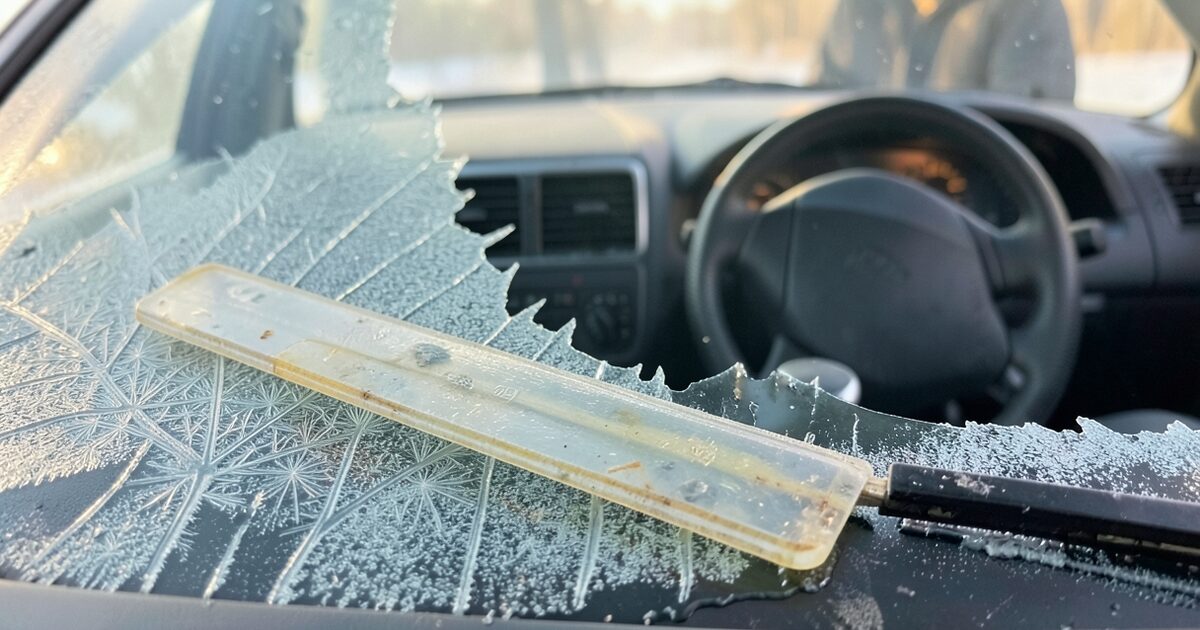
- Wiper blades: replace them if they streak, skip, or leave a film. A smeared windshield makes snow glare much worse.
- Tire tread: many states set the legal minimum at 2/32 inch, but 4/32 inch or more gives noticeably better grip in snow. Check several spots across each tire, not only one.
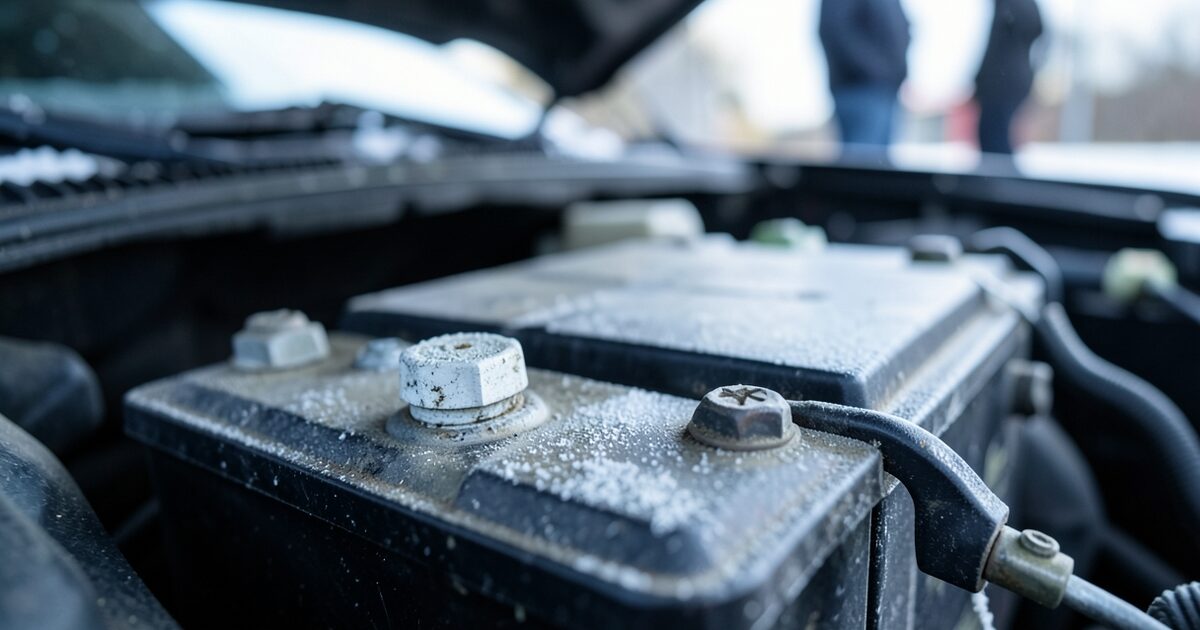
- Battery: cold reduces battery output. Test it before the trip if the battery is more than about three years old.
- Fuel: keep at least half a tank, so you can run the heater if you get stuck and cannot leave the car right away.
Check the route before you leave. Pull up the 511 map for each state on your route and note which sections have a shoulder wide enough to stop on. Those spots become your fallback stops if the wind builds faster than the forecast.
If you record tire changes, battery swaps and wiper replacements in CarDiary's service log, you can see the last date each part was replaced before you leave instead of guessing from memory.
What to do if the car gets stuck in a drift or stalls on the shoulder
Stay with the car unless you can see a building or a plowed lane within a few steps. In a whiteout, people lose their bearings quickly, and a walk that looks short can end in a ditch. Tell someone your route and your expected arrival time before you leave the interstate.
Exhaust blockage is the danger that catches people. If the engine runs while the tailpipe is buried, exhaust can enter the cabin. Clear the tailpipe and the snow around the exhaust before you run the engine, and check it again every time the car is partly buried. Common guidance is to run the engine for about 10 minutes in each hour, with a window cracked open a little, and only while the fuel allows it.
Turn on the hazard lights and the dome light so plows and other drivers can see the car. Call 911 if anyone is hurt. Otherwise, contact the state highway patrol or the state DOT line to report your location and the mile marker.
Should I take the detour or wait out the closure?
Interstate closures in high wind usually come from drifting and poor visibility, not from the pavement alone. State DOTs close a section when crews cannot keep it open, and a closure can last for hours. A detour on a two-lane county road can be slower, exposed to the same wind, and sometimes closed as well.
Check the official status before you commit. In Wyoming, the WYDOT 511 service at wyoroad.info lists closures and camera views. Other states run their own 511 systems, and the National Weather Service office for your area posts blizzard and high wind warnings. Read the direction and mile markers carefully, because an eastbound closure does not close the westbound lanes.
Here is a practical rule of thumb. If the detour adds more than an hour, crosses open high ground, or puts you on a road with no services, wait in a town with a motel and fuel. A driver who waits out a closure in Rawlins or Laramie arrives safer than one who spends the night in a drift on a county road.
What mistakes do drivers make in blowing snow?
- Following taillights too closely. The car ahead may be pulling off, and you will not see it stop until it is too late.
- Speeding up to get out of the white band. Less time to react is the bigger risk, not the storm itself.
- Stopping in the lane with the lights off, because the driver thinks the car is still visible from behind.
- Using cruise control on snow-covered pavement, which holds the throttle steady when the wheels need to slow.
- Trusting a navigation app's route over a posted closure sign.
The most common mistake is the one that looks like progress. A driver who keeps going at 40 mph through a drift zone because the car ahead is still moving is betting that the next mile will be better. Often it is not, and the moment to stop is before the lanes disappear, not after.
Blowing snow driving questions drivers ask
Is it safer to stop or keep moving in a whiteout?
If you can still see the road edge or the taillights ahead, keep moving slowly. If you cannot see either, get fully off the travel lanes and stop, because a stopped car in a live lane is the bigger hazard.
Should I use hazard lights while I drive in blowing snow?
Not as a replacement for low beams. Use the hazard lights once you are stopped off the road so other drivers know the car is not moving.
Does all-wheel drive help in blowing snow?
All-wheel drive helps you start and accelerate on snow. It does not shorten stopping distance or help you see the lane lines, so the decision to slow down and pull off stays the same.
How far should I stay behind the car ahead?
Leave several times your normal following distance. Blowing snow can hide a car that is slowing, and you need room to react without braking hard.
How do I know if an interstate is closed before I leave?
Check the state 511 service for your route, such as WYDOT at wyoroad.info in Wyoming, before each leg of the trip. Closures can start after you have left, so check again at each fuel stop or rest area.