Road salt car rust usually starts underneath, where brine splashes up, collects in frame seams and dries into a film that holds moisture against bare steel. If you drive on treated highways, rinse the underbody after salty trips when the temperature is above freezing, then check the parts that rust can make unsafe. That two-step routine covers most of what a winter car needs.
This guide is written for drivers in states that salt or brine their roads. It explains when to rinse, what to look for under the car, which rust spots need a shop, and how to keep a dated record. It does not cover structural frame repair or rust treatment for classic cars, which belong with a body shop.
How does road salt car rust start underneath?
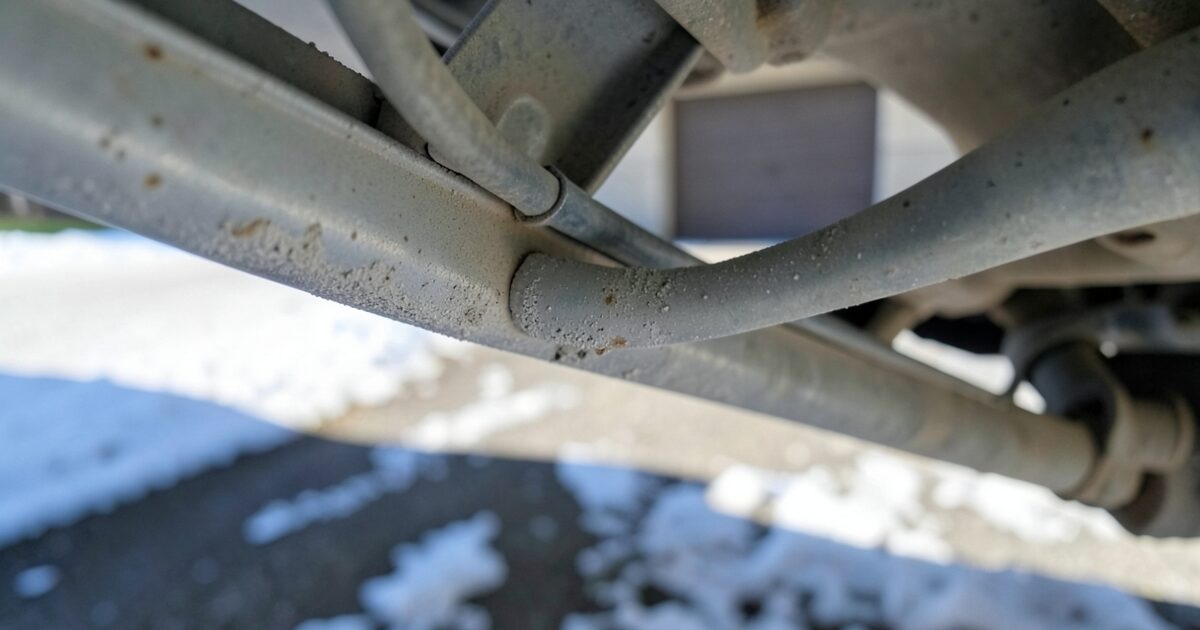
Salt does its damage where water sits. Spray from the front tires pushes brine into the wheel wells, and it settles on the rear axle, the rocker panels and the crossmembers. Corrosion speeds up where paint or factory undercoating has chipped, and around welds, bolt heads and the clamps on brake and fuel lines.
Many agencies pre-treat roads with salt brine, sodium chloride, or calcium and magnesium chloride. Chloride products attract moisture from the air, so the road can stay damp even on a dry day. A car parked on a snowy street can collect residue even if the driver never used a highway that week.
Consider a 2017 sedan that commutes 30 miles each way on a state highway treated with brine. The owner sees a white crust on the rear wheel wells in January and a bubbling spot on the frame in March. The car never looked dirty from the side, which is why the underbody check matters more than the paint.
When should you rinse the underbody after salt?
Rinse after any drive on salted pavement, and at least once a week while salt stays on the roads. Pick a day when the forecast stays above freezing, so water runs off instead of freezing in door seams, latches and the fuel door. A rinse at 20 degrees Fahrenheit can leave ice in exactly the places you wanted clean.
In a self-serve bay, start under the rocker panels, then move to the wheel wells, the subframe and the rear axle. Keep the wand away from the alternator, exposed electrical connectors and the air intake. Do not hold a pressure washer close to brake lines, wiring harnesses or sensor housings, because a sharp jet can strip coatings and damage connectors.
What should you check under the car after a salty winter?
Look under the car with a flashlight once a month during salt season, and again in spring. Start with the parts where corrosion can turn dangerous, and tap suspicious metal with a dull screwdriver handle when you see a flaking patch.
- Brake lines along the frame rails and rear axle, looking for flaking, bubbling or a damp film near fittings.
- Flexible brake hoses at each wheel, checking for cracks, swelling or any sign of fluid seepage.
- Fuel lines and the fuel tank straps, which sit in the path of brine that pools on the pavement.
- Frame rails and crossmembers, checking for soft spots after tapping.
- Rocker panels, rear wheel arches and the floor pan under the mats.
- Subframe bolts, suspension mounts and exhaust hangers.
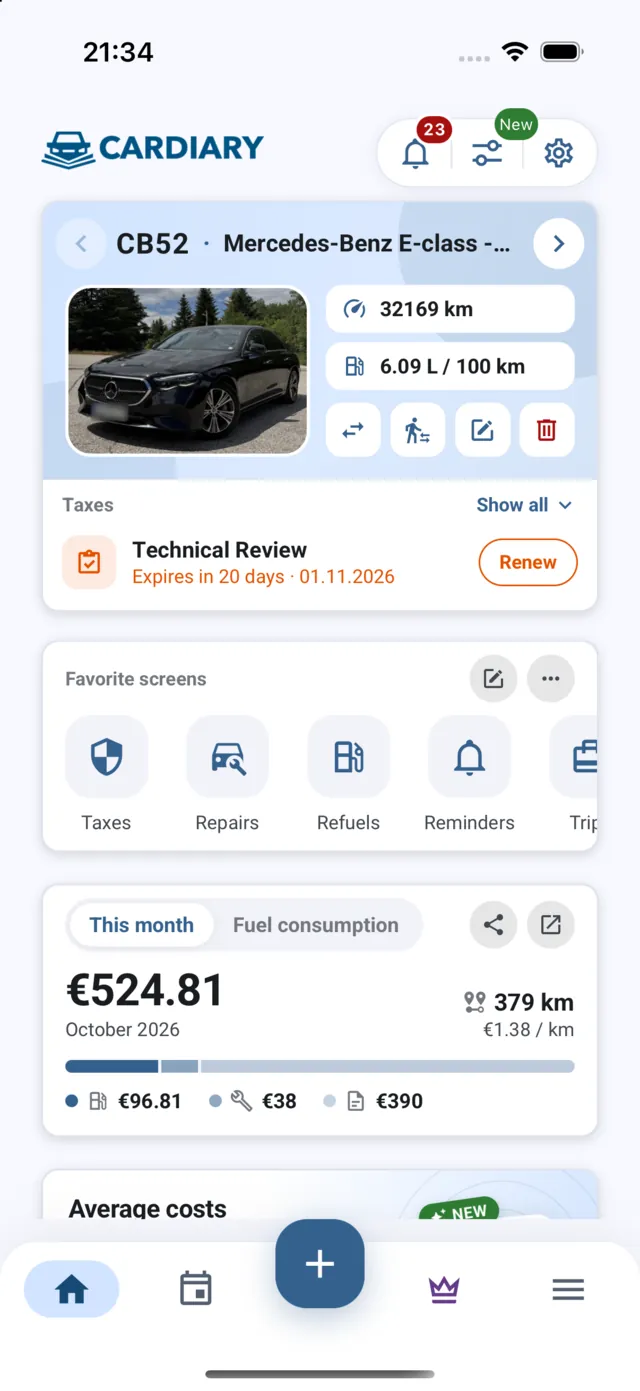
Write down what you find with the date and the mileage. Recording each underbody rinse and any brake-line repair in the CarDiary service log keeps those dates tied to the car, so a spring comparison is easy. A second look shows whether a spot is growing or holding steady, and that trend tells you more than one photo.
Which road salt rust is a safety problem?
Surface rust that scrapes off and leaves solid metal underneath is a maintenance issue. Scale that flakes in layers, holes you can poke with a fingertip, or a brake line that weeps fluid belongs in a different category. Those spots affect brakes, fuel delivery or the strength of the structure, and they need a shop visit before the next storm.
Brake lines deserve the most attention. A pinhole can leak slowly, so the pedal feels soft or the brake warning light appears only after the fluid is low. If the brake fluid level keeps dropping between top-ups, have a technician inspect the full line run to each wheel, not just the spot you saw.
A worked example: a driver spots bubbling on a rear brake line in early March. The line still holds pressure, but the rust reaches the fitting. The shop replaces that section the same week, which is a planned repair rather than a roadside emergency that needs a tow.
Does an undercarriage wash beat a home rinse?
Three options cover most drivers, and each one leaves a gap.
- Automatic wash with an undercarriage spray reaches the underside quickly and works well for a weekly run. Jets may miss the inside of the rocker panels and the back of the wheel wells.
- Self-serve bay with a high-pressure wand lets you target the rear axle and wheel wells, and you can take your time. The work falls to you, and warm water may be hard to find on a cold day.
- Touchless wash without an undercarriage option cleans the paint but leaves most of the salt under the car, so it is the weakest choice in winter.
For many drivers, an automatic wash with undercarriage spray once a week, plus a self-serve rinse after the worst storm, covers the gap. A car parked on a street that gets plowed needs more attention at the wheel wells than a garaged car.
Are factory coatings and rust inhibitors worth it?
Many new vehicles leave the factory with an underbody coating, and some dealers offer an aftermarket rust inhibitor. A coating only protects clean, dry, undamaged metal. Applied over existing rust or a chipped spot, it can trap moisture and speed corrosion underneath. Ask the shop what surface it prepares, which areas it covers, and whether the product is safe near brake and fuel lines.
If you keep a car through many winters, check the coating each spring. Touch up chips with a product made for the job, and keep the drain holes in rocker panels and door bottoms clear so water can leave the body. Blocked drains are a common reason rust starts inside a panel where nobody looks.
What road salt mistakes do drivers make most?
- Washing only the top of the car while the rocker panels and wheel wells stay caked with brine.
- Rinsing in freezing weather, so water refreezes in latches, seals and the fuel door.
- Assuming a rust-proofed car will not rust, then skipping the spring check.
- Leaving wet slush on the underbody for days because the car sits outside.
- Treating a soft brake pedal as a minor issue instead of a possible fluid leak.
Another mistake is waiting for a visible hole before acting. By that point the metal around a bolt or line has often lost strength, and a small patch becomes a section replacement. Acting on the first flaking spot keeps the repair small.
Road salt car rust questions drivers ask
Can road salt rust a car in one winter?
Yes. Surface rust can appear in one season, especially where paint is chipped. Structural damage usually builds over several winters, which is why an annual check matters.
Is a rust inhibitor enough to protect the underbody?
No. An inhibitor helps only on clean, dry metal. Rinsing and inspection still matter because the salt keeps arriving.
Should I wash the car when it is below freezing?
Avoid it when you can. Pick a warmer day, or use a self-serve bay and dry the car afterward, then check that the latches and door seals still work.
Does road salt affect electric vehicles?
Yes. The battery pack enclosure, brake lines, suspension and underbody panels face the same salt. Check the owner's manual for underbody guard care and any manufacturer washing guidance.