Winter storm warnings went up on November 18, 2026, for high terrain in southern Oregon. The National Weather Service office in Medford warned of 10 to 18 inches of snow above 4,000 feet, with strong gusts. If you drive a passenger car over the high passes this week, the question is simple: do you need chains, traction tires, or neither? In Oregon the answer comes from the chain sign posted on the road, not from your drivetrain or your tires alone.
For a passenger vehicle rated 10,000 pounds gross vehicle weight or less that is not towing, Oregon rules allow traction tires in place of chains when the sign permits it. An all-wheel drive or four-wheel drive vehicle can be exempt, but only when it meets every condition ODOT lists. The sections below cover what each sign means, how to fit chains, and where drivers get caught.
What the Oregon chain sign asks of your car
ODOT uses text signs and lighted message boards at chain-up areas. The current sign overrides the general rule, so read the wording before you start up the grade. Three sign types matter most for a car or crossover.
- Carry sign: you must have chains or traction tires in or on the vehicle, sized correctly and in sufficient number.
- Traction sign: a car rated 10,000 pounds GVW or less that is not towing must use chains or traction tires.
- Chain requirement sign: a light vehicle that is towing must use chains, and a vehicle over 10,000 pounds GVW must use chains when the sign calls for it.
The carry sign is the one drivers miss. If you have all-season tires and no chains in the trunk, you are out of compliance even when the road ahead looks clear. Check that chains fit your tire size before the first snow forecast, not at the chain-up pullout in the dark.
Does an all-wheel drive car need chains in Oregon?
Sometimes not, but the exemption is narrow. ODOT exempts a four- or all-wheel drive passenger vehicle only when all of these conditions are true:
- Its unloaded weight is 6,500 pounds or less.
- It drives both the front and rear wheels.
- It carries chains.
- It has mud and snow, all-weather radial, or traction tires on all four wheels.
- It is not towing and is not driven in a way that causes a loss of traction.
Consider a hypothetical midsize AWD crossover that weighs 4,300 pounds unloaded, with a mix of all-season and snow-rated tires and no chains in the back. It fails two of the five conditions, so the drivetrain does not save it. Matching snow-rated tires on all four corners and a set of chains in the cargo area would close that gap.
Can traction tires replace chains on a passenger car?
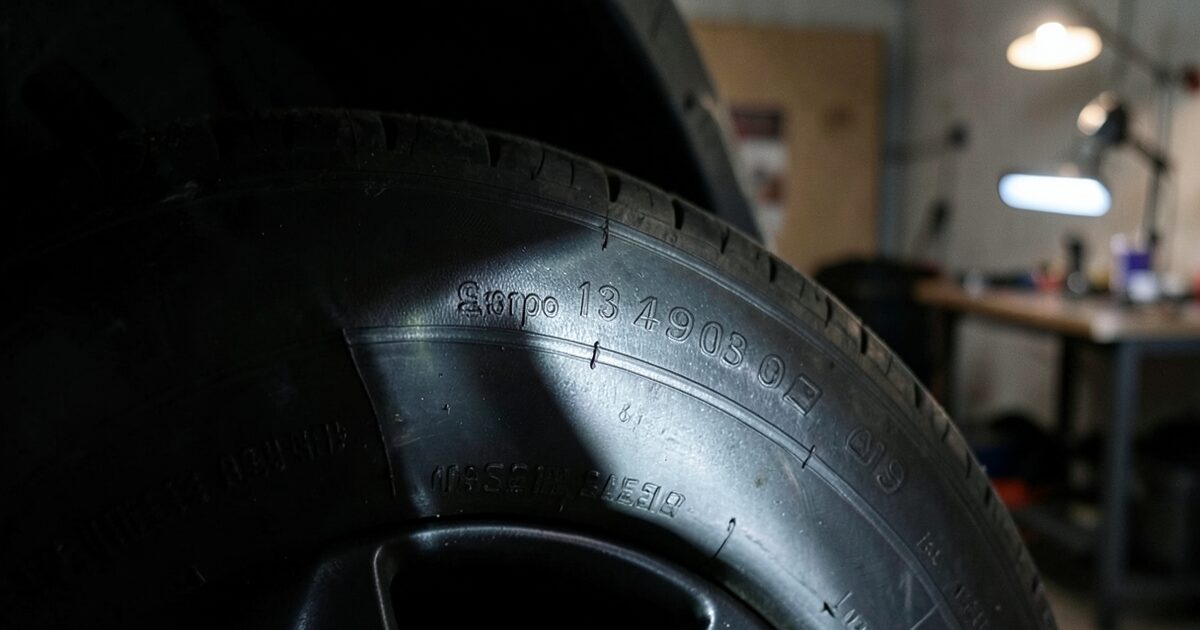
Yes, for a passenger vehicle rated 10,000 pounds or less that is not towing, when the sign allows traction tires. ODOT defines qualifying traction tires as studded tires, retractable studded tires, or other tires the tire industry considers suitable for severe snow. Qualifying tires carry the mountain and snowflake emblem on the sidewall.
That emblem is the test, not a general M+S label. Check the sidewall for the symbol before you rely on the tires. Studs must project about 0.04 to 0.06 inch past the tread, and retractable studs must project at least 0.04 inch when extended.
If you track tire purchases in a spreadsheet, a CarDiary service log entry with the fitting date and tire type keeps that record next to your other maintenance, so you can see when the set went on without digging through receipts.
How do you fit chains on a front-wheel drive car?
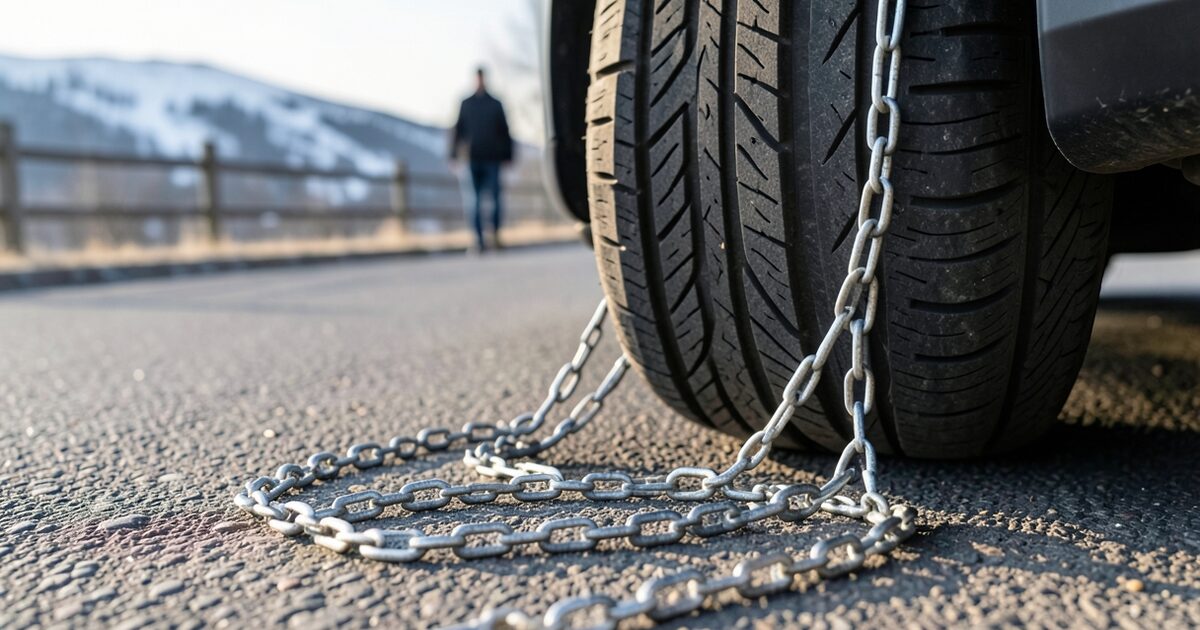
ODOT’s diagrams place chains on one tire on each side of the primary drive axle. On a front-wheel drive car that means the front tires, and on a rear-wheel drive car it means the rear tires. A braked trailer needs chains on one tire on each side of one axle as well.
- Pull onto a level, dry spot off the travel lane and turn on the hazard lights.
- Lay the chains flat behind or in front of the drive tires, following the chain set’s own instructions.
- Drape the chain over the tire, connect the hooks, and fasten the tensioner on the inside of the wheel.
- Drive forward a few feet, stop, and tighten the chains again.
- Recheck after a few miles, because loose chains can strike fenders and suspension parts.
Practice in a driveway before the trip. A driver who has only fitted chains in daylight may struggle at night in wind, with snow drifting onto the tire and the hands cold. Five minutes of practice at home is cheaper than a roadside delay on the grade.
What happens when the sign says chains required on all vehicles?
In very bad conditions ODOT can post a conditional closure that requires chains on all vehicles, regardless of drive type or tire type. On I-5 through Siskiyou Pass, the sign may read “Chains required on all vehicles excluding four wheel drive vehicles unless towing.” The exclusion means four-wheel drive vehicles are not included, but ODOT’s summary states that traction tires are not sufficient under that closure.
Read the full sign text before you commit to the pass. A two-wheel drive car with snow tires is still expected to chain up under that closure. Plan a second route or a later departure if the sign will not let you proceed without chains in the car.
What mistakes do drivers make on Oregon chain-up stretches?
- Assuming AWD is enough without checking all five exemption conditions.
- Carrying chains that do not match the tire size, which fails the carry sign even with chains in the trunk.
- Waiting until the chain-up area in whiteout conditions to start fitting chains with traffic behind.
- Towing a trailer and assuming the traction-tire rule for a non-towing car still applies.
- Ignoring a conditional closure and driving past the barrier.
ODOT treats disobeying chain or traction tire signs as a class C traffic infraction. Commercial drivers may face a class A violation for failing to carry or use chains and traction tires. The ODOT page does not list fine amounts, so check the current schedule with the court that handles traffic cases in your county.
Oregon chain requirements questions drivers ask
Do I need chains in Oregon with an all-wheel drive car?
Only when the sign requires them or when your car misses one of ODOT’s exemption conditions. An AWD vehicle is exempt only if it meets all five conditions, including carrying chains and having snow-rated tires on all four wheels.
Are studded tires legal in Oregon in December?
Yes. Studded tires are legal from November 1 through March 31. ODOT encourages drivers to use them only when conditions call for it.
Can I use traction tires while towing a trailer?
No, not as a substitute for chains. For a towing passenger vehicle, the sign’s chain requirement applies, and the trailer also needs chains on one axle where the rules call for it.
What does the Siskiyou Pass sign that excludes four-wheel drive mean?
Four-wheel drive vehicles are excluded from the chain requirement unless they are towing. Other vehicles must chain up under that closure, and traction tires are not enough.