A check engine light that flashes while you drive is a different problem from one that stays lit on the dashboard. A flashing light usually means the engine is misfiring badly enough to damage the catalytic converter, so you should reduce load and get off the road as soon as it is safe. A steady light is usually less urgent. It means the engine computer has stored a fault code, and the car can often be driven to a shop within a few days if it runs normally.
The short answer to the question most drivers type into Google is this: a steady light with normal engine behavior is usually fine for a short trip to a shop, while a flashing light is a reason to stop driving soon. Either way, the light only says a fault exists, not which part failed, so the code still has to be read. The sections below cover how to sort the situation on the road, how to read the code without guessing, and which mistakes turn a small fault into a larger repair.
What a Flashing Check Engine Light Means
Federal emissions rules have required OBD-II diagnostics on US passenger cars since 1996. The system watches for engine misfires, and a flashing check engine light is its way of saying a cylinder is misfiring hard enough to push unburned fuel into the exhaust. That fuel can ignite inside the catalytic converter and push its temperature far beyond normal, which is why a flashing light is treated as urgent.
Driving a few miles at reduced load to a safe place is generally considered a reasonable choice. Driving on a flashing light for days is not. Lift off the throttle, avoid hard acceleration, skip highway speeds if you can, and do not tow a trailer while the light is flashing.
Picture a driver in a 2016 Chevrolet Equinox heading home on Interstate 35 near Austin. The light starts flashing on the on-ramp, and the engine stumbles at low throttle. The sensible move is to ease off, signal, and take the next exit to a parking lot. Then call a tow or go to a nearby shop rather than finishing the 30-mile drive.
What a Steady Check Engine Light Usually Means
A steady light means the computer has detected a reading outside its normal range, or a problem that has happened often enough to store a code. It does not always mean the engine is in danger. Many steady-light faults are minor, such as a small evaporative emissions leak or a sensor drifting out of range. Others matter because they affect fuel economy or drivability, and those are worth fixing soon.
Common triggers include a loose or damaged fuel cap, a failing oxygen sensor, a worn spark plug or ignition coil, a vacuum leak, and a mass airflow sensor that reads incorrectly. Some of these repairs are inexpensive and some are not. You cannot tell which one you have from the light alone, which is why the code matters more than the light itself.
If the car runs normally, a steady light is usually a reason to book a diagnostic within a few days, not to tow it today. Watch for rough idle, hesitation, a drop in fuel economy, or a slow response from the throttle. Any of those makes the visit more urgent. In states that test emissions through the OBD port, a lit check engine light can cause a failed test, so check your state's rules with its DMV or environmental agency before an inspection is due.
Pull Over or Keep Driving: A Decision Path
Use this order when the light comes on. It is built around what the engine and dashboard are telling you, not around the light color alone.
If the light is flashing and the engine is rough, losing power, or shaking, pull over at the next safe spot, switch the engine off, and call for a tow.
If the light is flashing but the engine runs smoothly, reduce speed, avoid hard acceleration, and drive straight to a nearby shop. Skip errands on the way.
If the light is steady and the engine runs normally, keep driving, check the fuel cap, and book a code read within a few days.
If the temperature gauge climbs, the oil pressure warning appears, or the battery light comes on with the check engine light, stop as soon as it is safe. Those warnings outrank the check engine light.
If you smell fuel, see smoke, or hear grinding or knocking, stop driving. Do not keep restarting the engine to test it.
How to Read the Code Without Guessing
The OBD-II port is usually under the dashboard on the driver's side, near the steering column. A code reader plugs into it and returns a five-character code such as P0301, which means a misfire on cylinder 1. Write the code down exactly, including the first letter, because that letter names the system: P for powertrain, B for body, C for chassis, and U for network.
You have three practical ways to get the code:
Buy a handheld reader and keep it in the glove box. Basic models are inexpensive and show the code with a short description.
Ask an auto parts store to read the code. Many chains do this at no charge. Ask them to write the code down for you so you have it before any repair.
Book a diagnostic at a repair shop. This usually includes a fee and a test of the affected system, and the amount varies by shop and region.
A code points to a system, not always a single part. A P0301 misfire can come from a spark plug, an ignition coil, a fuel injector, or a vacuum leak. Ask the shop to confirm the cause with a test before you approve parts.
Common Causes Drivers Find First
Before paying for a full diagnosis, check the causes that show up most often. Start with the cheapest checks.
A loose or cracked fuel cap. Tighten it until it clicks. The light can take several normal trips to clear, and the stored code may stay until it does.
Worn spark plugs or a failing ignition coil. These often cause misfire codes in the P0300 to P0308 range, and the car may run rough at idle.
A failing oxygen sensor. This usually shows up as lower fuel economy rather than rough running.
A vacuum leak. Listen for a hiss under the hood and watch for a rough or high idle.
Catalytic converter efficiency, often shown as P0420. Treat this as a result to confirm, because other faults can set it.
One common pattern looks like this. A driver tightens a loose cap after a fill-up, and the light goes out after several days of normal driving. A code read before the fix would have shown whether the fault was an evaporative leak or a misfire, which tells you whether the cap was the whole story.
Mistakes That Turn a Small Fault Into a Bigger Repair
Most expensive outcomes start with a decision made in the first hour. These are the mistakes drivers make most often with a lit check engine light.
Clearing the code and assuming the problem is solved. The light returns when the fault recurs, and the freeze-frame data a technician uses to diagnose the fault is erased.
Driving a flashing light for a long commute because the car still moves.
Replacing parts by guesswork, such as swapping several sensors without a test to confirm which one failed.
Assuming an off light means the fault is gone. Some faults are intermittent and set the light again later.
Waiting until an inspection is due, then paying for a retest after the light is repaired.
Keep a Record of the Code and the Fix
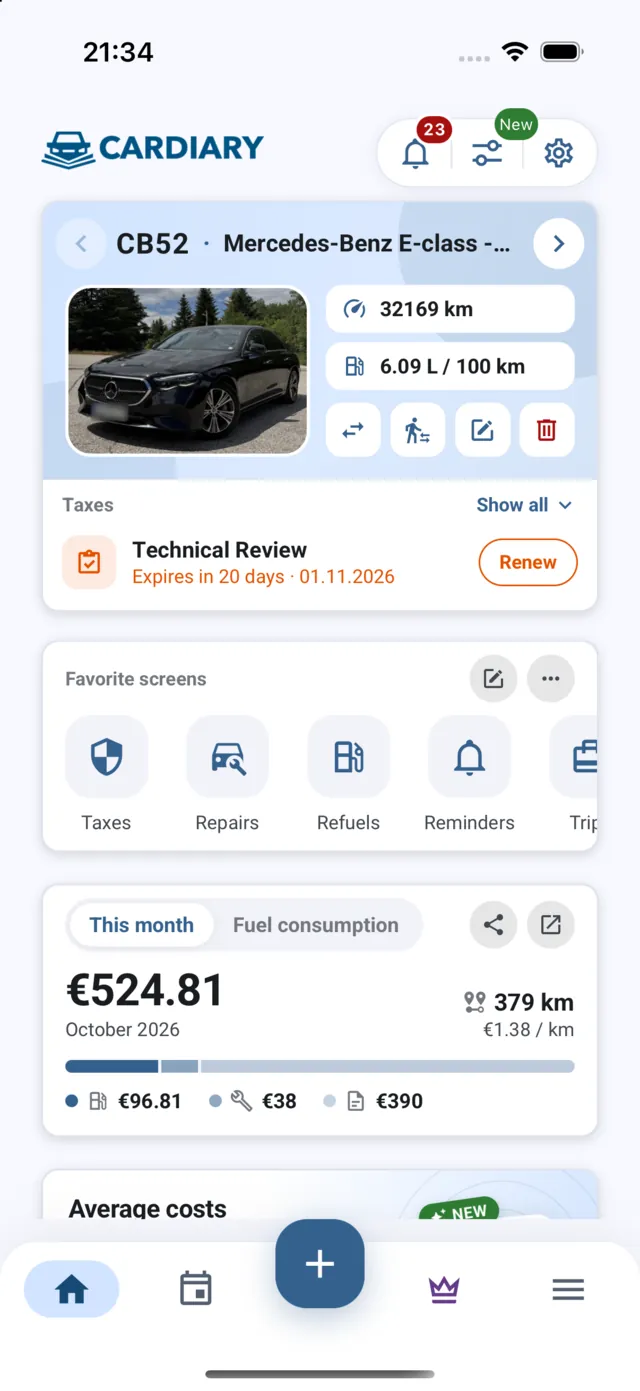
Write down the code, the date, the mileage, and what the shop found and replaced. A later technician or inspection station can use that history instead of starting from zero. A CarDiary service log does this in one place, so the repair history for a steady light, a fuel cap fix, or a spark plug change stays with the car.
Frequently Asked Questions
Can I drive with the check engine light on?
Yes, for a short trip when the light is steady and the engine runs normally. Get the code read within a few days. If the light is flashing, reduce load and stop driving as soon as it is safe.
Will the check engine light turn off by itself?
Sometimes. A loose gas cap or a minor sensor fault can clear after several drive cycles, but the stored code may remain until it is cleared or read.
Does reading the code cost money?
Many auto parts stores read codes for free. A shop diagnostic usually carries a fee, and the amount varies by shop and region.
Can a check engine light cause a failed emissions test?
In many states that use OBD testing, a lit check engine light is a failure. Confirm your state's rules with the DMV or environmental agency before the test is due.