Most US drivers ask one question once the first hard freeze shows up in the forecast: is the coolant in my car still strong enough to keep the engine and radiator from cracking? For most passenger cars, the answer comes down to the glycol-to-water ratio. A 50/50 mix of ethylene glycol coolant and distilled water is the standard fill in most US vehicles, and the label on a premixed jug usually states a protection level of about -34°F.
You can answer the question in about 15 minutes with a cheap tester strip or a refractometer, a look at the coolant reservoir, and a quick check of the coolant spec in your owner's manual. This field guide walks through those checks in the order that keeps you safe, from a cold engine to the refill and the record you keep afterward.
What the 50/50 mix protects against in a US winter
Ethylene glycol coolant does two jobs in your engine. It lowers the freezing point of the fluid so water inside the block and radiator does not expand and crack metal. It also raises the boiling point when the system runs under pressure. Plain water freezes at 32°F and boils at 212°F at sea level, so an engine running on water has almost no margin on a cold morning in Ohio, Colorado, or upstate New York.
Premixed 50/50 products are ready to pour, while concentrate is sold at full strength and must be diluted with distilled water. The number on the label is the one that matters for your car, because formulations differ by brand. Some propylene glycol products are rated differently, so read the bottle rather than relying on memory.
More glycol is not automatically better. Below about 50 percent glycol, the freeze protection drops quickly. Going much above 60 percent adds little useful protection in most climates and can reduce cooling efficiency, so the 50/50 target is the usual sweet spot.
How do I test the coolant mix at home?
Two tools work well for a driveway test. A glycol tester strip is the cheapest option and gives a rough reading. A refractometer costs more but gives a sharper reading that is easier to trust when the number is close to your local low temperature.
- Park on level ground and let the engine cool for at least an hour. Hot coolant under pressure can spray when a cap or hose is opened.
- Check the reservoir level first. If the level sits between the MIN and MAX marks, draw a small sample from the reservoir with the tester's pipette or a clean turkey baster.
- Dip the strip into the sample, or place a few drops on the refractometer lens. Read the freeze point against the scale printed on the tool.
- Compare the result with the coldest night you expect. A common rule of thumb is protection at least 10 to 15 degrees below that low, which is why a reading that looks fine in Dallas can fall short in Duluth.
- If the reading is weak, add concentrate or premixed 50/50, run the engine, let it cool, and test again. A single reading right after a top-off can mislead you.
Read the reservoir and the cap before you open anything
Most modern cars use a translucent plastic overflow tank with MIN and MAX marks. With the engine cold, the level should sit between them. A level that drops every few weeks points to a leak, not normal use, and a leak is the most common reason a 50/50 mix becomes a half-empty system in January.
- Look for crusty white, green, or pink residue at hose clamps, the radiator seam, and the base of the reservoir.
- Check the driveway or garage floor under the front of the car for damp, sweet-smelling spots after a drive.
- Inspect the reservoir cap seal. A cracked or stiff seal lets the system lose pressure and boil over sooner.
- Never open the radiator cap on a hot engine. Wait until the cap and the upper hose are cool to the touch.
Ethylene glycol is toxic to pets and children, and a sweet taste can attract animals. Wipe up drips at once and keep the jug sealed and stored out of reach.
Can I top off with plain water if I am out of coolant?
Only as a short-term fix in warm weather, and only when you have no 50/50 on hand. Plain water dilutes the mix and lowers the freeze protection. If the car sits in a cold garage or outside overnight, water left in the block can freeze and crack the engine, and that damage is expensive to repair.
Consider a driver who finds the reservoir half empty at a gas station in late October. The safe move is to buy a premixed jug that meets the spec in the owner's manual, top up to the MAX mark, and retest in the driveway after the engine has run. Distilled water is the right choice for dilution because tap water leaves mineral deposits that can clog small passages in the cooling system.
Why the coolant color and spec matter at refill
Coolant color is not a universal standard, and the same color can mean different chemistry from one brand to another. Owners should read the spec on the reservoir cap, the label on the existing fluid, or the owner's manual before buying a refill.
- Pink or red: many Toyota and Lexus models use a long-life pink or red coolant.
- Blue: many Honda and Acura models use a blue coolant with a Type 2 spec.
- Orange, yellow, or green: used across GM, Ford, and other brands depending on the engine and model year.
Mixing coolant types can form gel or sludge that clogs the radiator and heater core. If you do not know what is already in the system, a shop flush and refill is cleaner than topping off a fluid you cannot identify.
A January test on a 2014 Honda Accord in Minnesota
Picture a driver in St. Cloud, Minnesota, with a 2014 Honda Accord that has not had its coolant changed in several years. In early December, the reservoir sits near the MIN mark, and a tester strip reads protection to only about -10°F. The forecast shows overnight lows near -20°F.
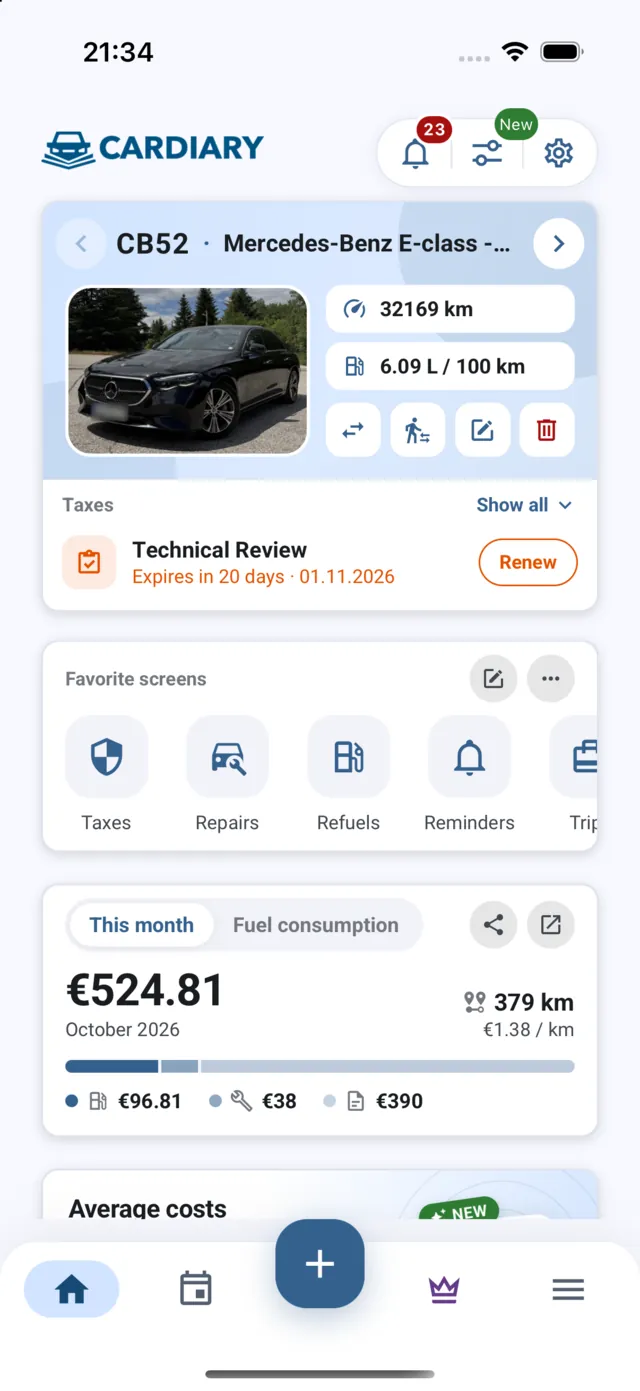
The driver checks the owner's manual, confirms the blue long-life spec, and drains a measured amount from the radiator drain with the engine cold. The reservoir is then refilled with a 50/50 mix made from concentrate and distilled water, the air is bled according to the manual, and the engine runs for a few minutes before the test is repeated. The new reading is about -34°F, and the driver records the test date, the reading, and the next coolant service due date in CarDiary, a digital vehicle cost and deadline log that replaces a note on the dashboard.
Mistakes that leave a car short of protection in January
Most winter coolant problems come from a few repeat errors that are easy to avoid once you know them.
- Testing a hot engine, or testing a sample that has been diluted by water added earlier in the day.
- Assuming the color of the fluid proves the mix is correct. Color says little about the glycol ratio.
- Using tap water to dilute concentrate, which leaves deposits in the cooling passages.
- Topping off with plain water and never retesting the system.
- Ignoring a slow leak until the reservoir is empty and the heater blows cool air.
- Skipping a retest after a hose, radiator, thermostat, or water pump repair, because the system was opened and the mix may have changed.
Winter coolant questions drivers ask
Is premixed 50/50 coolant ready to use?
Yes. Premixed 50/50 is designed to be poured directly into the reservoir, provided it matches the spec in your owner's manual. Concentrate needs to be diluted with distilled water before use.
How often should I test the coolant mix?
Test once each fall before the first hard freeze, and again after any top-off or repair. A test after a long highway drive in cold weather also confirms that the reservoir level has not changed.
Can I mix two brands of 50/50 coolant?
Only if both products meet the same spec and the same chemistry. When you are unsure, use the same brand and color that is already in the system, or have a shop flush the system.
What if the reservoir is empty and the engine is warm?
Do not drive far. Let the engine cool completely, check for a leak, and add the correct fluid only after the engine is cold. If the level keeps dropping, have a shop pressure-test the cooling system to find the leak.