Gloria Steinem spent decades as the public face of the U.S. women’s movement, yet she famously never learned to drive. In interviews tied to her 2015 memoir My Life on the Road, she said skipping the driver’s seat kept her free to talk with hosts who met her at airports and train stations—and with taxi drivers who became some of her favorite storytellers. That choice is unusual in a country built around private cars, and it highlights a split Americans still navigate: who needs a vehicle on title, and what mobility actually costs when someone else holds the wheel.
A road memoir without a garage
Steinem’s work required constant travel to campuses, rallies, and community halls. Associated Press obituaries published in September 2026 repeated the detail that she wrote about life on the road while deliberately avoiding driving lessons. For most U.S. workers, the same schedule would imply rental cars, mileage reimbursements, or a personal vehicle maintained for highway miles. Steinem’s model—hosts, trains, and for-hire cars—removed fuel stops and oil changes from her day, but it did not remove transportation from her budget or her safety planning.
If you drive yourself for work, the Internal Revenue Service treats business miles differently from commuting. The agency publishes annual optional standard mileage rates for cars, vans, pickups, and panel trucks used for business; the 2026 business rate is 70 cents per mile. That figure is a convenience method, not a measure of what any one driver spends on gas and wear. Still, multiplying 70 cents by even 5,000 paid miles in a year produces $3,500 in deductible mileage before you touch parking or tolls—numbers a speaker who drives herself would track carefully, even though Steinem’s receipts would have looked more like rail tickets and cab fares.
When the car loan desk was part of the fight
Steinem came of age professionally while Congress was rewriting credit rules. The Equal Credit Opportunity Act (ECOA), enforced through the Consumer Financial Protection Bureau’s Regulation B, makes it illegal to discriminate in credit—including auto loans—based on sex, marital status, and other protected factors. The original ECOA passed in 1974 amid documented evidence that women were often denied individual credit or told to bring a husband’s signature to buy a car on their own income.
Today, CFPB guidance states that if you meet a lender’s credit standards on your own, a creditor generally cannot require your spouse to co-sign. Regulation B still allows a co-signer when an applicant genuinely does not qualify alone, but the spouse cannot be forced into that role by default. For Steinem’s generation, a simple Volkswagen Beetle on a dealer lot could sit at the intersection of paycheck fairness and highway freedom—two themes her advocacy later made national.
What full-time travel costs when you are not filling the tank
Steinem’s approach traded fixed vehicle expenses for variable trip costs. To see the other side of the ledger, compare a mid-size sedan a consultant might drive to the same airports Steinem used.
- Ownership baseline: AAA’s Your Driving Costs studies typically put the annual cost of owning and operating a new sedan near $10,000–$12,000 when you include depreciation, insurance, maintenance, and finance charges—not just fuel.
- Fuel in U.S. units: Assume 15,000 miles per year at 32 highway-oriented mpg and gasoline at $3.40 per U.S. gallon. That is roughly 469 gallons, or about $1,595 in fuel alone—before registration fees that vary by state DMV rules.
- For-hire mobility: A single airport-to-downtown trip in a major city can run $45–$75 with tip; multiply that by dozens of engagements and the “no car payment” life still carries a line item.
None of that math appears in a memoir, but it matters for anyone weighing whether to keep a second car for occasional tours or to rely on rideshare and rentals. Steinem optimized for conversation; a touring musician or nurse educator might optimize for tax records and predictable per-mile budgets instead.
If you drive the road yourself
Most readers will fall between Steinem’s car-free itinerary and a full-time commuter’s 40-mile round trip. State DMVs still expect registered, insured vehicles on public roads, and many states tie safety inspections or emissions tests to renewal cycles—deadlines easy to miss when travel schedules get dense.
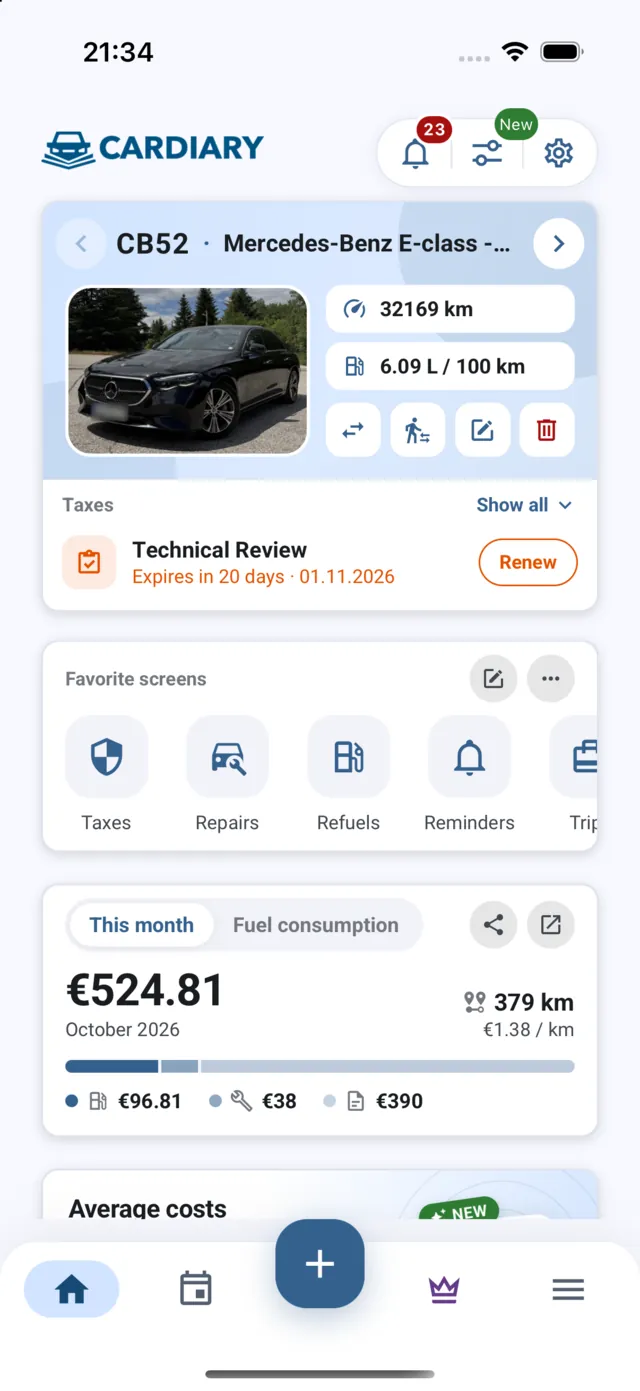
Start with honest mileage. Divide monthly fuel spend by miles driven to see your real-world mpg in U.S. gallons, then compare it to the window-sticker figure you remember from the purchase. The CarDiary MPG and fuel cost calculator is built for that monthly tank math when pump prices swing. If your side work includes client visits, logging odometer readings alongside appointment dates keeps you aligned with IRS recordkeeping expectations without claiming CarDiary is a tax filing system—it is a digital vehicle cost and deadline log that replaces scattered spreadsheets.
Buying a used car to support travel adds another layer Steinem sidestepped. A pre-purchase VIN check surfaces open recalls and title brands before you commit, complementing the free lookup at NHTSA’s recall site. Registration renewal dates belong in the same folder as insurance cards; the CarDiary registration renewal tracker is aimed at drivers who juggle multiple plates across states.
Credit, keys, and who gets to leave
Steinem’s story is not a lesson that every activist should sell her car. It is a reminder that mobility in the United States is never truly “free”—someone pays for tires, someone schedules the inspection, and someone must stay awake on the midnight highway. Federal credit law now guards the right to apply for that responsibility in your own name, while state motor-vehicle agencies still gate the privilege of driving it.
If your speaking tour or consulting gig puts you behind the wheel rather than in the back seat, CarDiary’s IRS mileage rate calculator helps you track business miles in one place alongside fuel and service history. Steinem chose conversation over keys; your ledger might look more like mpg, registration stickers, and 70-cent mileage lines—and both paths still belong in the American story of who gets to go.