Buying a new car in the United States crossed an uncomfortable milestone in September when Kelley Blue Book estimated the industry average transaction price (ATP) at $50,080—the first time the typical new-vehicle deal cleared the $50,000 line. That figure reflects what buyers actually paid after discounts, not the window sticker alone, and it rose 2.1% from August and 3.6% from September 2024 according to Cox Automotive's Kelley Blue Book report.
Sticker shock versus what you really pay each month
The average new-vehicle MSRP also hit a record $52,183 in September, with manufacturer incentives averaging about $3,700—roughly 7.4% of ATP. Even with discounts, finance charges add another layer. On a $50,000 loan at 6.5% APR over 60 months with zero down, the payment alone runs about $979 per month before tax, title, and license fees.
That payment is only the start. AAA's 2025 Your Driving Costs study puts the average cost to own and operate a new vehicle at $11,577 per year, or $964.78 per month, assuming 15,000 miles driven annually over five years. The study covers fuel, maintenance and repairs, full-coverage insurance, registration and taxes, depreciation, and finance charges—see the full methodology on AAA's newsroom.
Why the average climbed past $50,000
Cox Automotive analysts point to a richer sales mix rather than across-the-board price hikes on every trim. Electric vehicles reached an estimated 11.6% market share in September with an average transaction price of $58,124. More than 60 models sold with ATPs above $75,000, capturing 7.4% of industry volume compared with 6.0% a year earlier. Ford's brand average ATP was $57,197, reflecting strong demand for pickups that often transact well above $65,000.
Affordable nameplates still exist at the brand level. Kelley Blue Book logged September ATPs of $38,062 for Honda, $38,503 for Hyundai, $42,143 for Toyota, and $36,092 for Subaru—well below the industry mean but drifting upward year over year.
Monthly fuel math at today's pump prices
The sticker price does not predict fuel bills. The EPA rates the 2025 Toyota Camry Hybrid LE at 51 MPG combined on regular gasoline (fueleconomy.gov). At 15,000 miles per year and the September national average of $3.17 per gallon reported by the Bureau of Transportation Statistics, fuel for that sedan costs roughly $930 annually—about $78 per month. A crossover averaging 28 MPG under the same conditions needs about 536 gallons, pushing the fuel bill toward $1,700 per year.
Regional differences matter. BTS recorded a Gulf Coast average of $2.73 per gallon versus $4.23 on the West Coast in September, so identical EPA ratings produce different monthly tank costs depending on where you register the vehicle. You can model your own commute against local pump prices using the MPG and fuel cost calculator.
Where budget-minded shoppers are going
Cox Automotive notes that many price-sensitive buyers are staying out of showrooms or moving to used inventory while wealthier households carry new-vehicle volumes. Kelley Blue Book estimates a five-year total cost to own for the average new vehicle at $80,238, with depreciation alone consuming more than half of first-year expense for many models.
A used alternative near $25,000 can still qualify for routine maintenance and predictable registration cycles, but mileage history and accident records vary widely. Running the VIN through a VIN lookup before signing helps confirm title and recall basics, though it is not a substitute for an independent pre-purchase inspection.
Registration, insurance, and the costs you renew every year
State registration fees, ad valorem taxes, and mandatory inspection schedules sit outside the dealer quote. A $50,000 garage value can push annual property-tax assessments higher in states that tie registration to vehicle value. Tracking registration renewal dates by state keeps an expired plate from turning into a surprise citation on top of an already expensive month.
Insurance premiums scale with replacement cost. AAA's category averages show a medium sedan costing around $1,572 per year to insure versus $2,027 for a medium SUV in its 2025 model set. Adding a teen driver or switching from liability-only coverage on an older trade-in to full coverage on a new loan can move the monthly outlay more than fuel does.
Smart ways to stress-test a deal before you sign
- Compare the vehicle's EPA combined MPG against your actual commute miles before you negotiate—efficiency differences of 10–15 MPG can exceed $600 per year at current national pump averages.
- Request an out-the-door figure that includes doc fees, destination, and taxes, then add AAA's ownership estimate to see whether the all-in monthly fits your household budget.
- On used purchases, budget for immediate fluids, tires, and brake work that a new-car warranty would cover for the first years.
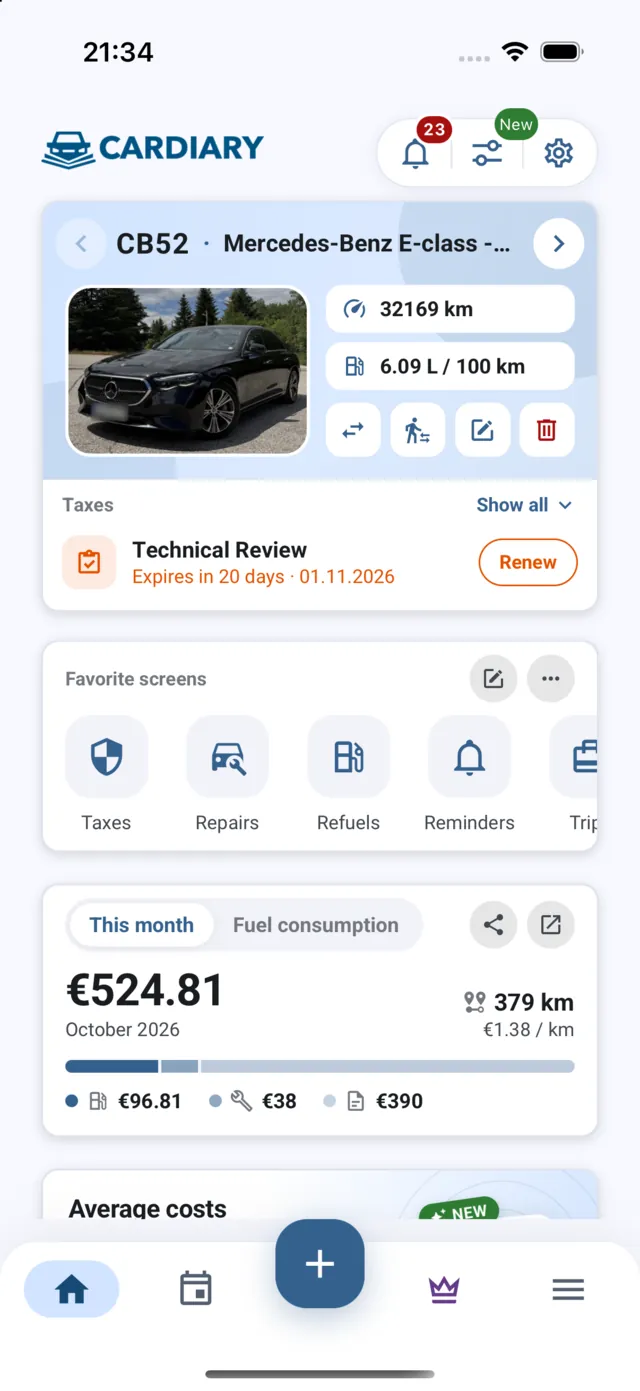
- Keep every fuel receipt and service invoice in one place so real operating costs stay visible after the new-car smell fades—logging each fill-up in CarDiary makes it easy to compare your actual MPG against EPA ratings once the finance payment is locked in.