The IRS business standard mileage rate for 2026 is 72.5 cents per mile for miles driven from January 1 to June 30, and 76 cents per mile from July 1 to December 31. The mid-year increase came in IRS Announcement 2026-11 because of higher fuel prices. For comparison, the 2025 rate was 70 cents.
The rate is optional. It replaces tracking the actual costs of gas, oil, repairs, insurance, registration and depreciation for the business share of your car. It applies to gasoline, diesel, hybrid and fully electric vehicles alike.
Which 2026 rate applies to your miles?
The date you drove the miles decides the rate, not the date you file. Add up business miles for January–June and multiply by $0.725. Then add up July–December and multiply by $0.76. If your log only shows a yearly total, you will have trouble backing up the split, so record each trip with its date.
- Business: 72.5¢ (Jan 1 – Jun 30), 76¢ (Jul 1 – Dec 31)
- Medical and qualifying moving: 20.5¢ before July 1, 23.5¢ from July 1
- Charitable: 14¢ all year (fixed by law)
A worked example
A self-employed photographer drives 4,000 business miles in the first half of 2026 and 4,000 in the second half. First half: 4,000 × $0.725 = $2,900. Second half: 4,000 × $0.76 = $3,040. Total standard mileage deduction: $5,940. The same 8,000 miles at the 2025 rate would have been $5,600. You can run your own numbers with the IRS mileage rate calculator, which lets you pick the period.
Business parking fees and tolls are deductible on top of the mileage figure. Interest on a car loan and personal property tax on the car follow separate rules, so check with a tax professional before you add them.
Who can actually use the deduction?
The deduction is mainly for self-employed people, independent contractors and business owners who report car expenses on their business return. Most W-2 employees cannot deduct unreimbursed driving on their federal return. If your employer reimburses you at or below the IRS rate under an accountable plan, the reimbursement generally is not taxable income.
Standard rate or actual expenses?
If you want the standard rate for a car you own, you generally have to choose it in the first year the car is used for business. After that you can switch between methods in later years, with limits on depreciation. If you lease, choosing the standard rate means using it for the whole lease, including renewals. You also cannot use it if you run five or more vehicles at the same time, as a fleet does.
Actual expenses can come out ahead for an expensive vehicle with heavy business use, or when fuel and repair costs are high. The standard rate is simpler and needs less paperwork beyond the mileage log.
What your mileage log needs
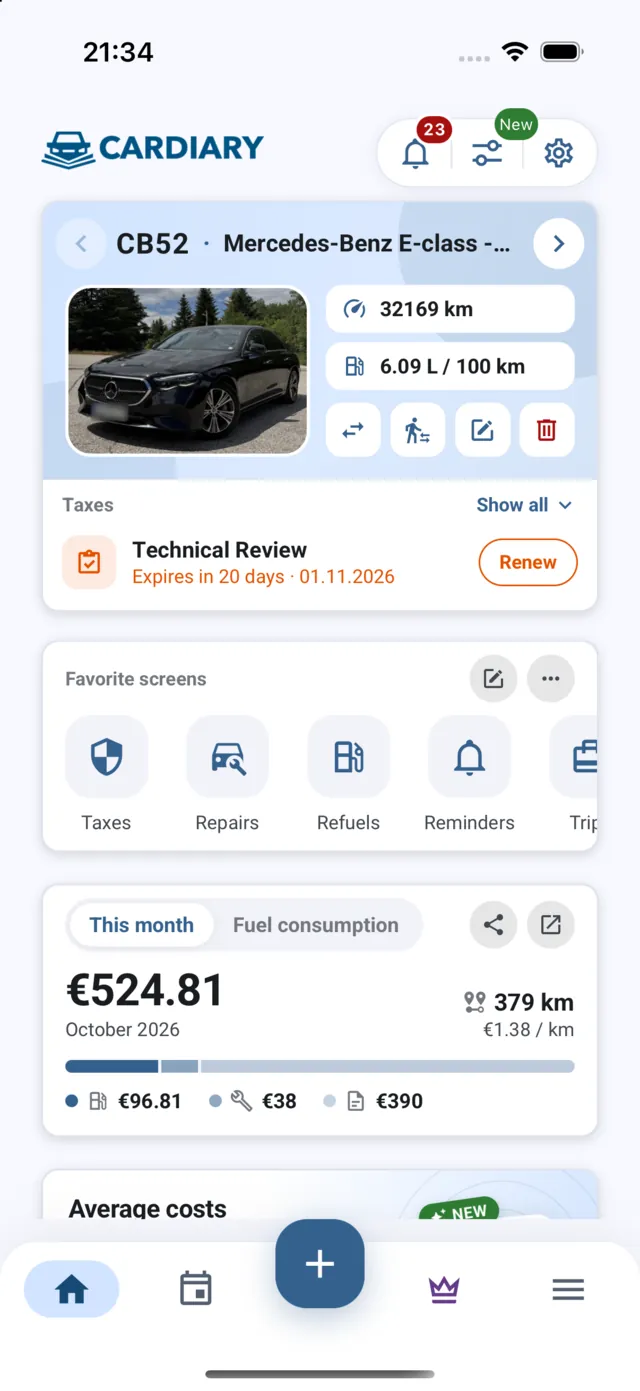
A contemporaneous record is what holds up if the IRS asks: the date, the destination, the business purpose and the miles for each trip, plus the odometer at the start and end of the year. Rebuilding a year from calendar invites is how deductions get reduced. Logging trips and odometer readings as you go in CarDiary gives you a dated record with the January–June and July–December totals already separated.
Commuting is not business mileage
Driving from home to your regular workplace is commuting, and it does not count at any rate. Driving from your office to a client, between job sites, or to a temporary work location usually does. If your home is your principal place of business, trips from home to clients generally count as business miles.
FAQ
What is the IRS mileage rate for 2026?
72.5 cents per business mile from January 1 to June 30, 2026 and 76 cents per mile from July 1 to December 31, 2026.
Why did the rate change in July?
The IRS raised it mid-year in Announcement 2026-11 because of higher fuel prices. It has made similar mid-year changes before, for example in 2022.
Does the rate differ for electric cars?
No. The same business rate applies to electric, hybrid, gasoline and diesel vehicles.
Where is the official source?
The rates are listed on the IRS standard mileage rates page.