If you are wondering which engine oil grade to buy this November, the answer is almost always printed in your owner manual. The grade listed there is the one the engine was designed and tested around, and that matters more in winter than at any other time of year. The bottle label only tells you what the oil meets, not what your engine needs.
This guide explains what the two numbers mean, where to find the grade for your car, how cold weather changes the choice, and what to check before the first hard freeze. For most US drivers the short answer is simple: buy the grade in your manual, check the level regularly, and keep the oil change dates in one place. The longer answer depends on your engine and on the temperatures where you park.
What the numbers in 0W-20 actually mean
The format comes from the SAE J300 viscosity standard. The letter W stands for winter, and the number in front of it describes how easily the oil flows during a cold start. A lower number means thinner cold oil that reaches the bearings and valve train faster.
The number after the dash describes the oil's thickness at normal operating temperature, around 212 degrees Fahrenheit. A 20 is thinner when hot than a 30, which is why many newer engines are built around 20-grade oil for quicker lubrication and better fuel economy.
- 0W-20: flows at the lowest cold temperatures and is common in many newer gasoline engines.
- 5W-30: a thicker hot grade often seen in older engines, trucks, and some turbocharged models.
- 0W-16 or 0W-8: thinner grades specified by some newer and hybrid engines. Use only what the manual lists.
Two oils can share a grade and still differ in their additive packages, so the number alone does not guarantee the right oil. The manual's specification and the API service category matter as much as the viscosity.
Where to find your engine oil grade
- Open the owner manual and look in the maintenance section for the oil capacity table. Most manuals list the grade and an API service category next to it.
- Check the oil filler cap. Some engines print the grade on it, which makes a useful cross-check but does not replace the manual.
- Look for an under-hood sticker or a dealer oil-change reminder label. These often list the grade and capacity.
- If the manual gives a grade by temperature range, note your coldest typical night. Some manuals list one grade for all climates and others list two.
Take a sedan whose manual says 0W-20 and whose filler cap says the same. A bottle of 5W-30 on sale is not a better winter choice for that engine. It is a different specification, and the price difference does not change what the engine was built to run on.
How cold weather changes the first number
Cold makes every grade flow more slowly, and most engine wear happens in the first seconds after a cold start, before oil reaches the top of the engine. A lower first number means the oil pumps and moves faster at the same temperature. That is the reason 0W grades are common in cold-climate guidance.
Consider a driver in Minneapolis who parks outside overnight when the temperature drops to 0 degrees Fahrenheit. The engine turns over more slowly in the morning, and the battery and oil both work harder. In that case the manual's cold-climate guidance matters more than any sticker on the bottle.
Winter does not usually mean switching to a thicker oil. Many manuals keep one grade year-round, and a thicker oil in a cold garage can start more slowly. If the manual allows a range, follow the range that matches your coldest typical night rather than the oil you happened to buy last time.
Can I use a different grade than the manual says?
Sometimes, but only within the range the manual allows. Many owners see 5W-30 and 0W-20 side by side in a parts store and assume either will work. If the manual names one grade, use that grade. If it lists several by temperature, pick from that list.
A grade that does not match the specification can affect oil pressure, flow to variable valve timing systems on some engines, and fuel economy. Under the Magnuson-Moss Warranty Act, enforced by the Federal Trade Commission, a manufacturer cannot void a warranty just because you used an aftermarket product. It can, however, deny a claim it can tie to a fluid that did not meet its specification, so keep the bottle label and receipt for each change.
Reading the API symbol and certification marks on the bottle
The circular API donut on the front of the bottle shows the viscosity grade and the API service category, such as SP for current gasoline engines. The starburst beside it marks energy-conserving oil. You do not need these symbols to choose oil, but they confirm the bottle meets a current category for your engine type.
- Viscosity grade on the front label, matching the manual exactly.
- API service category on the donut, meeting or exceeding the category in the manual.
- Starburst or energy-conserving mark where the manual or the category calls for it.
- Synthetic, synthetic blend, or conventional wording, matching what the manual allows.
- Diesel engines use a separate diesel category, such as CK-4, so a gasoline bottle is not the right check for a diesel truck.
Mistakes that cause trouble with winter oil
- Buying the cheapest grade on the shelf without checking the manual first.
- Assuming a high-mileage label means a different viscosity. It describes an additive package, not a grade.
- Checking the dipstick on a hot engine parked on a slope, which gives a false reading.
- Topping off with a different grade and never switching back. A one-time top-off in an emergency usually does no immediate harm, but return to the manual's grade at the next change.
- Ignoring a driveway spot after a few days of parking. Dark drips often point to a seal, gasket, or drain plug that needs a shop visit before the cold makes it worse.
Another common edge case is switching between synthetic and conventional oil from one change to the next. That is usually fine when both match the manual's specification, but note which one went in so the next service has accurate information.
How to check the oil level before the first hard freeze
- Park on level ground and wait a few minutes after the engine has been off, or follow the manual's method if it specifies a cold check.
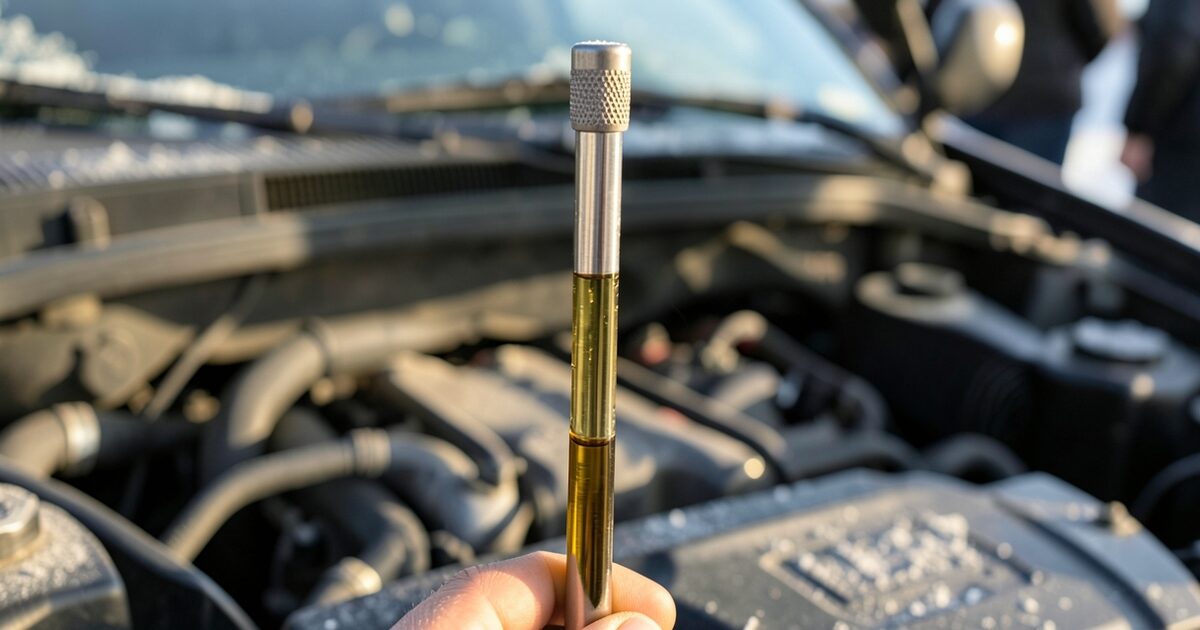
- Pull the dipstick, wipe it with a lint-free cloth, push it fully back in, and pull it again.
- Read the level between the two marks. If you are below the lower mark, add the manual's grade in small amounts and recheck.
- Write down the reading, the odometer, and the date.
- If the level drops quickly between changes, have a shop look for leaks before the cold makes the problem worse.
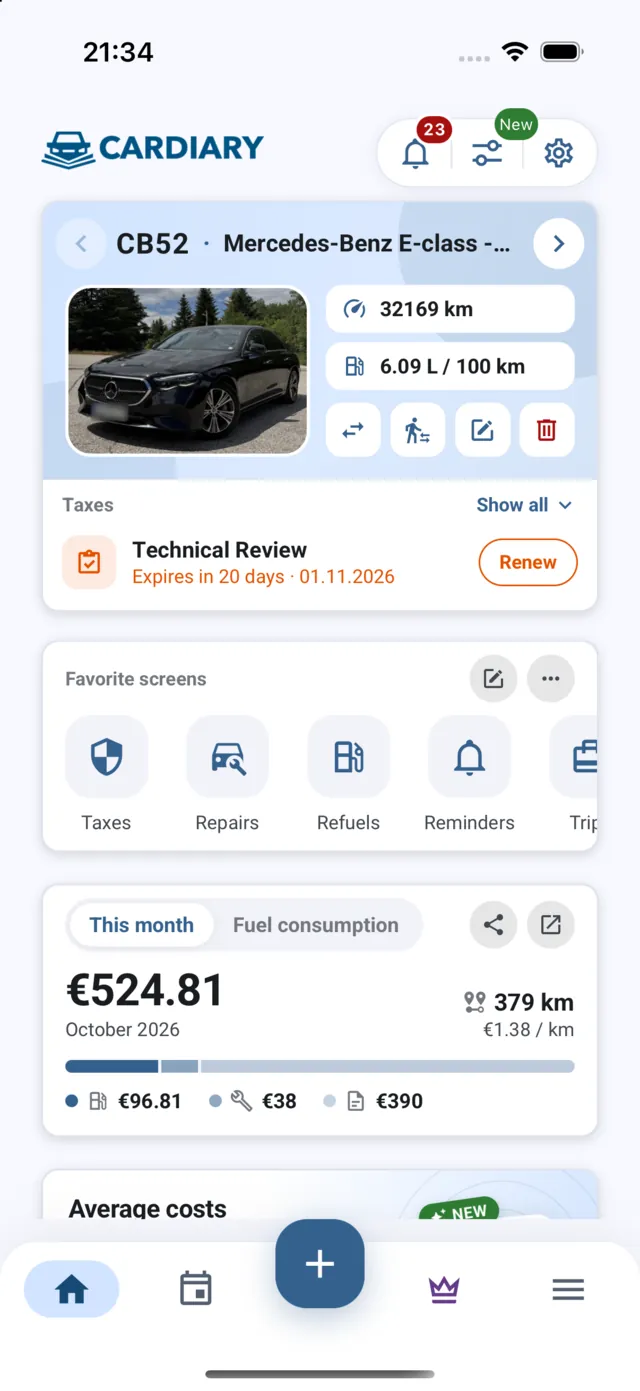
Keeping the grade, the date, and the odometer reading of each oil change in CarDiary's service log means the next shop sees the same specification you read in your manual.
Frequently asked questions about engine oil grade
Is 0W-20 better than 5W-30 for winter?
Not by itself. 0W-20 flows better at very cold starts, but it is only the right choice if your manual specifies it. For an engine built for 5W-30, the thinner oil is not an upgrade.
Can I mix 0W-20 and 5W-30?
In an emergency a small top-off with a different grade usually does no immediate harm. It is not the right long-term choice, so return to the manual's grade at the next oil change.
Does the grade on the filler cap override the manual?
No. The cap is a handy reminder, but the owner manual is the document that matches the engine's specification. If they disagree, ask a dealer service department which grade applies to your model year.
What if my manual lists two grades?
Choose the grade that matches your typical coldest temperature within the range the manual gives. Many manuals list one grade for hot climates and another for cold ones.