If you have been waiting for new-car prices to fall back toward pre-pandemic levels, the autumn of 2025 is delivering a different message. A 25% tariff on imported passenger vehicles took effect in April, and tariffs on key auto parts followed in May. Six months in, most sticker prices have barely moved, yet 2026 model-year window stickers and dealer quotes are starting to tell a clearer story about what American drivers will actually pay to own the next car in the driveway.
What the federal auto tariffs cover
Under Section 232 of the Trade Expansion Act, the White House imposed an additional 25% duty on imported passenger vehicles (sedans, SUVs, crossovers, minivans, and light trucks) effective April 3, 2025. A parallel tariff schedule for engines, transmissions, powertrain components, and electrical parts took effect by May 3, 2025, as published in the Federal Register. Vehicles assembled in the United States are not charged the full vehicle tariff, but they still draw imported content through parts and materials.
For USMCA-compliant vehicles built in Mexico or Canada, importers can document U.S. content so the 25% rate applies only to the non-U.S. share of each model. An April 2025 amendment also created a temporary offset for U.S.-assembled vehicles: manufacturers can apply for credits equal to 3.75% of MSRP on domestically built units through April 2026, stepping down to 2.5% through April 2027. Those rules reduce the headline shock but do not erase the cost; they shift who absorbs it and when.
Why showroom prices stayed flat through summer
Industry data show automakers largely swallowed tariff expense instead of passing it through immediately. Edmunds reported that average MSRP rose less than 1% from mid-March through mid-August 2025. Cox Automotive pegged the July average transaction price (ATP) at $49,077, roughly 30% above 2019 levels and already straining household budgets before any tariff pass-through.
Consultant Warren Browne, a former GM executive, estimated tariff-related costs at nearly $2,300 per vehicle on an annualized basis if spread across all new sales. GM has guided to up to $5 billion in gross tariff costs for 2025; Ford cited about $3 billion. Hyundai North America said it held pricing to stay competitive even as tariffs erased roughly $600 million from its second-quarter results. That strategy kept sales moving (Cox Automotive raised its 2025 U.S. forecast to about 16.1 million units) but could not last indefinitely.
2026 model-year increases are arriving now
As 2026 models reach dealers this fall, selective price hikes are no longer theoretical. Volkswagen raised MSRP on several 2026 nameplates by 2.9% to 6.5%, covering the Jetta, Taos, Golf GTI, Golf R, Atlas, and Atlas Cross Sport. Earlier in the year Ford added up to $2,000 on Mexico-built Bronco Sport, Mustang Mach-E, and Maverick units. Luxury importers including Porsche and Aston Martin adjusted pricing on affected lines as well.
Automakers also moved costs through fees that rarely make headlines. Edmunds found the average destination charge for 2025 models climbed 8.5% to $1,507, a sharper year-over-year jump than the prior decade. Destination is not a tariff line item, but it raises the out-the-door total the same way a base-price increase does.
Cox Automotive analysts still expect retail prices to climb 4% to 8% by year-end as more 2026 inventory lands. On a $49,000 transaction, that range adds roughly $1,960 to $3,920 before tax, title, and registration. J.D. Power and GlobalData noted that September's strong sales pace was partly fueled by shoppers rushing to lock in expiring federal EV credits, another pull-ahead demand spike that may leave non-EV segments looking softer once incentives and tariff costs fully settle into MSRP.
Ownership math beyond the window sticker
Sticker shock is only the first line on a U.S. ownership ledger. Financing costs matter as much as MSRP: J.D. Power reported record-high monthly payments in 2025 even before widespread tariff pass-through. A $49,000 loan at 7.0% APR over 72 months runs about $830 per month before down payment, taxes, or fees, and every $2,000 added to the sale price lifts that payment by roughly $34 per month.
Fuel remains the largest running cost for most gasoline and hybrid owners. A driver covering 15,000 miles per year in a 28 MPG combined SUV at $3.40 per gallon spends about $1,821 annually on fuel; compare that with a 30 MPG hybrid on the same mileage (about $1,700 per year, saving $121) using the MPG and fuel cost calculator. Over a five-year loan, fuel differences between body styles often exceed a single destination-fee bump, which is why tariff-driven MSRP increases should be weighed alongside efficiency, not in isolation.
Insurance, registration, and state inspection requirements vary by jurisdiction. Check your state DMV renewal calendar and any emissions or safety inspection intervals before signing; a higher purchase price can also raise comprehensive and collision premiums because insurers base those coverages on vehicle value.
Imported, Mexico-built, and U.S.-assembled: who feels tariffs first
Not every brand faces the same exposure. Models imported wholly from Europe or Asia carry the full 25% vehicle duty at the border unless a separate trade agreement modifies the rate. Mexico- and Canada-built vehicles with high U.S. content may see a lower dutiable share, but popular crossovers and trucks still sourced heavily from Mexico, including Ford's Maverick and Bronco Sport, were among the first to show explicit MSRP adjustments.
Even American-made badges do not mean tariff-free production. The April 2025 offset acknowledges that roughly 15% of a typical U.S.-assembled vehicle's MSRP value can trace to imported parts subject to Section 232 duties. That is why domestic full-size trucks and Midwest-built sedans can still inch upward as 2026 pricing rolls out, even when final assembly happens in Michigan or Tennessee.
What to document before you sign
Dealer quotes should separate base MSRP, destination, documentation fees, and any market adjustment. Ask whether the unit on the lot is a 2025 carryover or an early 2026 build; model-year transitions are when manufacturers most often reset pricing. If you are comparing a tariff-affected import with a U.S.-assembled alternative, calculate the full five-year cost: purchase price, estimated fuel at your local pump price, insurance quote, and registration.
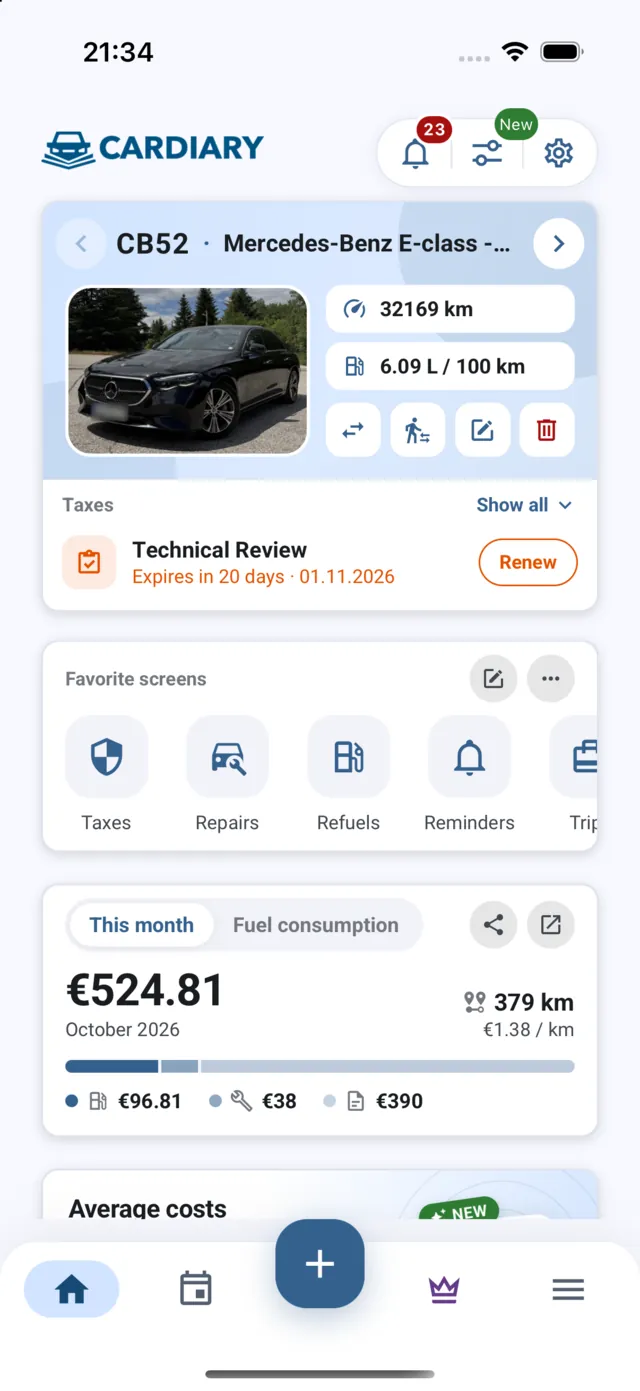
Logging the out-the-door figure alongside fuel receipts and service visits in CarDiary gives you a running total that a window sticker alone cannot show, which makes it easier to judge whether a 2026 price reset actually changed your monthly budget compared with the vehicle you drive today.
Used-market ripple effects
New-car tariff pressure also shapes the used lane. Cox Automotive expects three-year-old off-lease supply to tighten because fewer discounted new units were delivered during the pandemic years, while used EV inventory may expand as lease returns grow. A VIN check before buying any used import helps confirm model year, recall status, and title history, especially when cross-shopping a discounted 2025 against a freshly repriced 2026.