On Saturday, September 26, 2026, President Donald Trump said he had approved new federal fuel economy standards that roll back the tighter targets the Biden administration set for model years 2027 through 2031. The announcement landed in a Truth Social post framed around lower sticker prices and more domestic manufacturing, and it quickly moved from campaign rhetoric to a practical question for anyone shopping for a truck, SUV, or sedan: will tomorrow's window stickers look like today's, and who actually pays if they do not?
Corporate Average Fuel Economy, or CAFE, is not a single MPG number stamped on your registration. It is a fleet-wide compliance program run by the National Highway Traffic Safety Administration under the Energy Policy and Conservation Act. Automakers must meet rising averages across the cars and light trucks they sell, weighted by sales volume and vehicle footprint. When those averages climb, manufacturers lean on smaller engines, hybrids, aerodynamics, and—when credits and economics align—battery-electric models. When averages flatten, the pressure eases on the largest, highest-margin vehicles Americans already buy in huge numbers.
The Biden-era baseline NHTSA already finalized
Before this week's announcement, the benchmark many reporters cited was NHTSA's 2024 final rule for model years 2027–2031. The agency projected that rule would push the industry fleet-wide average for passenger cars and light trucks to roughly 50.4 mpg by model year 2031, using the special CAFE test values shown on regulatory worksheets—not the lower numbers most drivers see on Monroney window stickers. NHTSA paired that rule with lifetime fuel savings estimates and published the supporting analysis on its site at nhtsa.gov.
That 50.4 mpg figure became shorthand for “the EV push” in political coverage because electrification is one compliance lever, not because CAFE bans gasoline. Hybrids, efficient turbo fours, and lighter structures count too. Still, the trajectory mattered: each incremental MPG target is expensive engineering on three-row utes and full-size pickups.
The replacement direction NHTSA had already telegraphed
Separately from the 2024 final rule, NHTSA published a proposed reset—sometimes referred to in agency materials as the SAFE Vehicle Rule III pathway for model years 2022–2031—that would amend fleet classifications and credit trading while lowering the required pace of improvement. In that proposal, NHTSA projected an industry fleet-wide average of roughly 34.5 mpg in model year 2031 for light-duty vehicles, a much gentler slope than the Biden trajectory. The living summary page on NHTSA's CAFE hub contrasts that proposal with the earlier final rule and is the best primary reference until a new final rule text appears in the Federal Register.
Trump's September 26 statement did not, at publication time, attach the full regulatory text. Transportation Secretary Sean Duffy had previously said approved standards would land sharply below the Biden-era curve. Treat the social post as direction-of-travel confirmation while engineers and lawyers still convert it into amendable rule language.
Why automakers cared enough to call the White House
Reuters reported that manufacturers including General Motors, Ford, and Stellantis had pressed for domestic build flexibility tied to fuel economy policy. That aligns with how CAFE bites in the real world: a softer fleet average preserves mix—more large crossovers, fewer forced compromises on tow ratings and ground clearance. Weaker standards also change the business case for some EV SKUs that existed mainly to balance truck emissions credits, even as companies like GM publicly say they will keep building electric models for customer demand.
For shoppers, the near-term effect is not an instant $3,000 price drop on Saturday night. Vehicle programs run years ahead; supplier contracts and tooling decisions made under the old curve do not vanish overnight. What shifts is the margin on the next redesign cycle: whether a refreshed F-150 or Explorer must ship as a standard hybrid, whether a compact car gets canceled entirely, and how aggressively dealers discount compliance cars that suddenly look overbuilt for the rulebook.
CAFE is not the same document as EPA tailpipe rules
NHTSA sets fuel economy under EPCA; the Environmental Protection Agency sets greenhouse gas emissions under the Clean Air Act. The two programs are coordinated, but they can move on different timelines and face different court challenges. A driver in California or another state that follows California Air Resources Board rules may still see zero-emission sales mandates that do not disappear when CAFE loosens nationally. If you are comparing policies, read NHTSA for MPG compliance and EPA for grams of CO2 per mile—mixing them up leads to bad predictions about which models will arrive at your local lot.
What stays the same in your driveway
Nothing in a CAFE announcement retroactively changes the fuel economy label on the car you already own. State safety inspections, registration renewals, and insurance contracts keep their own calendars. Used values may drift over time if new trucks flood the market with older-efficiency powertrains, but that is second-order economics, not an overnight recall.
Drivers who track real-world consumption still live in the gap between laboratory CAFE values and U.S. road speeds, cold starts, and rooftop cargo boxes. If you are modeling a commute under the new policy debate, pair EPA window-sticker estimates with your own odometer and gallons in a MPG and fuel cost calculator so you are not betting a six-year loan on optimistic fleet averages.
Checklist if you are signing for a 2027-or-newer vehicle
- Read the Monroney label, not the headline MPG. CAFE compliance numbers and sticker “combined MPG” use different tests. Compare combined and highway figures for the exact trim, including tire size and axle ratio on trucks.
- Ask the dealer which model year rules the VIN was certified under. Early-build 2027s may have been homologated under the stricter pathway; later builds might differ once amended rules publish.
- Separate purchase price from fuel budget. NHTSA's own analyses of stricter rules emphasized lifetime fuel savings; looser rules can lower upfront compliance cost while raising gallons burned. Run your annual miles and local gas prices both ways before you finance.
- Watch hybrid and PHEV availability in your state. Even if CAFE eases, state incentives, HOV access rules, and local charging still shape total cost for plug-in variants.
- Keep registration and inspection dates on their own track. Federal fuel policy does not extend your state inspection window; use a reminder tool if you juggle multi-state moves or fleet units.
Policy headlines move faster than assembly lines. The September 26 approval tells you which side won the CAFE argument for now; your wallet still answers to the gallons you actually pump into whatever hits the driveway next spring.
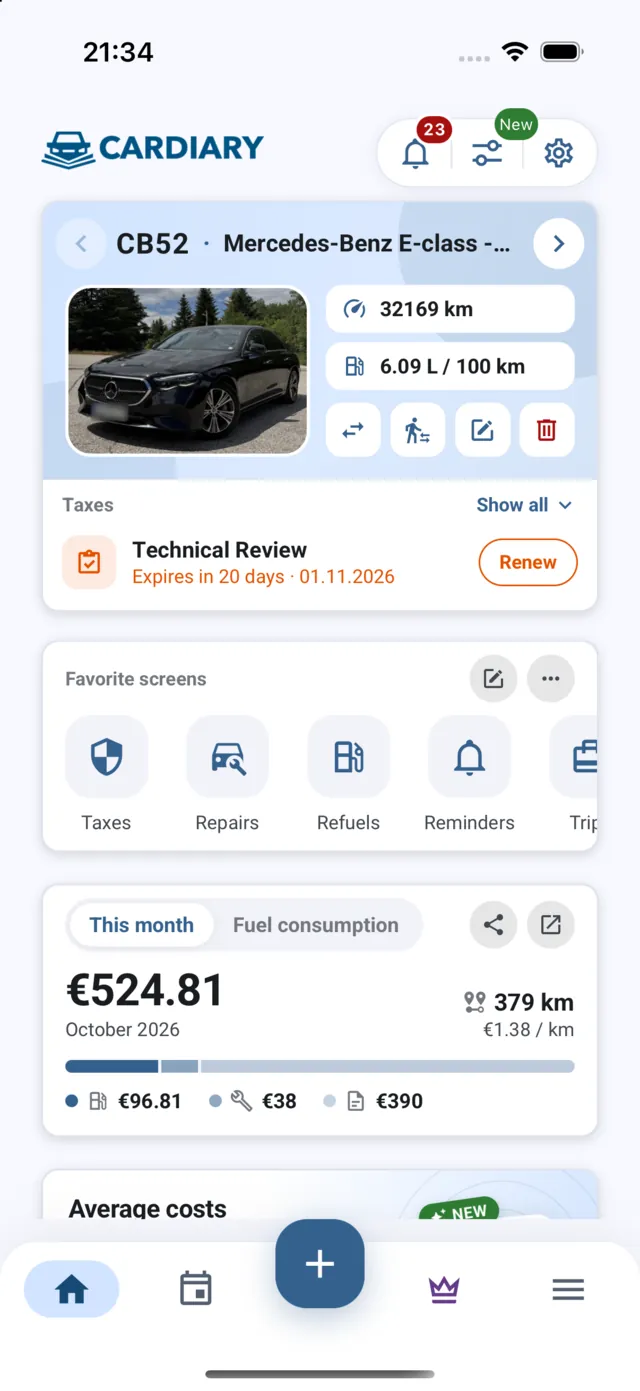
When you are comparing window-sticker promises to what the pump delivers after a policy swing, logging each fill-up in CarDiary makes it easier to see whether your real MPG still matches the Monroney figure you relied on at signing.