Car maintenance blog

Dense Fog on an Interstate Bridge: A Field Guide for I-95 and Low-Visibility Stacks

On the morning of October 1, 2026, a dense fog bank settled over the Interstate 95 bridge across Lake Marion between Cla...

On the morning of October 1, 2026, a dense fog bank settled over the Interstate 95 bridge across Lake Marion between Clarendon and Orangeburg counties in South Carolina. Visibility collapsed so quickly that drivers had almost no time to react. When the chain reaction ended, roughly 65 vehicles were involved, including about 15 tractor-trailers and 50 passenger cars and light trucks. South Carolina emergency crews reported entrapments, a helicopter medevac, and southbound I-95 closed with traffic sent to a detour at Exit 102 while wreckage was cleared. No deaths were reported, but the scene—semis twisted on the deck, cars wedged under trailers—was a reminder that fog on a bridge is not ordinary morning murk.

Bridge decks over water cool overnight and warm slower than the surrounding air. When humid air flows across that cold surface, advection fog can form in minutes, often thicker than fog in nearby woods. Add pre-dawn commuter and freight traffic on a primary East Coast corridor, and small gaps in following distance turn into multi-vehicle pileups. The National Weather Service treats dense fog as a visibility hazard in its fog safety guidance; the National Highway Traffic Safety Administration’s severe-weather driving advice applies the same logic to any condition that hides the vehicle ahead.

Before you merge onto the interstate

Check the forecast layer on your state's 511 map or the NWS point forecast for the counties you will cross, not just your departure city. Dense fog advisories and airport METAR reports along I-95 (for example Florence, Columbia, or Charleston terminals when you are heading south through the Carolinas) often show up before your windshield fogs. If a dense fog advisory is active for the lake country segment you need, shift departure time or pick U.S. 301 or U.S. 15 as a lower-speed alternative even if navigation apps still show I-95 as “fastest.”

Confirm lights and tires: low beams must work on both sides, wipers should clear without streaking, and tread depth matters because emergency braking on a fog-wet deck still demands grip. Stow distractions; you will need full attention for taillight patterns, not podcast volume.

On the bridge: speed, lights, and lane discipline

  • Slow before you feel blind. If you cannot see at least three to four seconds of pavement ahead at your current speed, you are already too fast. Many state driver handbooks recommend reducing speed substantially below the posted limit in fog; South Carolina and neighboring states also expect headlights on when visibility is limited.
  • Low beams only. High beams reflect off water droplets and glare back at you, which worsens the white-out effect on elevated structures.
  • Increase following distance beyond the dry-road three-second rule. In fog you are judging closure rates from red lights alone; leave enough space that a sudden stop by a sedan does not become your full-speed impact.
  • Stay in the right lane unless passing is essential. Passing moves you closer to oncoming glare and hides you in adjacent lanes' blind spots, especially beside high trailers.
  • Disable adaptive cruise and conventional cruise. You want your foot on the brake ready; automated following systems can lag when taillights flicker in and out of view.

When the taillights disappear

If the car ahead vanishes or you see brake lights bloom with no clear shape behind them, treat that as a full stop ahead. Ease off the accelerator, cover the brake, and scan the shoulder—not the centerline—for a safe place to wait. Do not stop in a travel lane unless traffic has already halted and you have no choice; a stationary car in a live lane is how secondary impacts kill in fog stacks.

If traffic is crawling and you must stop, pull as far right as possible, turn on hazard flashers, and keep your seat belt fastened. Exiting to stand on a bridge shoulder puts you in the path of mirror strikes from wide loads; stay inside unless fire or fuel leak forces you out.

Sharing the deck with eighteen-wheelers

The Lake Marion crash mixed heavy trucks with passenger vehicles. Tractor-trailers need much longer stopping distances even in clear weather; in fog they may not see your compact car until your taillights register. Avoid lingering in front of a truck or in its right-side blind spot on a downgrade. If you must pass, do it decisively with low beams and return to the right lane only when you can see the entire front of the truck in your mirror.

Listen for air horns—they often signal a driver who sees trouble before visual contact reaches car height. Do not weave through gaps that are closing; chain reactions start when one driver assumes a faint gap is still open.

If you are caught in a chain reaction

Keep the wheel straight, bleed speed smoothly, and avoid jerking the brake unless impact is unavoidable. Airbags deploy on sudden deceleration; hands at nine and three reduce wrist injury. Once stopped, hazards on, engine off if you smell fuel, and call 911 with mile marker or bridge name if you know it (Lake Marion bridge on I-95 is a known landmark between Santee and Summerton).

Photograph damage, license plates, and the scene from inside the vehicle if it is safe before cars reposition. Exchange insurance information when law enforcement opens a lane; fog scenes often involve dozens of parties, and orderly documentation speeds later claims.

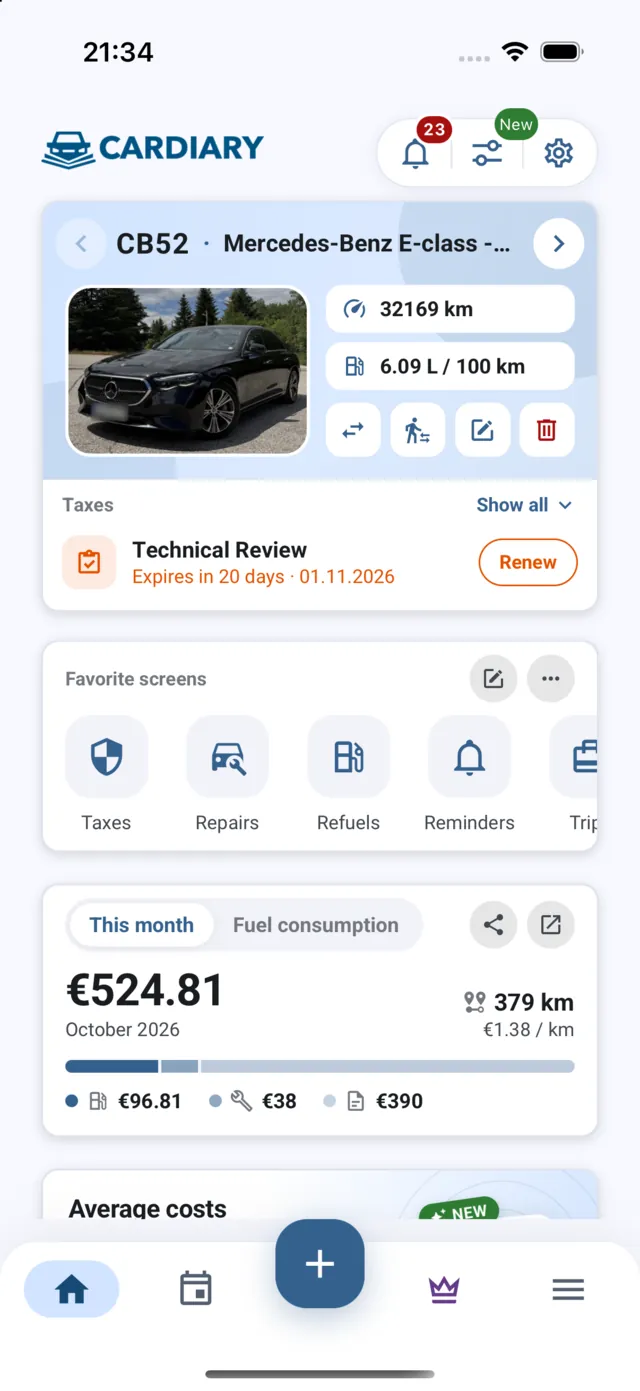
When body shops and rental cars enter the picture after a low-speed tap in the stack, logging repair dates and invoices in CarDiary keeps that incident beside your registration renewal reminders so claims paperwork does not outrun your deadlines.

After officials reopen the road

Do not rush back to highway speed when the fog lifts in one mile but not the next. Patches persist over water until full sun or wind mixes the air. Run a quick walk-around if you drove through debris: check tire sidewalls, headlight lenses, and undercarriage plastic. Report new vibrations—they may mean a hidden alignment hit from a pothole or curb during the detour.

Follow South Carolina Department of Transportation and local news outlets for confirmation that southbound I-95 has fully reopened past the Lake Marion bridge before you plan a tight connection; partial openings sometimes funnel traffic through one lane while cleanup continues.

Fog stacks are rare for any one driver but predictable in place: cool water, warm humid air, and high-speed traffic on a narrow deck. Treat dense fog like a temporary shutdown of sight distance, not a reason to “keep up with traffic,” and you give yourself the seconds that were missing on the bridge over Lake Marion.

  • #dense fog
  • #driving safety
  • #I-95
  • #South Carolina
  • #interstate bridge
  • #chain reaction crash
  • #tractor-trailer visibility
  • #NWS fog advisory
https://www.car-diary.net/build/assets/flag-en-Dien0O0O.png https://www.car-diary.net/build/assets/flag-en-gb-CFOpQedK.png https://www.car-diary.net/build/assets/flag-bg-MsiRXCLT.png https://www.car-diary.net/build/assets/flag-ro-CaHXANk0.png https://www.car-diary.net/build/assets/flag-el-BVHqgjTL.png https://www.car-diary.net/build/assets/flag-de-DOA3ZfaR.png https://www.car-diary.net/build/assets/flag-fr-BtfubWT6.png https://www.car-diary.net/build/assets/flag-es-iVTog9Oi.png https://www.car-diary.net/build/assets/flag-it-Ct7RLwXx.png https://www.car-diary.net/build/assets/flag-pl-OWgefiF6.png https://www.car-diary.net/build/assets/flag-hu-BxooiC-Y.png https://www.car-diary.net/build/assets/flag-cs-CQ0GPA3W.png https://www.car-diary.net/build/assets/flag-sk-Di2-hul_.png https://www.car-diary.net/build/assets/flag-hr-CFGT8V6D.png https://www.car-diary.net/build/assets/flag-nl-CeqTqx21.png https://www.car-diary.net/build/assets/flag-pt-BXdczVE-.png https://www.car-diary.net/build/assets/flag-sl-DBDq2xzK.png https://www.car-diary.net/build/assets/flag-da-CcE_SpnG.png https://www.car-diary.net/build/assets/flag-fi-kHDHHAV-.png