GM agreed to pay $220 million to settle claims that it collected and sold driving data from owners who used its OnStar Smart Driver program. If you own or recently bought a GM car, the GM driving data settlement raises three practical questions: was your car enrolled, who received the data, and how do you stop collection today? This article answers those questions for US drivers and lists the steps to check your own vehicle.
What the GM driving data settlement covers
The settlement, reported in late October 2026, resolves claims brought by a coalition of 36 state attorneys general. The states allege that GM sold driving and location data gathered through Smart Driver to data brokers, who passed the information to insurers. GM did not admit liability, and the payment settles allegations rather than admitting wrongdoing.
The case builds on earlier action. The New York Times reported on the practice in March 2024, and GM ended its data deals with LexisNexis and Verisk about two weeks later. The Federal Trade Commission took separate action over the same data, and that order bars GM from sharing geolocation and driver behavior data with consumer reporting agencies for five years.
The state settlement adds its own conditions. GM must obtain express consent before collecting connected-vehicle data, and owners must be able to disable collection of precise geolocation and driving behavior data. For you as a driver, the key number is not the $220 million. It is the scale: the states say millions of GM drivers were enrolled, and about 370,000 drivers were allegedly told they were not enrolled when they were.
How OnStar Smart Driver collected driving data
According to the allegations, Smart Driver ran from 2016 through 2024. Drivers were often enrolled automatically when they subscribed to OnStar services, so many owners never chose the program on purpose. The data covered how a car was driven and where it went, which is far more detailed than a simple mileage record.
Enrollment followed the OnStar service tied to the vehicle, not a separate app that owners had to download. That matters for used cars. A GM bought secondhand in the 2016 to 2024 window can carry an enrollment history that predates your purchase, even if you never subscribed yourself.
Here is a hypothetical example. A driver in Ohio buys a 2019 Chevrolet Equinox used in 2023. The OnStar service was active from the previous owner, and the new owner never saw a Smart Driver prompt. The only reliable way to learn whether that car's data reached a broker is to check the enrollment record with GM and ask for the answer in writing.
How to check whether your GM car was enrolled
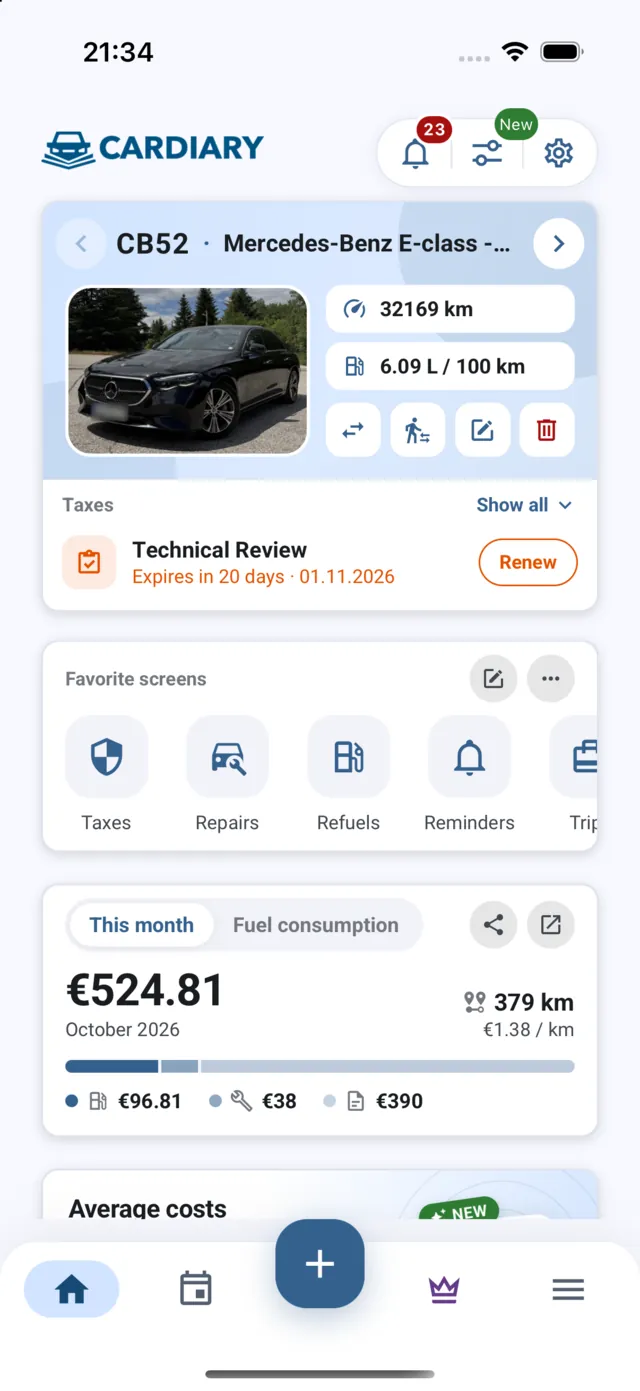
Enrollment records sit with GM, so a phone screen is only a starting point. Keeping your own dated record of the VIN, each reply, and each setting you change in CarDiary, a digital cost and deadline log that replaces a spreadsheet, makes it easier to prove what you asked and when. CarDiary is not telematics, though, and it does not track where you drive.
- Open the GM owner app or the OnStar app and look for any Smart Driver, driving data, or connected-service privacy setting. Take a screenshot with the date visible.
- Find the VIN on the driver-side door jamb or your registration. Have it ready for every message to GM.
- Contact OnStar and ask, in writing, whether this VIN was enrolled in Smart Driver between 2016 and 2024, and whether driving or location data was shared with LexisNexis or Verisk.
- Ask for a copy of any personal data GM holds about you. Several states give consumers a legal right to request it, so check your state attorney general's consumer privacy page for the exact process.
- Save every reply. A written answer carries more weight than a phone call if you later dispute an insurance rate.
If the app says you were never enrolled, ask anyway. The states allege that some drivers received that message while their data was still being sold, so an app notice alone does not settle the question.
What happens to driving data that was already sold
The settlement can stop future collection, but it does not automatically pull back data already in broker files. The states allege that the information went to LexisNexis and Verisk, who passed it to insurers. Some insurers used it to set rates or decline coverage, and reporting on the case says some of the data fed into credit reports.
If an insurer raised your premium or turned down a policy and cited a consumer report, the Fair Credit Reporting Act gives you the right to learn which agency supplied the report and to dispute errors. The Consumer Financial Protection Bureau publishes guidance on how to request your file and challenge inaccurate entries. Start with the insurer's adverse action notice, which should name the agency.
Removing a car from your name does not erase the records. If you sold or traded a GM that was enrolled, the data history stays with GM and the brokers, so ask GM to confirm what it holds under the VIN, not under your name alone.
How to turn off driving data collection in a GM car
Turn off collection now rather than waiting for a claim process. The settlement requires owners to be able to disable collection of precise geolocation and driving behavior data, so look for that option before anything else.
- Open the privacy or data-sharing menu in the GM app and turn off driving behavior and precise location collection if the option is there.
- Review the OnStar account for enrolled services. Remove any Smart Driver or insurance-linked program you do not want.
- Ask your insurer whether it receives telematics or third-party driving data for your policy, and request removal of any driving score you do not need.
- Keep only the connected services you use. Some safety features depend on a connected service, so change only the data options you can identify clearly.
- Save screenshots, the date of each change, and GM's written reply in one folder.
If a setting does not appear in your app, that is a reason to ask GM in writing, not a reason to assume collection is off.
Insurance discounts that rely on driving data
Many insurers offer discounts for a plug-in device or a phone app that scores braking, speed, and night driving. That program is different from a manufacturer's built-in data feed, but both can produce a driving score that affects your rate. The GM case shows how far that score can travel beyond the policy.
Before you renew, compare the discount with the data you give up. Ask whether the insurer keeps the data after the policy ends, whether it shares it with a third party, and how long it retains it. If you cannot see or delete the record, a discount does not justify an open-ended data share.
A driving score can also go up because of a single hard-braking event on a wet interstate, so check the scoring method before you accept a program. Ask what counts as a hard stop and whether a bad score can raise your premium at renewal.
Mistakes drivers make after settlement news
Several errors come up whenever a settlement like this reaches the news. Avoid these five.
- Waiting for a payout before acting. A settlement payment is not the same as a privacy fix, so turn off collection now and treat any payment as a separate question for your state attorney general.
- Assuming a used car is clean. Enrollment can predate your purchase, so check the record even if you are the second or third owner.
- Trusting the app alone. Get the answer from GM in writing, because a notice on screen is not a record.
- Assuming a sale removes the data. Trading in a car does not automatically delete records held by brokers or insurers.
- Calling a dealer for a repair. This is a privacy matter, not a safety defect, so no recall repair or dealer visit is needed to change your settings.
Frequently asked questions about the GM driving data settlement
Does the GM driving data settlement mean I get money automatically?
No. The settlement is between GM and the state attorneys general, and the coverage available so far does not describe an automatic payment to individual owners. Check your state attorney general's website for any claim process.
How do I find out if my GM car sent driving data to LexisNexis or Verisk?
Ask GM in writing for the enrollment history of your VIN, including any Smart Driver enrollment between 2016 and 2024 and any data sent to those brokers. Save the written answer with its date.
Can I stop GM from collecting driving data today?
Often yes. The settlement requires owners to be able to disable collection of precise geolocation and driving behavior data, so check the app and account settings first.
Can a driving report affect my insurance rate?
It can, if an insurer used a consumer report to set your premium or deny coverage. Under the Fair Credit Reporting Act, you can learn which agency supplied the report and dispute any errors.