Tesla is winding down Cybertruck production, and the news lands hardest on people who already own one. Coverage of the announcement says the company sold about 71,000 trucks against a target of 250,000 a year, and the line has run for roughly three years. For a driver, the practical question is whether a truck stops being supported when the factory stops building it. The short answer is that the truck in your driveway keeps working the same way, but warranty terms, parts supply, and resale value are where owners will feel the change first.
If you own one, the answer depends on which question you are asking. Your truck will drive the same way next week. What changes is the longer picture: how long factory parts stay on shelves, how dealers schedule recall work, and how buyers price a model that no longer has new sales. This guide goes through each area in order, with a checklist for owners and a separate one for shoppers.
What the Cybertruck production stop means for the truck you already own
A production stop is a decision about the factory line. It does not recall the truck, cancel a warranty, or change the registration rules in your state. Registration renewal, insurance, and any state safety inspection still follow the schedule set by your state's DMV or motor vehicle agency, and the end of assembly does not move those dates.
The gap between plan and sales is the core of the story. A target of 250,000 trucks a year against a reported 71,000 sold is a volume problem, and volume problems usually lead to a slower or shorter production run. Owners do not need to take action because of the headline itself. They should use it as a reason to look at their paperwork, because the questions below matter more than the news.
Does Cybertruck warranty coverage change after production ends?
Warranty coverage follows the written terms in your owner documents, not the date the last truck leaves the factory. Manufacturer warranties usually count from the in-service date and a mileage limit, so a truck built in the final months keeps the same clock as one built earlier. Read the exact terms in the paperwork or the Tesla app before you assume anything about coverage.
Recall remedies follow a separate track. Federal law requires manufacturers to remedy safety defects at no charge to the owner, and that duty does not end when a model stops selling. An open recall stays open after production ends, so check each VIN through NHTSA's recall lookup at nhtsa.gov and keep the results with your records.
- Find the in-service date on your delivery paperwork and note the current odometer reading.
- Write down the end dates for the basic and drivetrain warranty terms from your owner documents.
- Run the VIN through NHTSA's recall search and book any open remedy with a Tesla service center.
- Save each recall notice, completion record, and dealer invoice in one folder.
Which Cybertruck parts and repairs could become harder to find?
The parts most likely to tighten over time are the ones unique to the Cybertruck body. Those include the stainless steel exterior panels, the angular glass, the light bar, and the body-mounted lamps. A panel that is damaged in a parking lot may require a specific part that is not stocked locally, so the wait can run longer than it would on a common sedan.
Consumables are easier to source. Wiper blades, brake pads, and 12-volt batteries are generally simpler to buy than body-specific components. Tires need more care. A truck this heavy often uses specialized tire sizes, so confirm the sidewall size and load rating before you order, rather than trusting a size from memory.
Recall history shows how parts reach owners. NHTSA has issued recalls covering the Cybertruck light bar and parking lamps under campaign numbers 25V735 and 25V699. In those cases the manufacturer supplies the remedy through its own service network, which is why owners should not wait on a private parts market for recall items.
Independent shops can handle alignments, suspension work, tire service, and some glass replacement. Ask whether the shop has worked on a Cybertruck before you book a body repair. Stainless steel panels require different repair methods than steel or aluminum, and a shop without that experience can take longer and make a repair that looks worse than the original damage.
How does production ending affect Cybertruck resale and trade-in value?
Resale depends more on supply, condition, mileage, and documentation than on the headline. A model that stops building can firm up in the used market when buyers want a unit that will not be replaced. It can also soften when dealers work through remaining inventory. Expect the gap between trucks with clean records and trucks with missing records to widen over time.
Consider Maria, who lives in Denver and owns a 2024 Cybertruck with about 38,000 miles. She plans to trade it in during 2027. Her delivery paperwork and recall notices sit in a folder, but her service visits are scattered across emails and text messages. Before she calls a dealer, she spends an evening rebuilding a dated service list from her inbox. Appraisers and buyers ask for that history early, and a complete list gives her a stronger position when the offer comes in.
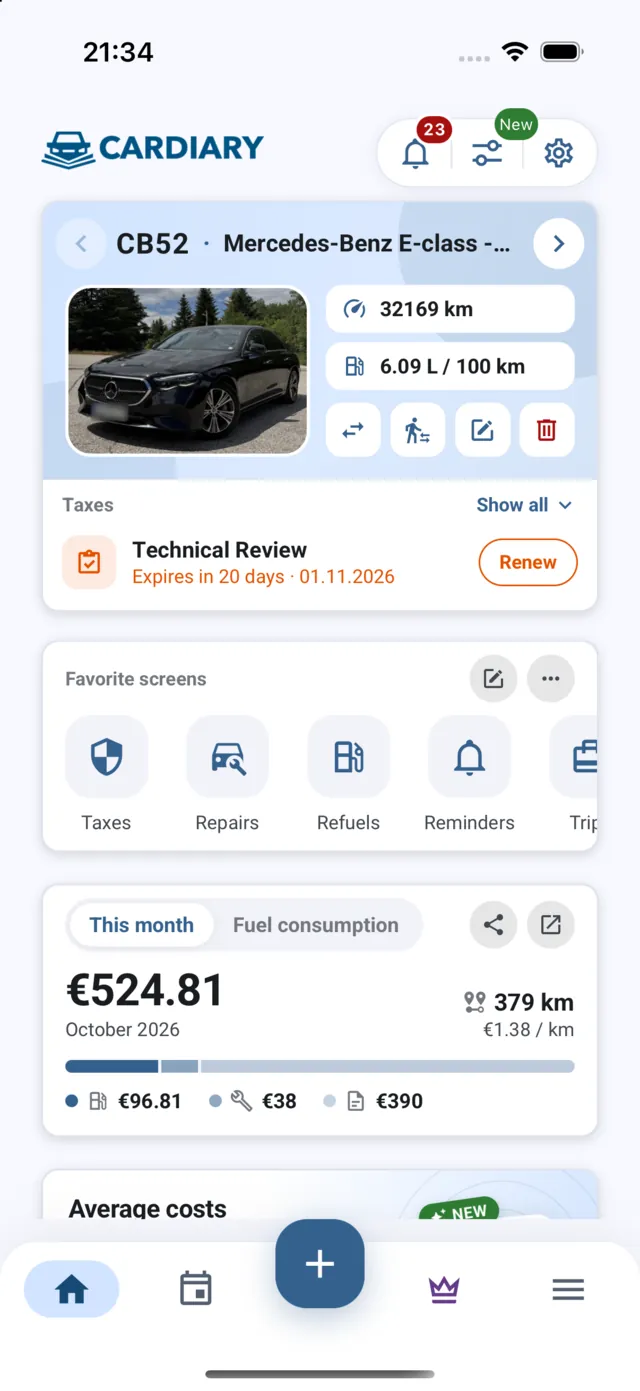
Owners who keep every service visit in CarDiary, a digital vehicle cost and deadline log that replaces a spreadsheet, have a dated history ready when a buyer asks, though the dealer invoices remain the documents a buyer will usually want to see.
What should you check before buying a used Cybertruck now?
Shoppers face a different risk. A seller who wants to move quickly may offer a truck with an open recall, a branded title, or a thin service history. Use the VIN printed on the dashboard, the door jamb label, and the title. Do not rely on a number read over the phone or copied from an ad.
- Confirm that the VIN on the dashboard, door jamb, and title all match the listing.
- Run the VIN through NHTSA's recall lookup, and ask the seller for proof that any remedy was completed.
- Check the title for brands such as salvage or rebuilt, and confirm the title status with the state that issued it.
- Ask for every service invoice, including body, glass, and battery work.
- Pay for an independent inspection by a shop familiar with stainless steel body repair and high-voltage systems.
A state inspection checks a vehicle against that state's rules, and it is not the same as a pre-purchase inspection. The state inspection tells you whether the truck can be registered. The pre-purchase inspection tells you what condition it is in, which is the question that matters more for a model with a shrinking parts pipeline.
What mistakes do owners and shoppers make after a production stop?
The most common mistake is reacting to the headline instead of the paperwork. Owners sell early because a news story sounds alarming, then accept an offer that ignores the truck's actual condition. Shoppers do the reverse and buy a bargain without checking the title or the recall history.
- Assuming a recall remedy will disappear because the model stopped building.
- Letting a seller's assurance replace a title check and a VIN-based recall search.
- Leaving a pending service item open for months, then trying to rebuild the history at trade-in time.
- Ordering body parts without matching the VIN and model year to the part listing.
- Skipping the inspection because the truck looks new.
Leased owners have an extra edge case. The lease contract sets the end date, mileage allowance, and buyout terms, and those terms do not change because the factory has stopped building the model. Ask the lessor in writing how the production stop affects any early termination or purchase option before you decide.
Frequently asked questions about Cybertruck production ending
Will my Cybertruck still get recall repairs?
Yes. Open recall remedies remain the manufacturer's responsibility, and you can check any VIN through NHTSA's recall lookup at nhtsa.gov.
Does ending production void my Cybertruck warranty?
No. Warranty coverage follows the written terms and dates in your owner documents, not the end of factory output.
Is a used Cybertruck a good buy after production stops?
It depends on the individual truck. A clean title, completed recall remedies, and a documented service history matter more than the model's production status.
Where do I find the in-service date?
It appears on the delivery paperwork from the sale. If you cannot locate it, ask the seller or the manufacturer for the first registration date and the delivery record.