When Georgia Tech opened the 2026 season with a sold-out White Out against Colorado at Bobby Dodd Stadium at Hyundai Field, more than 52,000 fans packed a campus that sits between downtown Atlanta and Midtown. The Thursday night kickoff on ESPN put a national spotlight on The Flats, but the real test for most drivers was the same one that returns for every home date: navigating I-75, I-85, and local Tech Parkway closures, finding a legal parking deck, and paying for gasoline that still costs well above last year.
Where Bobby Dodd Stadium sits in Atlanta traffic
Bobby Dodd Stadium is at 150 Bobby Dodd Way NW, Atlanta, GA 30332, on Georgia Tech's main campus just north of the Downtown Connector. On gameday, Georgia Tech Parking and Transportation closes dozens of permit lots hours before kickoff and routes single-game traffic to specific decks listed on the official football parking guide. For the 2026 season, athletics rolled out more than 100 gameday improvements, including a dedicated navigation page and real-time wayfinding signs, because a sellout crowd in a 52,113-seat stadium creates ripple effects across the entire metro area—not only on North Avenue and Tech Parkway.
Major road projects can still spill over. During the Colorado weekend, Georgia Tech warned fans about I-285 Westside Rebuild lane closures between Cascade Road and Langford Parkway and about the Shaky Knees festival at Piedmont Park, both of which added volume to routes that already funnel toward campus. If you are driving to a later home game—Duke, Louisville, Wake Forest, or the Tennessee rematch—build in extra time even when your GPS shows a short distance.
Parking options and what they cost
Georgia Tech sells advance football parking through ParkMobile and accepts day-of cash or card payments at designated lots. According to the campus gameday parking page, day-of parking is $15 per vehicle at Tech Square Deck (E81), Family Housing Deck (ER66), Ferst Drive (W01), 781 Marietta Street (W04), Dalney Deck (W22), and North Deck (W23). Lots open at 7 a.m. on football Saturdays; weekday or Thursday night games follow the schedule posted for that specific contest.
Single-game fans should buy parking in advance when possible and drive straight to the assigned deck. Georgia Tech explicitly warns against entering permit-only areas—traffic staff will reroute you, and attempting cut-throughs on Ferst Drive or Tech Parkway adds idle time that burns fuel. The athletics parking map breaks down walk times: Tech Square (E81) is roughly 0.6 mile and a 10–15 minute walk; Dalney (W22) and North Deck (W23) are closer to 0.8–0.9 mile; permit-only Wardlaw and Alumni lots sit within steps of the gates but require a Georgia Tech parking pass.
RV and oversized-vehicle parking is separate from the standard $15 lots and must be reserved ahead—on-site RV payment is not available. Tailgating is allowed on campus, but open flames and grills are prohibited inside parking decks, including Tech Square. Parking on lawns, sidewalks, or landscaped areas leads to towing and citations, a costly mistake on a night when every space is spoken for.
Rideshare, MARTA, and skipping the deck fee
All rideshare pickup and drop-off happens on Tech Parkway in the parallel spaces off North Avenue. That keeps Uber and Lyft out of the tightest campus loops but still means surge pricing when 50,000 people leave at once. If you split a ride four ways and surge doubles the fare, you can easily exceed the $15 parking fee—compare both before you commit.
MARTA's North Avenue station is a five- to ten-minute walk from Bobby Dodd Stadium. The standard one-way fare is $2.50, with up to four free transfers within three hours when you tap the same payment method throughout the trip. A couple riding rail from Midtown pays $5.00 total in transit fare versus $30.00 for two parking passes, though you trade trunk space and tailgate gear for the walk.
Fuel math at today's Georgia pump prices
Parking is only part of the bill. AAA reported a Georgia statewide average of $4.09 per gallon for regular unleaded in mid-September 2026, while the national average reached $4.47—more than one dollar above the same week in 2025. Atlanta drivers heading to campus from suburbs like Marietta, Alpharetta, or Decatur commonly log 20 to 40 miles round trip.
Here is what that looks like in US gallons and US MPG for three realistic scenarios using the Georgia average of $4.09 per gallon:
- Intown Atlanta (25 miles round trip, 28 MPG crossover): 0.89 gallon consumed, about $3.64 in fuel, plus $15 parking = $18.64 per game before tolls or rideshare surge.
- North Fulton or Gwinnett (50 miles round trip, 28 MPG): 1.79 gallons, about $7.32 in fuel, plus $15 parking = $22.32.
- Athens or Chattanooga visitor (140 miles round trip, 30 MPG sedan): 4.67 gallons, about $19.10 in fuel, plus $15 parking = $34.10—and that assumes no congestion idle time, which can add 10–15 percent more fuel on a hot, humid Atlanta evening.
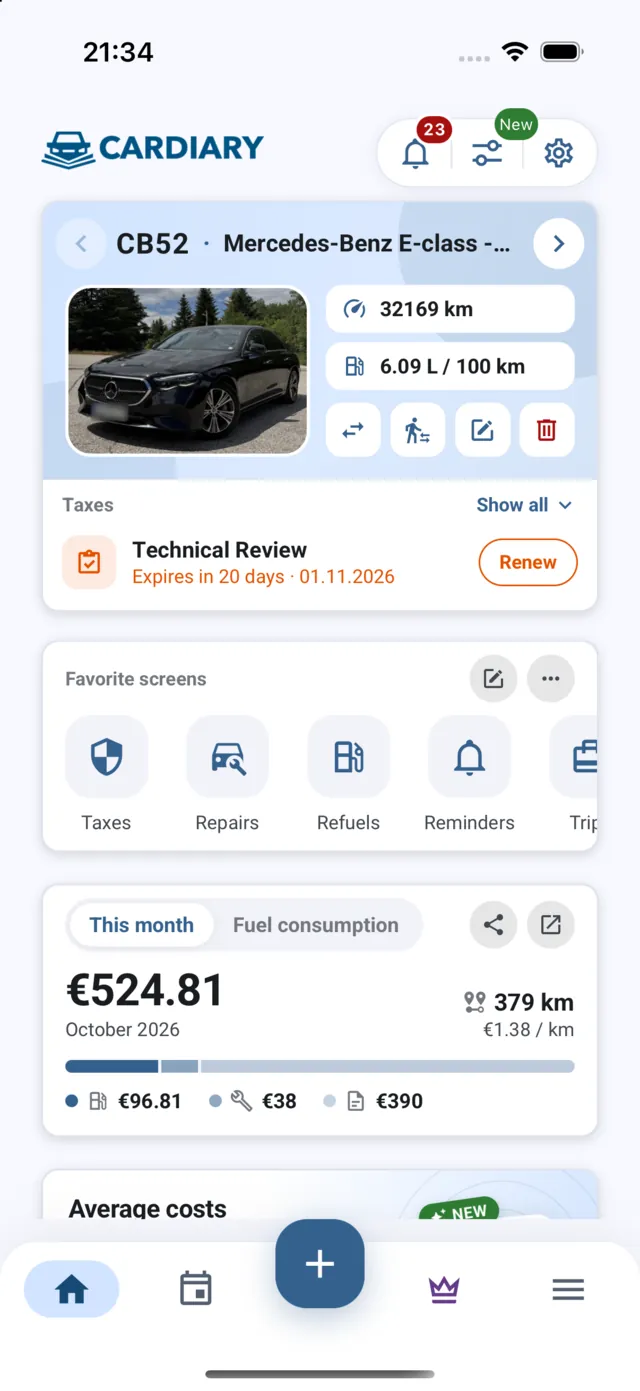
Use the CarDiary MPG and fuel cost calculator to plug in your own vehicle's EPA combined rating and local price per gallon. A Toyota RAV4 Hybrid rated at 40 MPG on the same 50-mile suburban round trip burns 1.25 gallons ($5.11) instead of 1.79 gallons in a 28 MPG crossover—a $2.21 savings per trip that adds up across a seven-game home slate.
Out-of-town fans and business mileage
Colorado supporters who flew into Hartsfield-Jackson and rented a car faced a different cost stack: airport rental, downtown hotel parking (often $30–$45 per night at Midtown garages), plus the $15 campus pass. Renting a compact car for a weekend can exceed $200 before fuel, which is why many out-of-town fans stay near a MARTA line and ride to North Avenue instead.
If you drive to Bobby Dodd Stadium for work—scouting, media, catering, or a client event—the IRS optional standard mileage rate for business use is 76 cents per mile for miles driven on or after July 1, 2026, per IRS Publication guidance. Fifty business miles from a Midtown office to campus and back at the current rate equals $38.00 in deductible mileage before parking receipts, compared with roughly $7–$10 in actual fuel for an efficient sedan. The CarDiary IRS mileage rate calculator applies the correct half-year rate to each trip date; CarDiary is a digital log for your own records, not an IRS filing system.
Planning the rest of the 2026 home schedule
Georgia Tech's 2026 home slate includes high-demand dates beyond the Colorado opener—Tennessee, Duke, Louisville, and Wake Forest all draw larger travel crowds than a mid-week non-conference game. Expect earlier lot closures, heavier Connector traffic, and longer egress queues after night games. Check the athletics parking page the morning of your game for traffic alerts, confirm your ParkMobile reservation, and avoid the temptation to park in a closed permit lot even if you see an open space.
When you add parking receipts and odometer readings after each trip, CarDiary keeps a running fuel and mileage log so a full season of Yellow Jackets home games is easier to compare than a spreadsheet.
Quick budget checklist before you leave
- Reserve parking through ParkMobile or budget $15 cash/card day-of at E81, ER66, W01, W04, W22, or W23.
- Estimate fuel using your vehicle's US MPG and the current Georgia average—about $4.09 per gallon as of mid-September 2026.
- Compare MARTA ($2.50 one-way to North Avenue) against parking plus fuel if you are coming from along the rail line.
- Allow 60–90 minutes from the Perimeter on sellout nights; Thursday and Saturday kickoffs both clog Tech Parkway exits.
- Keep receipts if the trip is for business—the IRS rate is 76 cents per mile for July–December 2026, but you still need dates and odometer proof.