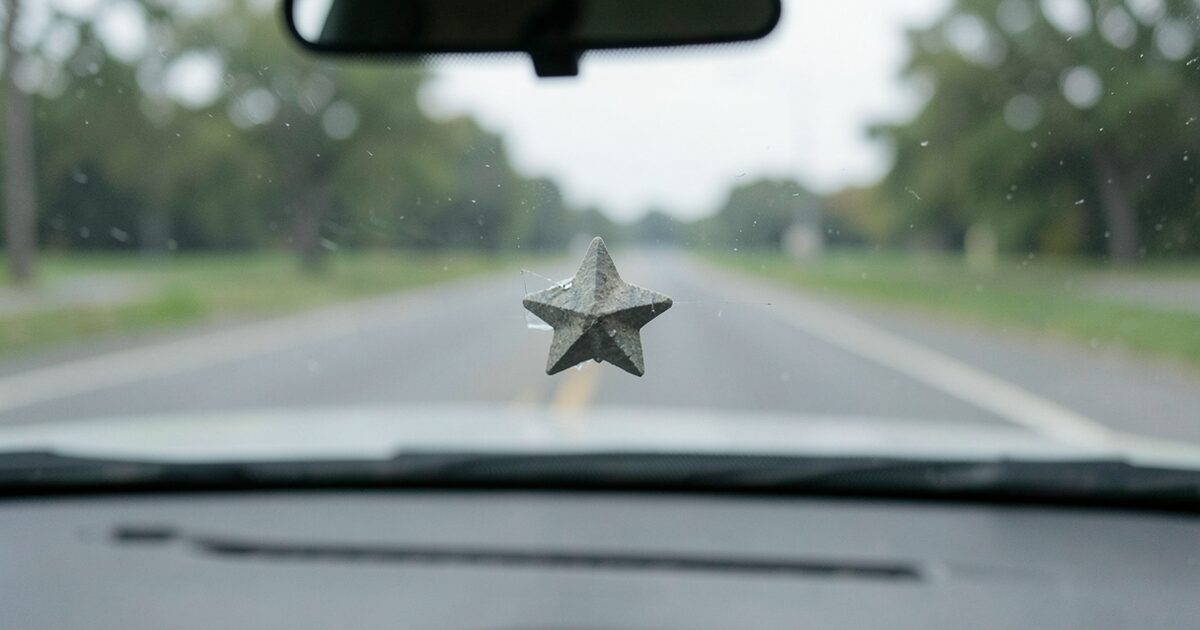
A rock chip in your windshield is usually a repair job rather than a replacement when it is smaller than about an inch across, sits outside the driver's line of sight, and has not started to crack. A shop can often fill that kind of chip in about 30 minutes, and the original glass stays bonded to the frame. The decision turns to replacement when the damage is bigger, lies directly in front of the driver, or already runs as a crack that keeps spreading.
How big can a chip be and still get repaired?
Shops judge a chip by its diameter and depth, not by how annoying it looks. The common rule of thumb in the glass trade is a chip under about one inch across, roughly the size of a US quarter. That is a guideline, not a federal rule. Each shop follows its own repair standard, and some decline a smaller chip if it is deep or has long legs.
Check the damage with a flashlight and a clean cloth. A pit that has not broken through the outer layer usually fills well. A chip with a visible crater, loose glass fragments, or a crack already leaving it is a different job, and the shop may only stabilize it rather than make it invisible. Dirt and moisture get into a chip over time, which is one reason to book the repair within a few days rather than a few months.
Most chips fall into one of three shapes, and the shape tells the technician how the resin will flow:
- Bullseye: a round chip with a dark center and a clean ring around it, usually the easiest to fill.
- Star break: a center point with short radiating legs, often repairable while the legs stay short.
- Combination break: several impacts or a crack crossing the glass, which usually calls for replacement.
Does damage in the driver's view mean replacement?
Location matters more than many drivers expect. The glass in front of the driver is held to a stricter standard, because even a small fill can scatter light at night or distort the view in low sun. Many shops refuse to repair damage in the driver's sightline even when the chip is small, and they recommend a new windshield. The exact zone differs between shops, so ask where the line is before you agree to a repair.
Take a driver who gets a three-quarter-inch bullseye on I-35 in Dallas. The chip sits about two inches below the top edge, directly in front of the driver's seat. The first shop declines the repair and recommends replacement, because the fill would show as a haze when the sun is low. The same chip on the passenger side, away from the driver's eye line, would likely have been a straightforward fill. Same damage, different answer, because the location changed the decision.
If a chip is in the sightline, get it handled before a long trip or a night drive. Get a second opinion from a different shop if the first one only offers a repair you do not trust. A shop that is confident will show you the damage on the glass and explain which part of the view it affects.
What happens to the windshield camera after a replacement?
Many cars built in recent years mount a forward-facing camera on the windshield, behind the rearview mirror, to run lane-keeping, automatic emergency braking, and adaptive cruise control. A new windshield changes how that camera sees the road, so the system may need a calibration before it works as designed. Some makers call for a static calibration with targets set up in a shop bay. Others call for a drive on marked roads, sometimes with a scan tool connected. Ask whether your car needs it, and whether the shop does it in-house or sends the car out.
A spot repair leaves the camera bracket and the camera undisturbed, which is one practical reason to repair early. A replacement that skips the calibration can leave lane-keeping or emergency braking working from a wrong view, and a dashboard light may not tell you the whole story. Ask the installer for a printed calibration report, and keep it with the invoice.
Repair, crack fill, or replacement: which fits your damage?
Three options cover most cases, and each one fits a different kind of damage. Match the damage to one of these before you call a shop.
- Spot repair: for chips in the acceptable zone. Resin is injected into the damage and cured with UV light. The original glass stays in place, the job is usually quick, and the appearance is often much better but rarely perfect.
- Crack stabilization: for a short crack that has not reached the edge. The technician drills a small hole at the end of the crack and fills it. This slows spreading, but the line usually stays visible.
- Full replacement: for cracks reaching the edge, damage in the driver's view, or several breaks in one area. The old glass is cut out and a new windshield is bonded in with urethane, which needs a cure time before the car is driven.
Ask the installer for the safe drive-away time, because it depends on the urethane product and the air temperature. A cold garage can slow the cure, so a winter appointment may need a longer wait than a summer one. Do-it-yourself resin kits can fill a small pit, but they rarely match a shop's clarity, and a poor fill can stay cloudy and collect dirt inside the chip.
Can I wait, and what should I do first?
Waiting is the most common mistake. Temperature swings are the main reason a chip becomes a crack. Hot air blasted at cold glass on a winter morning, a car parked in the sun after a freezing night, or a cold-water wash can stretch the glass around the damage. A chip that looked stable in October can run across the windshield after the first hard freeze.
Follow this order after a rock strikes the windshield:
- Note the date, the location of the chip, and its size measured against a coin or ruler.
- Cover it with clear packing tape on the outside to keep out dirt and water.
- Keep the defroster on low and avoid aiming hot air straight at the glass.
- Call two shops, ask whether they repair chips in the driver's view, and ask whether your car needs a camera calibration after a replacement.
- Book the repair within a few days, and schedule replacement soon if a crack reaches the edge.
A driver who waits three weeks before booking a chip in a cold climate may find the chip has become a crack that needs a new windshield. Acting early keeps more of your options open, including the repair itself.
Does insurance pay for a chip or a new windshield?
Glass damage is often covered under the comprehensive part of a US auto policy, not the collision part. Some insurers waive the deductible for a repair but apply it to a full replacement. Others carry a separate glass deductible or a glass endorsement. Check the declarations page, or call the insurer and ask three questions: is there a glass deductible, does the insurer have a preferred glass network, and will a glass claim appear on your policy history.
Your state rules and your policy set the details, so confirm before the appointment rather than after. Keep the invoice, the calibration report if there is one, and the date of the work. These records matter at resale, because a buyer or a dealer may ask whether the windshield was replaced and whether the camera was calibrated.
Record the work in CarDiary's service log, next to your oil changes and tire rotations, so the invoice and calibration report sit in one place when you sell or trade the car.
Frequently asked questions about windshield chip repair
Can a windshield chip be repaired in the rain or cold?
Many shops need dry, reasonably warm glass for the resin to cure properly. A wet or freezing day can mean a rescheduled appointment, so ask the shop what conditions they need.
Is a repaired chip as strong as the original glass?
A good repair restores much of the strength and stops the chip from spreading, but it does not make the glass new. The spot usually remains faintly visible, which is why shops refuse some damage in the driver's view.
Does a windshield crack affect a state inspection?
Many states fail a windshield crack or chip that obstructs the driver's view during inspection. Check your state's inspection rule before the due date, because the threshold varies.
Does replacing a windshield void my car's warranty?
Usually not by itself, but a dealer may ask which glass was installed. Keep the invoice and any calibration report to show the work was done correctly.