September 2025 closed a chapter for American car buyers. Battery electric vehicles reached roughly 12% of new retail sales that month, according to industry analysts, as shoppers rushed to dealer lots before federal purchase incentives disappeared. Now that the window has passed, anyone shopping for a new or used plug-in vehicle must price the car on its own merits: sticker price, electricity or gasoline bills, insurance, registration, and maintenance. The subsidy is gone, but the math of driving an EV in the United States is still straightforward once you strip away the tax-credit discount.
What changed under federal tax law
The IRS clean vehicle credit page states plainly that the New Clean Vehicle Credit under Internal Revenue Code Section 30D, the Previously-Owned Clean Vehicle Credit under Section 25E, and the Qualified Commercial Clean Vehicle Credit under Section 45W are not available for vehicles acquired after September 30, 2025. Congress accelerated those termination dates through the One, Big, Beautiful Bill, signed July 4, 2025.
For buyers who timed a purchase correctly, Section 30D could reduce federal tax owed by up to $7,500 on a qualifying new battery electric vehicle or plug-in hybrid, and Section 25E could provide up to $4,000 on a qualifying used clean vehicle. Dealers could transfer the credit at the point of sale, which made the discount feel like an instant rebate. After September 30, 2025, that line item simply does not appear on the purchase agreement for newly acquired vehicles.
Who can still claim a credit
Not every deal closed before the calendar flipped. The IRS FAQ on OBBB credit terminations explains that a vehicle is considered acquired when you have a written binding contract and have made a payment, including a nominal deposit or a trade-in. If both conditions were met on or before September 30, 2025, you may still claim the credit when you take possession, even if delivery happens later. The dealer must submit a time-of-sale report to the IRS, and you claim the credit on your return using Form 8936 for the tax year in which the vehicle is placed in service.
If you signed paperwork after the deadline with no prior binding contract, the federal purchase credit is not available regardless of when the car arrives at your driveway.
Sticker shock without the $7,500 discount
Industry data from September 2025 illustrate why the credit mattered at the register. Kelley Blue Book reported that the average transaction price for a new vehicle in the United States crossed $50,000 for the first time, reaching $50,080, while the average EV transaction price stood at $58,124. Removing a $7,500 federal credit from a $58,000 electric crossover effectively adds more than 12% to the out-of-pocket cost for buyers who no longer qualify.
Automakers including Ford, Hyundai, and Kia posted record EV sales in the final credit month, and overall new-vehicle sales ran at a seasonally adjusted annual rate near 16.4 million units. Analysts widely expect EV market share to soften in the fourth quarter now that the incentive is gone, even as hybrid sales remain strong near 14% of retail volume.
Electricity versus gasoline: monthly fuel math
Purchase price is only half the ownership story. Running costs depend on how many miles you drive and what you pay for energy. The EPA Automotive Trends Report puts the real-world fuel economy of the average new 2024 model-year vehicle at 27.2 miles per US gallon. At 12,000 miles per year and $3.50 per gallon of regular gasoline, that conventional car burns about 441 US gallons annually, or roughly $1,544 in fuel.
A typical battery electric sedan or crossover uses roughly 0.30 kilowatt-hours per mile when charged at home. Over the same 12,000 miles, that is 3,600 kWh. At a residential rate of $0.17 per kWh, home charging costs about $612 per year, or roughly $51 per month. Public fast-charging runs higher, often $0.35 to $0.50 per kWh, so drivers who rely on highway chargers should budget more.
You can benchmark any gasoline model against an EV using the CarDiary MPG and fuel cost calculator, which works in US gallons and miles per gallon rather than imperial units. For a 30 mpg gasoline sedan at $3.50 per gallon, 1,000 monthly miles cost about $117 in fuel. The EV example above at $0.17 per kWh lands near $51 for the same distance, saving roughly $66 per month on energy alone. Insurance, tire wear, and registration fees still apply to both.
Used EV buyers face a double hit
Section 25E previously offered up to $4,000 for qualifying used clean vehicles priced under $25,000, subject to income limits and other IRS rules. That credit also ended for acquisitions after September 30, 2025. Used EV prices had already been falling as new inventory grew, but losing the $4,000 credit raises the effective price on budget-friendly models such as early Tesla Model 3s, Chevrolet Bolt EVs, and Hyundai Kona Electrics.
Before buying a used battery electric vehicle, pull the vehicle history through a VIN lookup and confirm the remaining battery warranty. A lower purchase price means little if the pack is out of warranty and range has degraded significantly.
Home charger credit and state deadlines
One federal incentive remains for now. Section 30C, the Alternative Fuel Vehicle Refueling Property Credit, covers up to 30% of the cost of qualified home EV charging equipment and installation, capped at $1,000, for property placed in service before July 1, 2026, according to the IRS FAQ. That can offset a Level 2 wall charger, which typically costs $400 to $800 for the hardware plus electrician labor.
State-level costs continue regardless of federal tax policy. Registration renewal fees, annual safety or emissions inspections where required, and local EV surcharges vary widely. The CarDiary registration renewal guide helps you track when your plate tags expire so a missed deadline does not add penalties on top of an already expensive vehicle.
Building a post-credit ownership budget
Without a federal credit, the decision to go electric rests on your daily driving pattern, access to home charging, and how long you plan to keep the vehicle. Short commutes with overnight charging favor EVs even at full sticker price. Long rural drives with sparse fast-charging infrastructure may still favor a hybrid or efficient gasoline car.
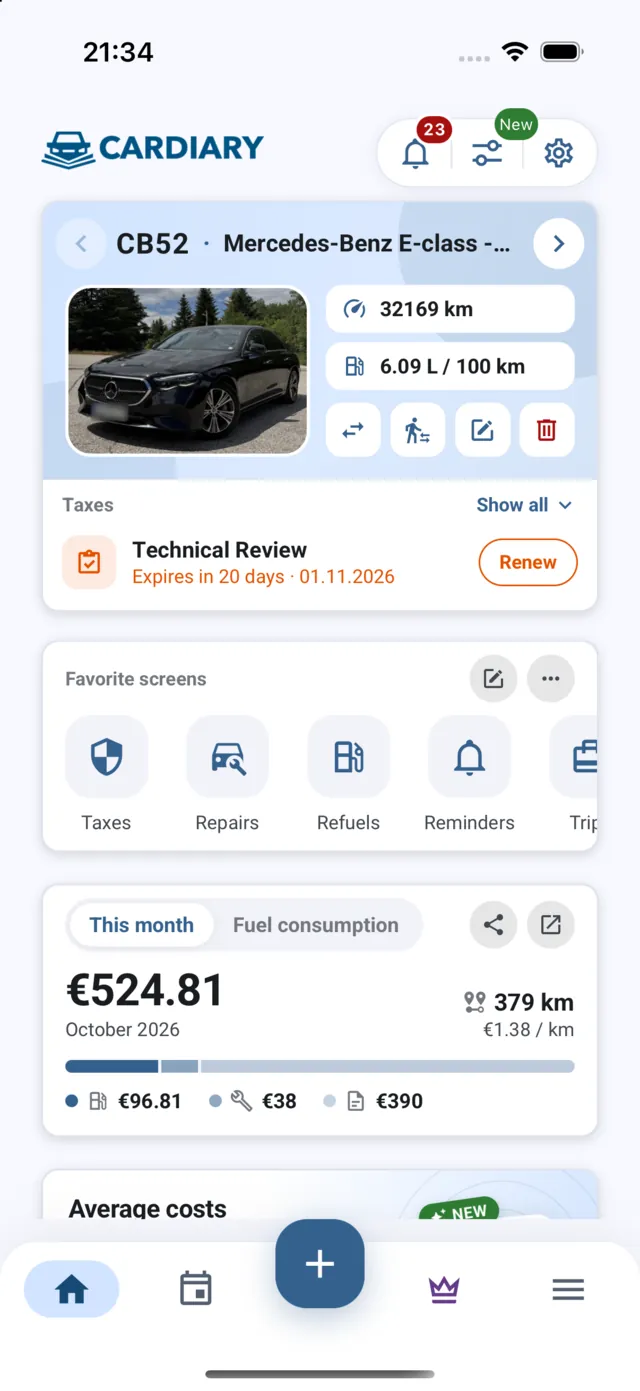
Track every cost category separately: monthly loan or lease payment, insurance premium, electricity or gasoline receipts, tire rotations, and registration. Keeping a running log of charging sessions and maintenance dates in CarDiary gives you a clear picture of what the vehicle actually costs per month once the showroom discount is history.
Hybrids offer a middle path. They qualify for neither the expired Section 30D credit nor home-charger incentives in most cases, but their EPA-rated fuel economy often exceeds 40 mpg in US gallons, which keeps pump spending low without range anxiety. For many suburban households, a hybrid may deliver the best balance of upfront price and running cost in the current market.
Whether you bought before the deadline or are shopping today, the ownership equation is the same: compare total cost of ownership over the years you plan to drive the car, not just the monthly payment on the window sticker. The federal credit made that comparison easier for a while. Now the numbers speak for themselves.