Shoppers racing to close on a new or used electric vehicle before federal clean vehicle credits end are running into a second bottleneck at the dealership: IRS Energy Credits Online is taking longer to approve dealer advance payments, and some stores are limiting how much rebate cash they will front while reports sit in pending status. The cars are still in the headlines—Tesla Model Y, Chevrolet Equinox EV, Ford Mustang Mach-E, Hyundai Ioniq 5, and used EVs coming off lease—but the paperwork path matters as much as the sticker price this month.
Why the dealer portal suddenly feels slow
Since 2024, most point-of-sale rebates have flowed through a transfer election: you assign the credit to a registered dealer, the dealer reduces what you pay at signing, and the IRS reimburses the dealer via advance payment after a time-of-sale report clears. Under normal conditions, the IRS says time-of-sale reports finalize after a 48-hour void window, and advance deposits typically land within about 72 business hours once a request is accepted—timelines spelled out in IRS Topic H FAQs on credit transfers.
Dealers nationwide told reporters in late September 2025 that many recent submissions were flagged pending, with extra documentation requests such as photos tying the purchase agreement to the VIN on the door jamb. That does not cancel the credit by itself, but it does mean a dealer may be floating $4,000 on a used EV or up to $7,500 on a qualifying new model until ACH arrives. Some franchises continued honoring rebates; others capped exposure or paused transfers to protect cash flow—exactly the kind of business decision the IRS says dealers may make even though they must still report qualifying sales.
What the IRS requires before you drive home
The transfer election is optional—you cannot be forced to transfer the credit—but if you want the instant discount, both sides have homework at or before the time of sale. Dealers must give you a written disclosure covering MSRP or sale price, the maximum credit, the cash or price reduction they are providing, income limits, and (for used EVs) model-year and first-transfer certifications. They must also hand you a copy of the seller report and confirmation that Energy Credits Online accepted the submission.
On your side, you provide ID, your taxpayer identification number, income attestations, and several signed statements, including that you will file a federal return reporting the VIN and the transfer. Critically, Topic H FAQ 11 states that if the seller report is rejected, you cannot claim the New Clean Vehicle Credit or Previously Owned Clean Vehicle Credit at all for that transaction. Buyers and dealers are explicitly told to confirm acceptance before the vehicle is placed in service.
- Ask to see the live portal status—not a promise that finance will “handle it Monday.”
- Compare the VIN on the seller report, window sticker, insurance binder, and door jamb; a mismatch is an instant stop.
- Keep the time-of-sale report; you will need it for Form 8936 on next year’s 1040 even though the credit was applied upfront.
- If the dealer will not transfer the credit, you may still buy the car and claim the credit on your return, but only if the dealer successfully reported the sale through the same IRS portal.
- Remember the election is final; you cannot unwind it after signing because reimbursement lagged.
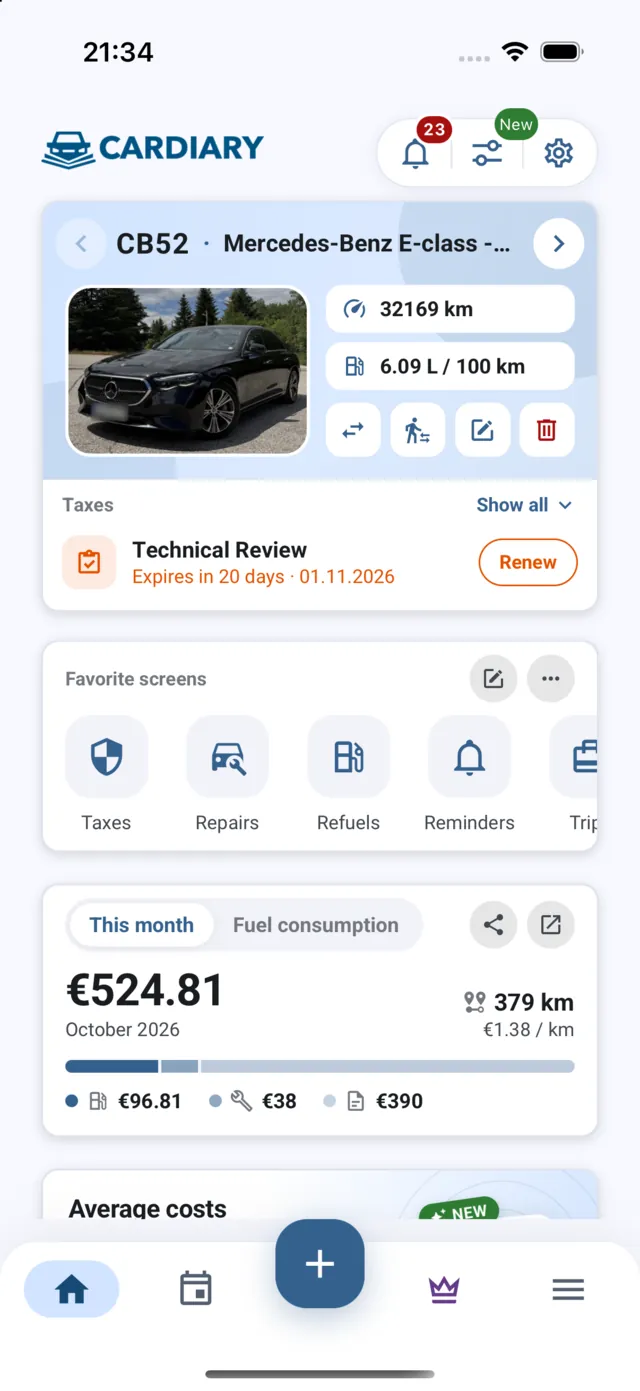
Before you sign, cross-check the VIN on the contract against public recall and title clues with the CarDiary VIN check tool—a quick step in a private vehicle log that replaces spreadsheet notes and is not an official DMV or IRS register.
September 30 acquisition rules still matter
Congress shortened the life of these credits in 2025, with eligibility tied to acquisition before October 2025 for many shoppers who already paid deposits or signed contracts. IRS guidance published in 2025 clarified that vehicles acquired by September 30 can qualify even if delivery slips a few days later, provided you have a binding contract and payment on record—language dealers have been citing for back-ordered Equinox EV and Lyriq units. If you are counting on a transfer, however, the dealer still has to be registered for advance payments and willing to shoulder float until the IRS pays.
Models moving fastest—and what they cost to run afterward
Industry forecasters expected September 2025 to set EV volume records, with battery-electric share approaching twelve percent of retail sales and Tesla, Chevrolet, Ford, Hyundai, Cadillac, and Rivian posting strong months. Among high-volume nameplates, the Chevrolet Equinox EV has been highlighted as one of the lower average transaction price EVs near $40,000, while luxury entries such as the Cadillac Lyriq saw double-digit growth. None of that helps if your rebate is stuck pending, but it explains why lots are crowded.
After the credit question is settled, running costs revert to electricity versus gasoline math. Using a national average near $3.17 per gallon for regular gasoline in September 2025 (Bureau of Transportation Statistics and EIA retail surveys) and a conservative 30 US MPG for a comparable gas crossover, 12,000 miles burns about 400 gallons—roughly $1,268 in fuel at that price. An EV averaging 3.0 miles per kWh would need about 4,000 kWh; at $0.16 per kWh home charging, that is near $640 a year before public fast-charging premiums. Plug-in hybrids sit in the middle and still need oil changes. You can model your own commute with the CarDiary MPG and fuel cost calculator using US gallons and US MPG.
When dealers pull back on transfers
If a store stops offering point-of-sale transfers but will still sell the EV, you can pay full price and recover the credit on your 1040—provided the seller report is accepted and you meet income and MSRP caps. That path demands tax liquidity: you float the full amount until refund season, and you remain responsible for repaying the IRS (not the dealer) if your modified AGI exceeds limits. Dealers are not required to verify income, but you attest under penalty of perjury, and Topic H FAQ 21 makes clear excess AGI triggers repayment on your return.
Used EV credits cap at $4,000 and carry additional eligibility rules (model year at least two years older than the calendar year of sale, first transfer since August 2022, sale price below IRS thresholds). A pending portal status on a $28,000 off-lease Ioniq 5 or Model 3 is still a $4,000 swing—worth verifying acceptance before keys change hands.
Registration, insurance, and inspection deadlines still tick
Even during credit chaos, state rules do not pause. You still need valid insurance before registration in most states, and inspection or emissions tests remain on their own calendars— unrelated to the IRS portal. If you are juggling a temporary tag and a home charger install, logging renewal and inspection due dates alongside fuel or charging receipts keeps the admin stack from slipping; CarDiary’s inspection due date reminder is built for that kind of deadline tracking without GPS telematics.
Practical checklist for the final week of credits
Walk into the finance office with the same discipline you would use for a home closing: verify VIN triple-match, insist on accepted seller-report proof before delivery, read whether the rebate is cash off MSRP or a down-payment adjustment (MSRP caps for new EV credit eligibility do not shrink when the credit acts as a down payment, per Topic H FAQ 22), and photograph the IRS-required disclosure packet. If the dealer cites pending IRS status, ask whether they will still honor the full transfer amount in writing on the buyer’s order.
Federal clean vehicle credits were always a tax program administered through dealer reporting, not a guaranteed instant rebate fund. September’s combination of record EV demand and slower advance payments makes that distinction painfully visible. Nail the IRS paperwork once, file Form 8936 next spring, and shift your focus to the ordinary ownership math—electricity rates, tire rotations, and state registration—that will govern the car long after the credit window closes.