Volkswagen Group of America is recalling 208,724 SUVs in the United States because a steering-rack mounting bolt can corrode, break, and leave a driver without reliable steering control. The National Highway Traffic Safety Administration (NHTSA) lists the campaign as recall 26V590, filed September 11, 2026, with affected VINs searchable on NHTSA.gov since September 16.
Which vehicles are included
The action targets specific model years and steering-rack builds—not every Tiguan, Atlas, or Q3 sold in the U.S.:
2018 Volkswagen Tiguan — 85,713 units
2018–2019 Volkswagen Atlas — 82,601 units
2019–2021 Audi Q3 — 40,410 units
Volkswagen says production changes phased out the vulnerable bolt between June 2018 and July 2021, which explains why newer model years fall outside the recall window even when the badge on the grille looks the same.
What NHTSA says can fail
According to the defect report, the right-side bolt that attaches the steering rack to the front subframe may corrode until the head snaps off. If the steering-rack housing then fractures, NHTSA warns of a potential loss of steering control and an increased crash risk.
Volkswagen's investigation began with field reports outside North America and stretched across several years. By August 2026 the company concluded that a housing fracture might not always produce obvious warning signs before control is lost—making the free dealer repair worth scheduling even when the SUV still tracks straight on the highway.
Steps for U.S. owners
Check your VIN. Enter the 17-character number at NHTSA.gov/recalls. Volkswagen customer service is also available at 1-800-893-5298; internal recall codes are 48LG and 48VT.
Schedule the dealer visit. The remedy replaces the right-side steering-rack mounting bolt with a corrosion-resistant polymer-coated part at no charge.
Do not wait for mail if your VIN is flagged. Owner notification letters are expected November 10, 2026, but an open safety recall can be repaired as soon as your dealer has parts and bay time.
Running costs while you keep the SUV
Steering repairs are safety-critical, but most owners still track fuel and registration on these aging crossovers. EPA labels at fueleconomy.gov use U.S. gallons and miles per gallon:
2018 Tiguan (FWD, 2.0T) — 24 combined MPG; EPA annual fuel cost about $2,650 at 15,000 miles per year on regular gasoline.
2019–2021 Audi Q3 — about 23 combined MPG on premium gasoline; EPA annual fuel cost near $3,000–$3,350.
At $3.50 per gallon for regular fuel, a 15,000-mile year in a 24-MPG Tiguan consumes about 625 gallons—roughly $2,190 before oil changes, tires, insurance, or state registration fees. Plug your commute and local pump price into the MPG and fuel cost calculator for a tighter monthly number.
State inspections and resale paperwork
Completing recall 26V590 does not reset or replace your state's emissions or safety inspection schedule. Owners in inspection states should still plan for annual or biennial tests on time; the vehicle inspection due-date tool maps typical state cycles so a steering-rack appointment does not collide with a registration deadline.
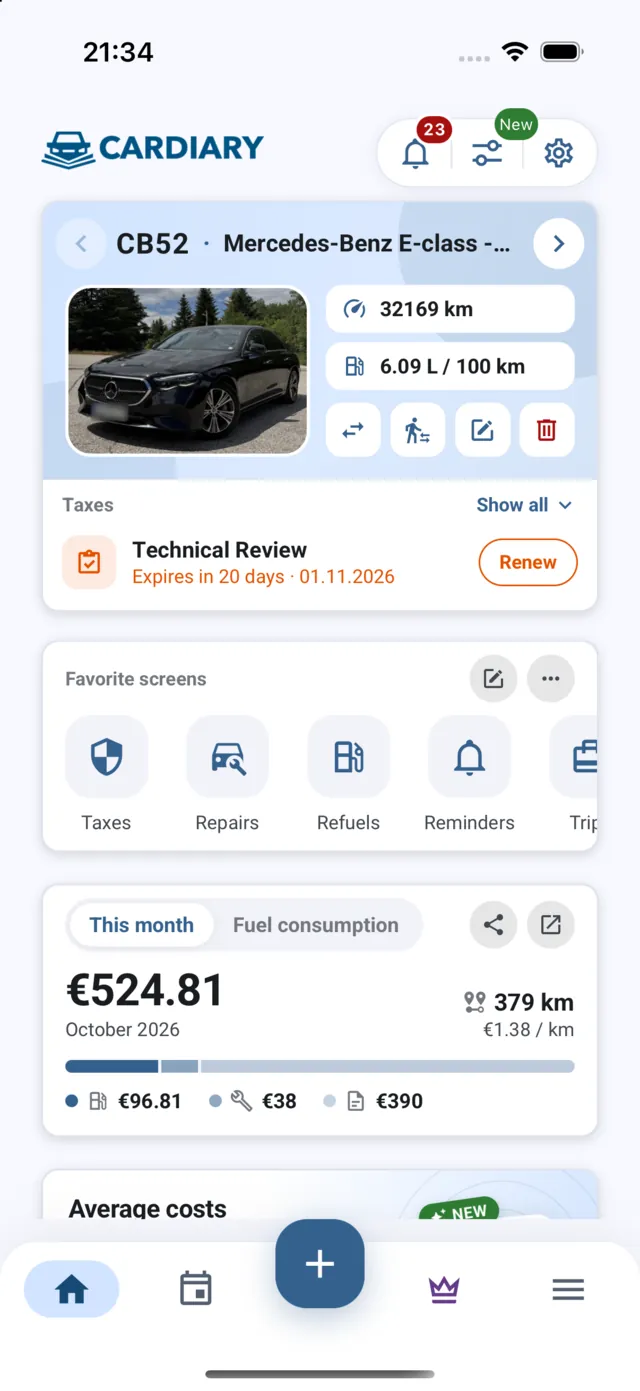
When you sell or trade, buyers and dealers will ask whether open recalls were closed—keep the dealer repair receipt with your maintenance file. After NHTSA confirms your VIN is in the campaign, noting the scheduled and completed bolt replacement in CarDiary keeps that safety fix in the same timeline as fuel fill-ups and inspection reminders instead of buried in email.