The first accumulating snow of fall is showing up on high peaks in Colorado and Utah while valleys along Interstate 70 may still see cold rain. That split is normal for early October, but it catches drivers who left Denver or the Front Range on dry pavement and climb into Eisenhower-Johnson Memorial Tunnel country with summer all-season tires and no chains in the trunk. The National Weather Service and NOAA Weather Prediction Center treat mountain snowfall as a probability band by elevation, not a single guaranteed depth at every exit, so the legal and mechanical question on the ground is simpler: are you compliant with Colorado’s winter traction rules before you need them?
Why October on I-70 is a different animal than a January blizzard
Storm tracks in early fall often bring heavy rain to the central United States while colder air aloft turns precipitation to snow above roughly 8,000 to 10,000 feet. On the I-70 mountain corridor between Dotsero and Morrison, that means Georgetown, the tunnel approaches, and the Vail Pass grade can ice over while lower segments look merely wet. CDOT posts active traction and chain requirements on variable message signs, on COtrip.org, and through 511; treat a green dashboard temperature in Golden as irrelevant once you are committed to the climb.
What Colorado law expects from September 1 through May 31
Colorado’s Passenger Vehicle Traction Law applies on I-70 between milepost 133 (Dotsero) and milepost 259 (Morrison) for the entire winter season window, and CDOT activates stricter requirements when snow or ice is present. Under rules summarized by the Colorado Department of Transportation and the Colorado State Patrol, all-wheel-drive and four-wheel-drive vehicles need qualifying tires—winter-rated (mountain-snowflake), all-weather, or M+S—with at least 3/16-inch tread, or approved chains or alternate traction devices on two or more drive tires. Two-wheel-drive vehicles must carry chains or an approved alternate traction device in that corridor during the season even on dry days, and must meet the same tire or chain standard when the traction law is in effect. If CDOT escalates to the Passenger Vehicle Chain Law during a severe storm, every vehicle needs chains or an approved device on the drive axle, which is the step taken before a full highway closure. Noncompliance carries a $50 fine plus a $17 surcharge when enforced after a crash or delay, and CSP treats violations as secondary offenses until something goes wrong on the roadway.
Field checks before you leave the Front Range
Start with tires, not drivetrain badges. AWD helps you start on a slick grade; it does not shorten stopping distance if the tread is worn smooth. Use a tread gauge at the 3/16-inch threshold CDOT cites, confirm the sidewall markings match what the traction law recognizes, and if you run narrow summer performance rubber, plan to park below the snow line or swap wheels before the trip. Pack chains or an AutoSock-style approved alternate traction device that fits your exact tire size, with gloves and a headlamp, because installation happens on a narrow shoulder in spray from plow trucks. Top off winter-grade washer fluid, confirm wipers and defrosters work, and clear the roof so slush does not slide onto the windshield of the car behind you—behavior the National Weather Service highlights in its winter driving safety guidance.
On the corridor: read the road, not the app headline
Watch for variable message signs east of the tunnel and near Vail Pass; they switch from advisory language to mandatory traction or chain law faster than phone apps refresh. Increase following distance, avoid cruise control on wet or slushy pavement, and expect bare pavement in the sun on one side of a pass and packed snow on the shaded inside curve. If you are in a long line behind spun-out two-wheel-drive crossovers, resist passing on unknown traction; CDOT often holds traffic for chain installation rather than reopening a closure. When forecasts show heavy rain at Denver elevation and snow probabilities above the resorts, build extra time or choose US 285/US 40 only if you know those routes are open and you still meet the same seasonal chain-carry rules where they apply.
When rain at the trailhead still means snow on the pass
Weekend traffic to hiking trailheads and ski-town errands peaks in October, which overlaps with the first mountain rescues and tow bills of the season. The National Highway Traffic Safety Administration notes that many winter crashes happen in lighter events, when drivers underestimate how quickly wet roads turn to ice as elevation rises. If COtrip shows chain law active ahead, pull into a lighted parking area and install devices before the grade steepens; partial installs on a 6 percent climb are where passenger vehicles block both lanes. If conditions degrade to closure, idling for hours burns fuel but is safer than sliding backward into traffic; keep half a tank, water, and a charged phone, and share your route with someone off the mountain.
Paperwork at home if you cross state lines often
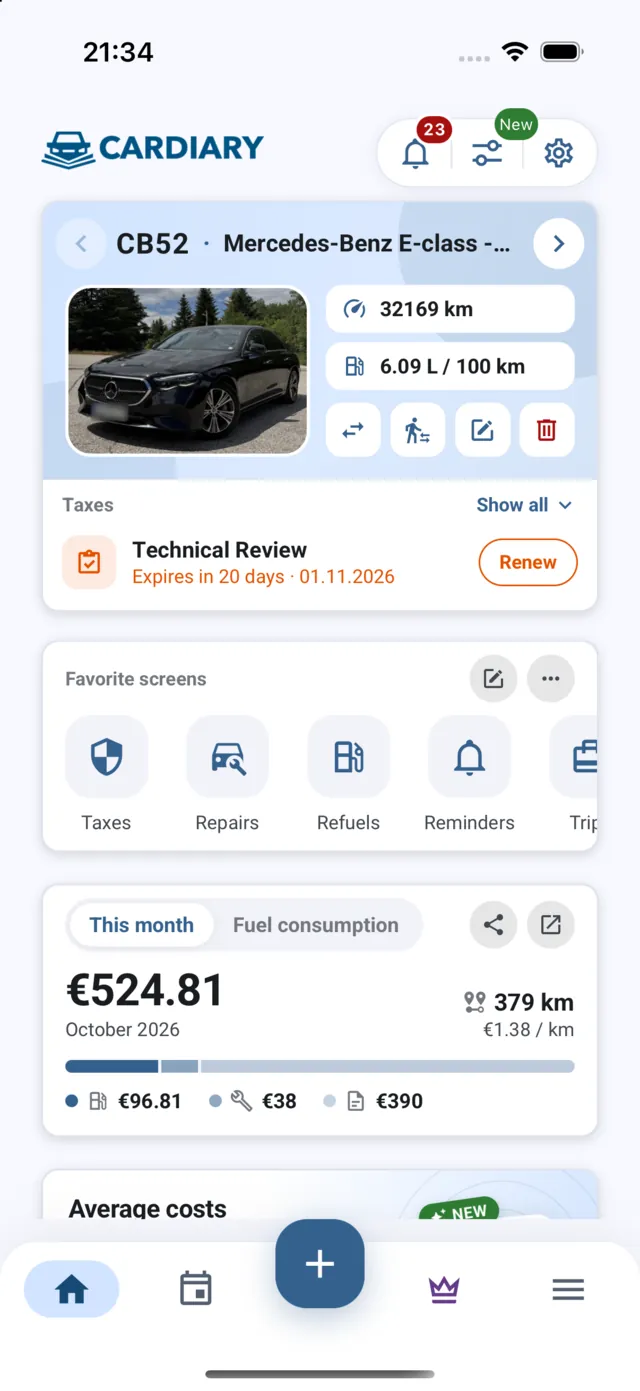
Colorado’s corridor rules do not replace registration, insurance, or inspection deadlines in your home state. If you split time between a no-inspection state and one that requires periodic safety checks, note renewal dates before winter travel season stacks up; you can track those deadlines alongside service visits in CarDiary so a mountain weekend does not collide with an expired sticker or missed emissions appointment. That single log also helps after a shop mounts winter tires or stores your all-season set, because the date and mileage of the swap matter if you need warranty support on a damaged sidewall later in the season.
After the storm: what to verify before the return trip
Slush clears from lower I-70 quickly, but side roads above the resorts may stay icy for days. Before descending, knock ice from wheel wells so vibrations do not loosen splash shields, and listen for grinding if snow packed into the brake hats. If you used chains, inspect link wear and dry them before storage; rusted fasteners fail silently on the next activation. A calm October crossing is the best time to learn where your vehicle loses grip, long before holiday traffic packs the same lanes in December.