Tropical Storm Gabrielle is strengthening over the central Atlantic this week, and the National Hurricane Center expects it to reach hurricane strength by Sunday, September 21, 2026. The forecast track keeps the center well east of Bermuda and away from a direct U.S. landfall, but Gabrielle is still relevant to American drivers because Atlantic hurricane season runs through November 30 and because coastal swells from offshore storms routinely reach beaches from North Carolina northward. If you live along the Gulf or Atlantic coast, or you are planning a late-September beach drive, the storm is a practical reminder to treat fuel, paperwork, and vehicle condition as part of storm season—not only when a cone points at your county.
What Gabrielle means on the road this week
As of Friday, September 19, Gabrielle was moving west-northwest at about 12 mph, several hundred miles east of the northern Leeward Islands and roughly 945 miles southeast of Bermuda. National Hurricane Center forecasters expect the system to turn north and pass east of Bermuda on Sunday night and Monday, September 22, staying far from the U.S. mainland. No coastal watches or warnings were in effect for the continental United States, though Bermuda was in the warning zone and surf generated by Gabrielle could build along the U.S. East Coast from North Carolina northward through early next week.
For motorists, that offshore track still changes driving conditions at the shoreline. Life-threatening surf and rip currents can close beach access points, slow traffic on coastal highways, and push sand or debris onto low-lying road segments after high tide. The National Weather Service and local lifeguards typically urge swimmers to stay out of the water when long-period swells arrive, which also means parking lots and causeways near popular beaches see heavier-than-usual congestion as visitors arrive, realize conditions are unsafe, and leave in the same afternoon window. If your route uses A1A in Florida, Ocean Highway in the Carolinas, or any barrier-island connector, check state 511 systems before you go; Florida uses FL511, and South Carolina publishes live road data at 511SC.
Fill the tank before storms: real dollar math
Hurricane preparation advice from state emergency agencies consistently includes topping off your fuel tank while roads are clear and stations are supplied. That is not abstract caution—at current U.S. pump prices it is measurable household spending. The U.S. Energy Information Administration pegged the East Coast (PADD 1) average for regular gasoline at $4.031 per gallon for the week ending September 7, 2026, while AAA's national average stood at $4.3672 on September 16. Using the AAA figure, a typical 15-U.S.-gallon tank costs about $65.50 to fill from empty; a 22-gallon pickup tank runs roughly $96.
EPA fuel-economy data for common family vehicles helps translate evacuation distance into dollars. A front-wheel-drive sedan rated at 32 highway mpg that carries a driver, luggage, and a full tank might consume about 3.1 gallons to drive 100 miles. At $4.37 per gallon, that 100-mile leg costs roughly $14. The same 100 miles in a midsize SUV rated at 24 highway mpg burns about 4.2 gallons, or near $18. Add stop-and-go traffic—which can cut effective mileage by 20 to 30 percent—and budget another $4 to $6 per hundred miles. You can model your own vehicle with the EPA's tools at fueleconomy.gov or CarDiary's MPG and fuel cost calculator, which uses U.S. gallons and miles per gallon rather than imperial units.
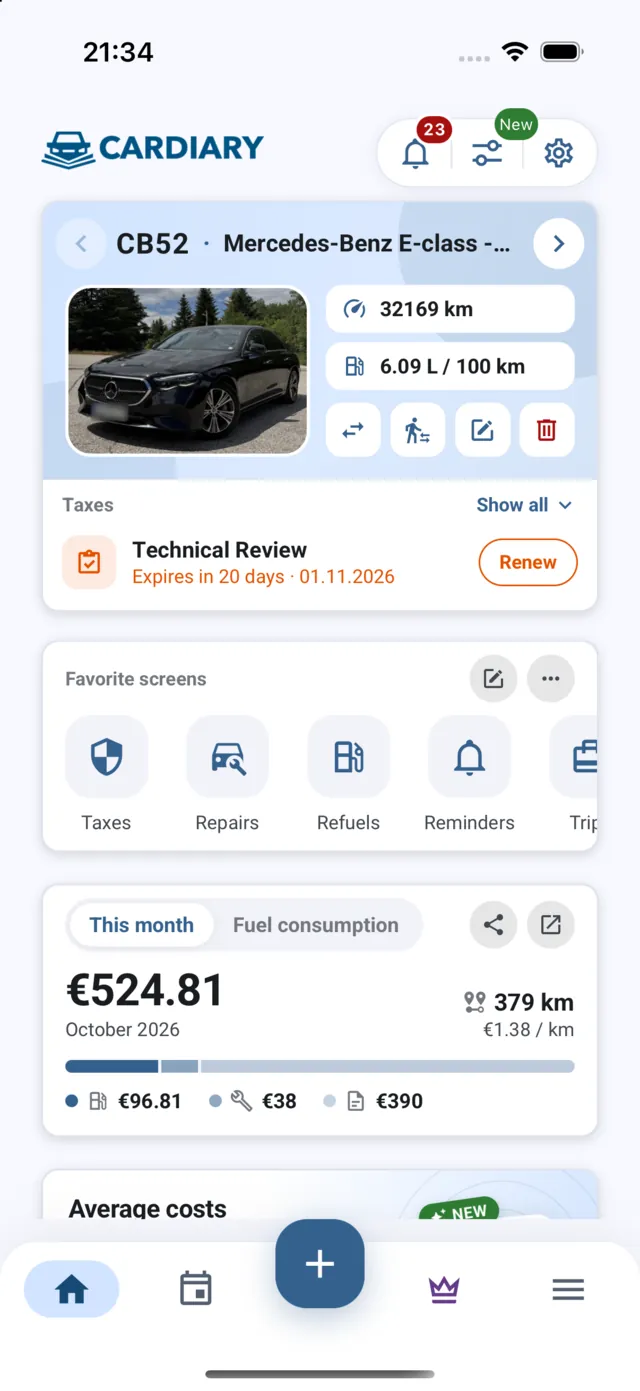
Logging each coastal fill-up in CarDiary makes it easier to see how hurricane-season mileage and higher pump prices shift your monthly fuel spend compared with ordinary commuting, without installing telematics hardware.
When evacuation orders come: miles, fuel, and routes
Gabrielle is not triggering continental U.S. evacuations, but the guidance used in prior Atlantic storms still defines what a car must handle when the next landfall threat arrives. South Carolina's hurricane guide tells residents in surge-vulnerable areas to plan routes that may require driving 20 to 50 miles inland to reach safe lodging, and it warns that GPS navigation may send drivers toward closed roads during a mandatory evacuation. Officials direct motorists to follow posted evacuation routes and live 511 updates instead of blindly trusting mapping apps. New York City's coastal storm plan similarly urges leaving early if you are in a designated evacuation zone, notes that bridge wind restrictions can ban high-profile vehicles before passenger cars, and recommends mass transit when possible because highway capacity collapses quickly once lanes reverse.
Run the inland-distance math against your actual tank range. A compact car with a 14-gallon tank and 380 miles of EPA highway range can reach a hotel 50 miles inland and return for supplies without refueling, assuming traffic stays near free-flow speed. A full-size truck towing a small utility trailer might fall below 18 mpg, cutting effective range below 300 miles on the same tank—enough for the drive but not for idling in congestion for hours. South Carolina and other Gulf states have, in past seasons, positioned supplemental fuel along major outbound interstates; those programs help, yet station lines still form when millions leave at once. Keeping registration current and knowing your inspection deadline avoids an administrative stop when time matters. CarDiary's registration renewal tracker and inspection due-date reminder are built for that kind of deadline logging, not as a substitute for your state DMV record.
Vehicle checks worth doing while skies are still clear
Offshore storms are a good prompt to finish maintenance you might defer until the first cold front. Start with tires: tread depth below 4/32 inch on wet pavement increases stopping distance, and underinflation worsens hydroplaning on rain-slick coastal roads. Test battery terminals and charging voltage; heat-stressed batteries often fail on the first cool overnight after a storm passes. Replace streaking wiper blades, confirm headlight and brake-light function before shorter autumn days arrive, and pack a basic kit—phone charger, flashlight, first-aid supplies, water, and a paper copy of your insurance declarations page—in the glove box or cargo area.
Before buying a used car to replace storm-damaged transportation, pull the vehicle history through a VIN lookup. CarDiary's VIN check tool helps you log what you find alongside service records; it is not a government title registry. Flood-damaged vehicles re-enter the market after major hurricanes, and title branding rules vary by state. Your state DMV remains the authoritative source for liens, salvage brands, and odometer disclosures.
Insurance, parking, and floodwater rules
Comprehensive auto insurance—not liability-only coverage—pays for hurricane wind, flood, and falling-tree damage if you carry it before the storm. Photograph your odometer, VIN plate, and existing body damage, and store those images outside the vehicle. If you must park in a garage or elevated deck during surge warnings, note daily parking fees; in metro areas they can add $25 to $45 per day on top of fuel and lodging during a multi-day evacuation.
Never drive through water of unknown depth. As little as 12 inches of moving water can float a passenger car, and saltwater immersion can total a vehicle even if the engine restarts once. Turn around, log the detour mileage, and add the extra fuel cost to your household storm budget—the same spreadsheet habit you might already keep for commuting, but tied to a specific weather event.
Staying ready through the rest of 2026 season
NOAA's 2026 Atlantic outlook called for above-normal activity, with the potential for multiple hurricanes before the season ends November 30. Gabrielle's recurvature into the open Atlantic does not reduce landfall risk for the Gulf Coast or Florida later in the fall; it simply shifts attention this week to surf, rip currents, and beach traffic rather than interstate evacuations. Treat each named storm as a calendar nudge: confirm your inspection and registration dates, keep at least half a tank during peak season, and know your inland route before your county emergency management office posts an order.
CarDiary is a digital vehicle cost and deadline log meant to replace scattered spreadsheets—it does not track your location by GPS, file taxes with the IRS, or replace official DMV, EPA, or National Hurricane Center information. Used consistently through hurricane season, though, it gives you a single place to record fuel spikes, parking fees, and service work when Atlantic weather keeps you on the road more than planned.