Washington is arguing again over how much carbon new cars and light trucks may emit, and the fight landed in your driveway on September 22, 2025. That day the Alliance for Automotive Innovation—the trade group for General Motors, Toyota, Volkswagen, Hyundai, and most other major brands sold in the United States—filed comments with the Environmental Protection Agency (EPA) about greenhouse-gas (GHG) limits for future model years. Reuters reported the filing on September 23. For drivers, the paperwork matters less than a simpler question: will the sedan or crossover you buy next still be tuned for fuel economy you can afford at the pump, or will sticker prices and engine choices shift as rules change?
What automakers asked EPA to change
EPA’s current framework includes the long-running GHG program for light-duty vehicles and the stronger “multipollutant” standards finalized under the Biden administration for model years 2027 through 2032. Those later rules were designed to push the fleet toward lower tailpipe CO2 through more hybrids, plug-in hybrids, and battery-electric vehicles (BEVs). The Alliance’s September comment letter argues that the 2027–2032 pace is “not achievable” given charging gaps, supply-chain limits, affordability, and weaker near-term EV demand—especially after federal purchase incentives of up to $7,500 for many new EVs ended September 30, 2025.
At the same time, EPA is reconsidering its 2009 GHG “endangerment finding” for motor vehicles, a legal anchor for federal tailpipe GHG rules. The agency opened that process in the Federal Register (Docket EPA-HQ-OAR-2025-0194). Automakers did not ask for a free-for-all: even if EPA keeps the endangerment finding, they want replacement standards that match what the market can actually build and sell. State attorneys general and environmental groups filed opposing comments the same week. None of that replaces your monthly fuel math—it shapes which powertrains stay on the menu.
EPA labels, NHTSA CAFE, and the MPG you actually get
Two federal programs sound alike but measure different things. EPA sets GHG limits and publishes the fuel-economy and emissions data on the window sticker and at fueleconomy.gov. The National Highway Traffic Safety Administration (NHTSA) runs Corporate Average Fuel Economy (CAFE) compliance separately. A court decision in early September 2025 struck down a Biden-era Department of Energy rule that adjusted how electric vehicles count toward petroleum-equivalent fuel economy in CAFE calculations—another sign that compliance math, not just engineering, is in flux.
The combined MPG figure on the label is a laboratory test cycle, not a promise for every commute. EPA’s own Automotive Trends Report shows the industry has cut per-mile tailpipe GHG from new vehicles by double-digit percentages since model year 2012, but real drivers still beat or miss the sticker depending on speed, cold weather, roof racks, and tire pressure. Treat the label as a ranking tool between two trims on the same lot, then validate with your odometer and fill-ups.
September 2025 pump prices in US gallons
Regulation headlines do not pay for gasoline. The Bureau of Transportation Statistics reported that in September 2025 the US average for regular gasoline was $3.17 per gallon, with diesel no. 2 at $3.75. Regional spreads were wide: the Gulf Coast averaged $2.73 while the West Coast hit $4.23. All figures are US gallons, not UK imperial measure.
Here is monthly fuel cost at 12,000 miles per year (1,000 miles per month), using EPA combined MPG and those September averages:
- 2024–2025 compact SUV at 28 combined MPG: about 35.7 gallons per month × $3.17 ≈ $113 nationally; on the West Coast at $4.23 ≈ $151.
- Same class hybrid at 40 combined MPG: 25.0 gallons × $3.17 ≈ $79 per month nationally.
- Full-size pickup at 20 combined MPG: 50.0 gallons × $3.17 ≈ $159 per month; towing or idle time pushes real use higher.
- Long-commute sedan at 32 combined MPG, 1,500 miles per month: 46.9 gallons × $3.17 ≈ $149 nationally.
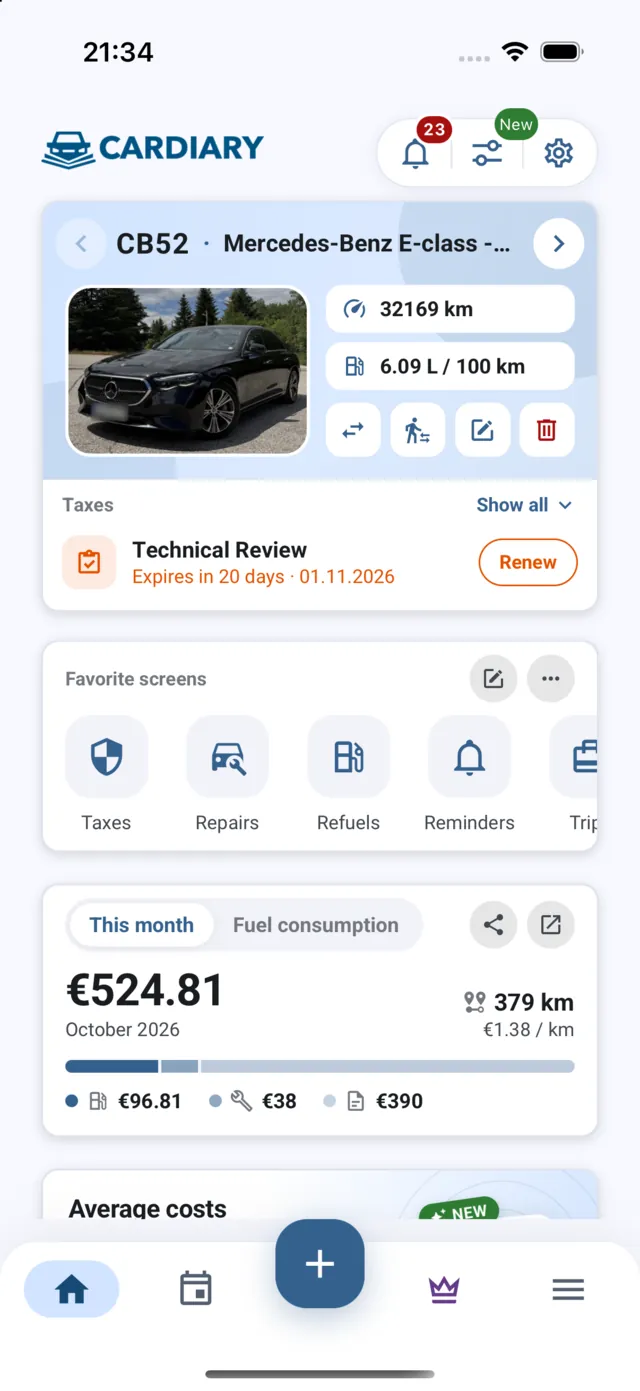
Logging each fill-up in CarDiary and running the numbers through the MPG and fuel cost calculator on car-diary.net turns those estimates into a personal average that reflects your routes and driving style instead of a lab cycle.
How rule fights show up on dealer lots
When GHG targets tighten faster than sales data supports, manufacturers lean on credits, air-conditioning efficiency improvements, and model-mix shifts—more hybrids on volume nameplates, fewer high-MPG specialty cars, sometimes delayed ICE refreshes. When targets ease or timelines slip, you may see more traditional engine options hang around longer, which can hold down transaction prices on gas-only trims but also slow fleet-wide efficiency gains.
None of that removes state-level rules. California and states that follow its standards still require zero-emission sales through the Advanced Clean Cars program unless federal preemption changes in court. A shopper in Phoenix and a shopper in rural Ohio can face different available EV and plug-in hybrid inventories even when federal GHG comments dominate the news cycle.
Inspection and smog deadlines still run on state calendars
Federal GHG comments do not pause state safety or emissions inspections. Texas, Missouri, Florida, and many other states require periodic safety checks; California, Arizona, Colorado, and others pair registration with smog or OBD tests on a fixed schedule. Missing a window can block renewal even when EPA is rewriting tailpipe CO2 limits in Washington. If you are unsure when your next check is due, the vehicle inspection due date tool on CarDiary’s US site helps you log the date alongside service records—CarDiary is a private vehicle log, not a DMV or EPA database.
Practical takeaways before you sign a retail contract
Compare at least two powertrains on the same platform—gas, hybrid, or plug-in hybrid—and run the fuel rows above with your actual miles. Read the Monroney label’s combined MPG and GHG score, then discount the MPG side by 10–15 percent if you drive mostly highway speeds above 70 mph or short cold-start trips. Ask the dealer which model year EPA certified and whether a mid-year software update affects fuel maps. If you buy used, a VIN check confirms open recalls and basic history before you inherit someone else’s real-world MPG.
Policy will keep moving in 2026, but your cost of ownership is still gallons times price per US gallon, plus registration, insurance, and maintenance. Tracking those line items month by month is how you see whether Washington’s tailpipe debate actually changed your budget—or only the headlines.