Losing a car to theft or carjacking is a safety crisis first and a paperwork project second. Crossovers such as the Honda HR-V and Toyota RAV4 show up often in police reports because they are common, easy to resell, and simple to move across state lines. Recent federal prosecutions in the Washington, D.C. metro area traced stolen HR-V and RAV4 vehicles through Maryland and Virginia within days, which is a reminder that your VIN can travel farther than you do. The steps below apply whether you drive a compact SUV, a work van, or a sedan.
Stabilize the scene and open a police file
If you are still at the scene and it is safe, call 911. Carjacking is a violent crime; give dispatch the direction of travel, plate if you remember it, and any description of the suspect or accomplices. Do not chase. For a theft discovered later—a driveway, garage, or parking lot—use the non-emergency line or online report portal your city or county publishes.
Ask for a report number before you hang up. Insurers, lenders, and your state motor vehicle agency will all ask for it. Write down the officer name, precinct, and time you filed. If keys were taken, mention that explicitly; it affects how your insurer treats window damage versus total loss. The National Insurance Crime Bureau (NICB) maintains theft trends and VIN-based resources that complement local police data.
Notify your insurer with the right coverage in mind
Call your carrier the same day if possible. Theft and carjacking are usually handled under the comprehensive portion of an auto policy, not collision. Comprehensive covers theft even when no other vehicle hit yours. If you only carry liability, you may have no coverage for a stolen car unless a separate rider applies.
Have your policy number, lienholder contact, and a list of personal property inside the car—child seats, tools, laptops. Most policies cap contents unless you added specific coverage. Ask whether rental reimbursement applies while the claim is open, what documentation they need for a total loss, and how they pay off a loan if you still owe more than market value. Gap insurance, if you purchased it, enters here.
Your adjuster will want the police report, all keys in your possession, and proof of mileage or service if they dispute value. Photos you took when you bought the car help; so do maintenance receipts.
Work your state DMV and lender in parallel
Each state handles stolen titles differently, but the pattern is similar. Report the theft to your state motor vehicle agency if they require a separate form beyond the police report. Some states flag the title as stolen so a thief cannot register the car cleanly in your name.
Contact your lender or lessor immediately. They hold a security interest in the vehicle. For a lease, the leasing company may want you to continue payments until the insurer settles; ask about gap or waiver language in your contract. For a loan, the insurer typically sends the payoff to the bank and any remainder to you after deductibles.
If you had toll tags, garage openers, or a spare key registered to the vehicle, disable or reprogram them. A stolen HR-V with your home address on the registration is a home-security problem as well as a car problem.
If police recover the car
Recovered vehicles are often held for evidence, especially when used in other crimes. You may pay towing and storage until the case clears. Before you drive it, inspect for ignition damage, hidden trackers, and mechanical issues from hard use. Run an updated NHTSA recall lookup on your VIN; months on the street do not pause safety campaigns.
Your insurer may declare the car a total loss if damage or missing parts exceed thresholds, even if the shell returns. You can accept the total loss and replace the car, or negotiate repair if coverage and state law allow retaining a salvage title.
Replacing the vehicle without missing deadlines
Once you accept a settlement or buy a replacement, you face a stack of new paperwork: bill of sale, insurance binders, temporary tags, and registration fees. States often give a short window to register a newly purchased vehicle; missing it triggers penalties unrelated to the theft itself.
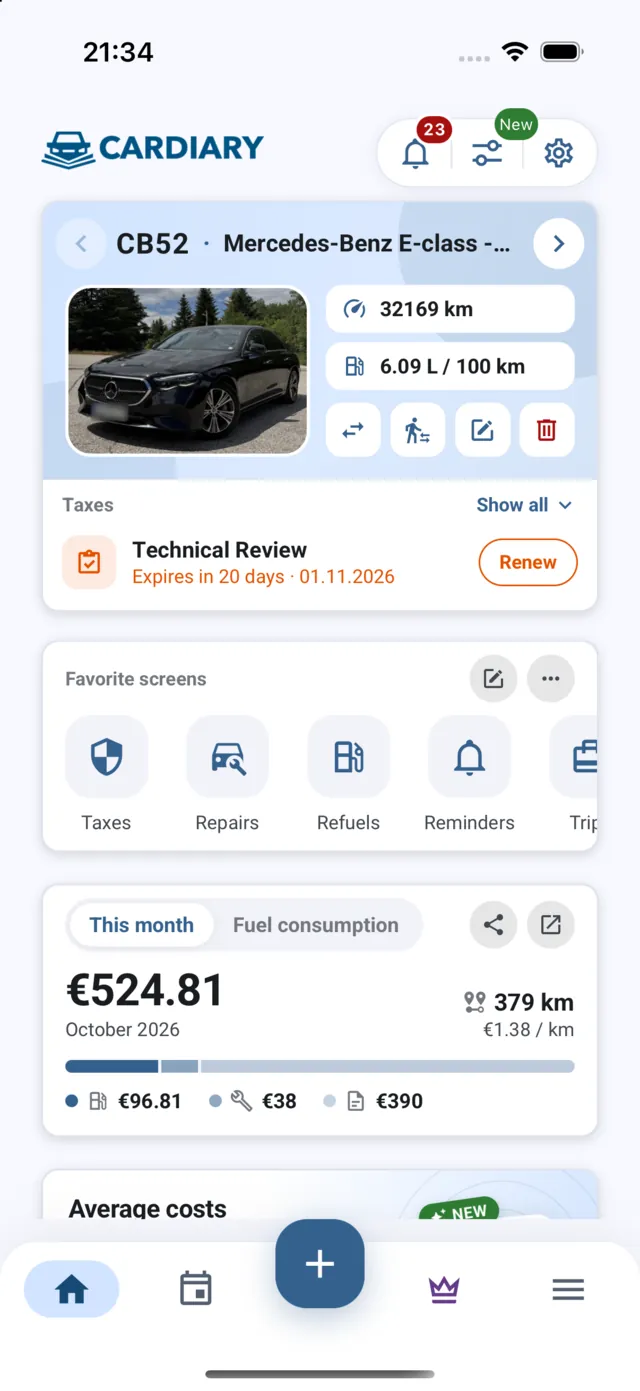
When you finally have a replacement title and plate in hand, note the first registration renewal date your state assigns—after a theft, that date is easy to lose among police case numbers and claim files. Storing that renewal deadline in CarDiary keeps it visible alongside your other vehicle records so the replacement car does not become the one that lapses.
Buying used while theft rings stay active
Thieves target common models because buyers do not question them. A clean-looking RAV4 or HR-V at a suspicious price deserves scrutiny. Pull the VIN from the dashboard and door jamb, then check it through CarDiary’s VIN check and the NICB’s free lookup before you pay. Mismatched stickers, fresh rivets on the VIN plate, or a seller who insists on cash at a rest area are signals to walk away.
Ask for a title signed by the registered owner, not a power of attorney from a third party. Verify the seller’s ID matches the title. For dealer purchases, confirm the dealer license with your state consumer protection office if anything feels off.
Business and fleet operators
A stolen Transit van or delivery SUV hits revenue immediately. Commercial policies may require a separate theft report timeline. Document which tools or inventory were inside; business personal property may ride on a commercial policy, not the auto comprehensive limit. Keep digital copies of registrations for every unit in one place so one stolen clipboard does not slow the claim on the remaining vehicles.
Vehicle theft rates fluctuate by city, but the administrative sequence does not: police report, insurer claim, lender notice, state notification, then either recovery inspection or replacement registration. Handling those steps in order keeps a violent or unsettling loss from turning into months of denied claims and expired plates on the car you buy to move forward.