Joey Logano won the 2026 Bass Pro Shops Night Race at Bristol Motor Speedway on September 19, holding off Kyle Larson by 1.248 seconds in the third race of the NASCAR Cup Series playoffs. Carson Hocevar finished third, Christopher Bell fourth, and Ty Gibbs fifth after leading much of the final stage. The finish looked like a classic short-track scramble, but the numbers underneath were familiar Thunder Valley math: a 0.533-mile concrete oval, a 20-gallon fuel cell, and crew chiefs trying to guess how many green-flag laps their driver can survive before the tires—or the tank—run out.
Why fuel windows matter more than raw speed at Bristol
NASCAR scheduled 500 laps, or 266.5 miles, for the Night Race with stages at laps 125, 250, and 500. Jayski and race-week materials listed a fuel window near 190 laps for the Next Gen Cup car at Bristol, meaning a full load should theoretically cover about 101 miles under green-flag conditions before another stop. The final stage alone runs 250 laps—longer than one tank—so every contender needed at least one more pit stop even if cautions stretched mileage.
Work the formula backward the way broadcast analysts do: 20 gallons multiplied by miles per gallon, divided by 0.533 miles per lap. A 190-lap window implies roughly 5.1 MPG on green flags. Under caution, teams historically plan for about double that economy because drivers lift, draft, and sometimes kill the engine on backstretch sections. That is why a race with a dozen or more yellow periods can reorder the leaderboard without anyone finding extra horsepower.
What is actually in a NASCAR fuel cell
Cup Series cars do not carry a simple gas tank. The Next Gen platform uses a 20-gallon fuel cell with a ballistic Kevlar bladder, foam baffles to limit fuel slosh, and check valves that keep fuel from escaping if a car flips. Teams weigh fuel cans before and after service to know exactly how many gallons went in, but there is no dashboard fuel gauge—only a fuel-pressure reading that drops when the cell is nearly empty.
Sunoco Green E15 race fuel weighs about 6.2 pounds per gallon, so 20 gallons add roughly 124 pounds aft of the cockpit. On a half-mile bullring where weight transfer already decides who hooks up on restarts, that mass matters as much as tire compound choice. Engineering analyst Diandra Leslie-Pelecky noted on Building Speed that the teams with the best mileage models rarely share them publicly, which is why television graphics sometimes show a driver “short” on fuel yet still rolling when the white flag waves.
How the 2026 Night Race strategy unfolded
Rain washed out practice and qualifying, so Kyle Larson started from the pole on metrics while Logano lined up second. A competition caution at lap 40 split the field: Logano stayed out and led the rest of Stage 1, while Larson pitted and spent the middle of the race digging out of traffic. Logano’s early gamble created a tire offset— fresher rubber later—but also meant his No. 22 Ford had to recover track position after Stage 2.
Ty Gibbs led a race-high 176 laps and looked poised to sweep Bristol after winning the spring race in April 2026, when he stayed out during a late caution and beat Ryan Blaney by 0.055 seconds on old tires. On Saturday night Gibbs again controlled the closing stint until contact with Carson Hocevar on the final restart opened the door. Logano dove to the bottom lane with seven laps remaining and was never seriously challenged, collecting his third win of 2026 and 40th career Cup victory.
The contrast with the 2025 Night Race is instructive for anyone watching pit boards instead of only the highlight reel. Christopher Bell won that edition with 14 pit stops in a tire-wear war so extreme that Goodyear mounted extra sets mid-race; 137 of 500 laps ran under caution, yet fuel mileage still shaped who could stay out during late cautions. Bristol can flip from a tire lottery to a fuel-and-track-position puzzle depending on rubber buildup, concrete grip, and how cautions cluster.
Translating race MPG to your highway bill
Street drivers should not expect 5 MPG, but the planning problem rhymes with what fans face driving into northeastern Tennessee. The U.S. Energy Information Administration pegged the national average for regular gasoline at $4.157 per gallon for the week ending September 7, 2026, with the East Coast near $4.03 and the Gulf Coast near $3.69. Parking at Bristol Motor Speedway still means a long highway haul for most ticket holders.
- Charlotte to Bristol: about 220 miles. A crossover rated at 28 highway MPG burns roughly 7.9 gallons each way. At the EIA national average, that is about $33 in fuel one direction, or $66 round trip before tolls, hotels, or in-race concessions.
- Atlanta to Bristol: about 280 miles. At 30 MPG, expect 9.3 gallons each way—near $39 one way at $4.16 per gallon.
- Knoxville to Bristol: about 120 miles. Even a 22 MPG SUV uses 5.5 gallons each way, or roughly $23 at national-average prices.
Those figures move quickly if you tow a camper or idle in Bristol traffic after the checkered flag. The EPA publishes official fuel-economy estimates for passenger vehicles on window stickers and at fueleconomy.gov; your real MPG on mountain interstates may land a mile or two below the label, the same way a Cup car’s mileage swings when it fights for position instead of trailing in clean air.
Pit road speed limits and why they show up in your wallet
NASCAR enforces a 30 mph pit-road speed limit at Bristol, with caution laps at 35 mph around the 0.533-mile oval. A slow pit stop costs positions, but a speeding penalty costs even more when the fuel window is tight. Fans feel a parallel on the drive home: run the interstate at posted speeds and you stretch each tank; rush and you pay at the next exit.
Playoff races also compress the ownership math for the cars on track. A single Next Gen Cup car can consume more than 50 gallons of race fuel over 500 laps once you count green-flag runs, cautions, and rich mixtures used for restarts, even though the cell never holds more than 20 gallons at once. Retail Sunoco E15 at your corner station is a different product from the blended race fuel in those cells, but the unit math—gallons times price—works the same for teams and travelers.
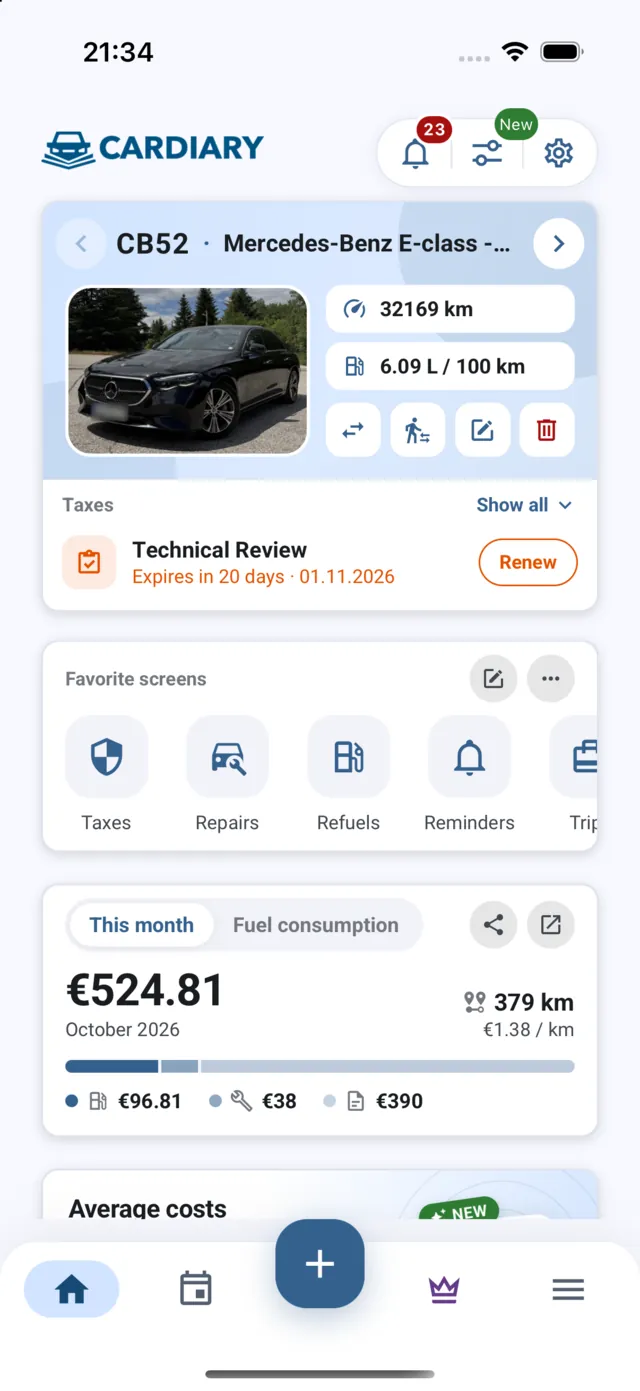
Before you plan next year’s Night Race road trip, you can compare your actual fill-up costs against EPA estimates using the CarDiary MPG and fuel cost calculator, a digital log that replaces spreadsheet tabs when you want cents-per-mile clarity for a long drive to Thunder Valley.
What to watch for at the next short track on the schedule
Logano’s win moved him to third in the playoff standings while Larson left Bristol as the points leader by a single marker over Denny Hamlin. Bell remains within striking distance despite another strong-but-not-victorious night. The broader lesson for car owners following along at home is unchanged: at Bristol, the fastest car does not always win—the car that best manages consumables over 266.5 miles often does.
If you are comparing daily-driver costs across makes and models, keep separate notes for highway trips and around-town errands. Race teams already do that with segmented telemetry; your version can be as simple as resetting the trip odometer at each fill-up. Either way, knowing your true MPG beats guessing from a window sticker when gas is north of $4 per gallon and the next 500-lap ticket is already on the calendar.